
Amber snail
Perpolita hammonis
Description
How to identify
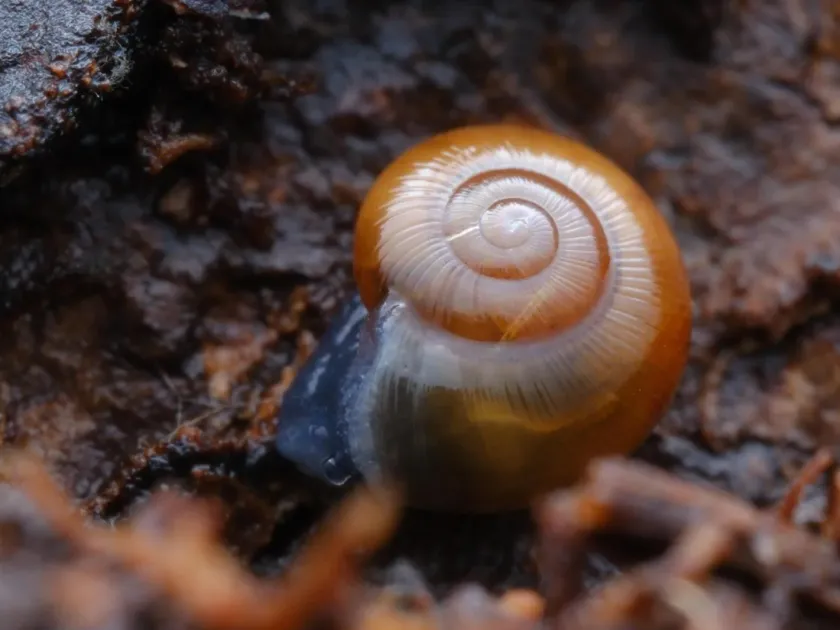
The amber snail (Perpolita hammonis) is a small terrestrial mollusc belonging to the family Gastropoda. It is recognized by its delicate, translucent, amber or yellowish-brown shell.
Adult snails are typically very small, measuring about 3–4 mm in diameter, which often makes them difficult to spot during routine garden inspections.
The shell is glossy and consists of several whorls, providing the mollusc with a distinct appearance compared to larger snail species found in the garden.
These snails thrive in moist, shaded environments, frequently hiding under plant debris, stones, or within dense vegetation where they are protected from desiccation.
They reproduce rapidly in damp soil, laying small clutches of eggs that hatch into juvenile snails ready to feed shortly after emerging.
What it damages
This species is a polyphagous feeder, known to attack a wide range of horticultural crops, with a preference for succulent, young seedlings and leafy greens.
In greenhouses and nursery beds, they can cause significant damage by consuming leaf tissue, often leaving irregular, ragged holes in the foliage.
Beyond direct feeding damage, their movement across plant surfaces leaves behind trails of mucus that can facilitate the spread of fungal and bacterial pathogens.
Young plants are particularly vulnerable, and severe infestations can lead to stunted growth or the complete loss of seedlings in high-density plantings.
The damage is often localized at the base of the stem or on the undersides of leaves, where the snails spend their daylight hours seeking protection.
When it appears
The activity of these molluscs begins in early spring as temperatures rise, continuing throughout the growing season until the onset of cold weather.
Peak activity is closely linked to humidity levels; frequent rainfall or heavy irrigation creates ideal conditions for their movement and reproduction.
During the summer months, they may reduce activity during periods of drought, but they remain highly active in consistently moist garden microclimates.
Winter is spent in dormancy, with the snails sheltering deep within the soil, under mulch, or within dense vegetation to survive freezing temperatures.
As nocturnal feeders, they are most active at night or during overcast, rainy days, avoiding the drying effects of direct sunlight.
Signs of infestation
The most common indicator of an amber snail presence is the appearance of irregular, small holes on the leaves of young vegetable or decorative plants.
Shiny, silvery dried mucus trails left on soil surfaces, leaves, or greenhouse structures are a definitive sign of mollusc activity.
During early morning inspections, you may find the small, amber-colored snails hidden under damp boards, pots, or decaying plant matter near the affected crops.
- Ragged holes on tender leaf tissues.
- Silvery, dried mucus trails on soil and plants.
- Small amber shells found under mulch.
- Weakening of seedlings due to foliage consumption.
- Secondary fungal infections on damaged plant tissue.
Control measures
Cultural control is highly effective: keep the garden clean by removing piles of debris, weeds, and dense mulch that provide hiding spots for snails.
Modify irrigation practices to avoid excessive soil moisture, and ensure proper drainage in greenhouse beds to discourage mollusc habitation.
Create physical barriers around vulnerable plants using materials like crushed eggshells, wood ash, or sharp sand, which are difficult for snails to cross.
Encourage natural predators such as hedgehogs, ground beetles, and birds, which can help keep snail populations at manageable levels naturally.
In cases of severe infestation, use environmentally friendly molluscicides, such as iron phosphate baits, applied according to label instructions to minimize non-target impact.
Taxonomy
- Latin name
- Perpolita hammonis
- Order
- Molluscs
- Family
- Vitrinidae
- EPPO code
- PRLTHA
Discussion
No discussions yet — be the first.