
Glass snail
Vitrea
Description
How to identify
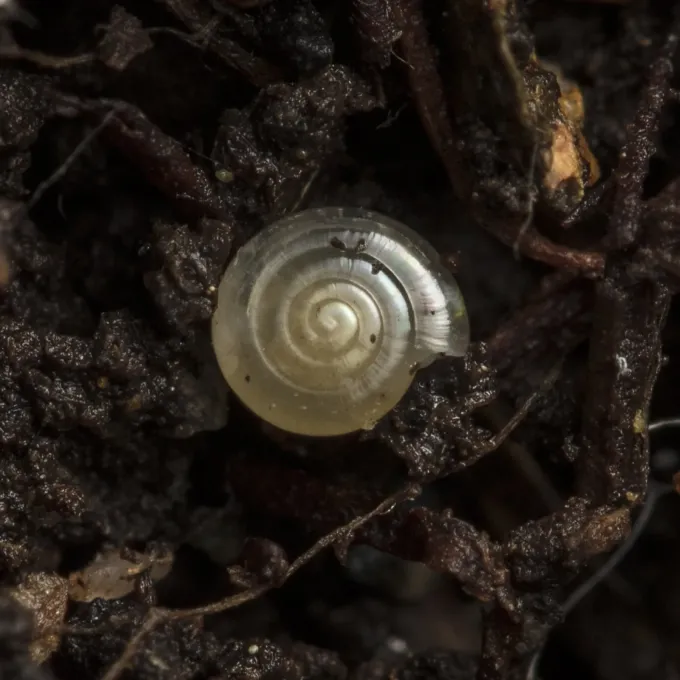
Glass snails (genus Vitrea) belong to the family Zonitidae. They are small terrestrial gastropods characterized by a translucent, glossy shell that is typically flattened in shape.
The shell size of most species in this genus ranges from 2 to 5 millimeters in diameter. The body of the snail is generally light or greyish, making them difficult to spot against moist soil and plant debris.
This pest prefers a secretive lifestyle, hiding during the day in the soil, under rocks, fallen leaves, or within dense vegetation. They are highly sensitive to humidity and avoid dry, exposed areas.
Identifying specific species often requires a detailed examination of the shell structure under a microscope, as members of the Vitrea genus resemble other small woodland snails.
They reproduce by laying eggs in moist soil patches or under layers of mulch, which provide the optimal microclimatic conditions for the development of the offspring.
What it damages
Glass snails are polyphagous, meaning they can feed on a wide variety of plant species. They pose a significant threat to young vegetable seedlings and ornamental plants.
In gardens and allotments, they can damage crops such as lettuce, cabbage, various berry plants, as well as the roots and subterranean parts of young seedlings.
In addition to fresh plant tissue, these mollusks feed on decomposing organic matter, but when food is scarce, they will switch to living crops. In greenhouses, they can damage seedlings by eating delicate leaf tissues.
Beyond direct mechanical damage, the snails leave slimy trails that facilitate the spread of bacterial and fungal diseases on the affected plant parts.
They are particularly dangerous during prolonged wet weather, when population numbers can increase rapidly and standard garden barriers become less effective.
When it appears
The activity of glass snails is closely linked to humidity levels and temperature. The most active period occurs during spring and autumn when the soil is well-moistened.
During the summer, in drought conditions, snails retreat deep into the soil or into other protected areas, entering a state of dormancy. Their activity resumes with the onset of rainy weather.
The life cycle of these mollusks can be prolonged, with overwintering occurring in both egg and adult stages within sheltered locations. They start active feeding early in the spring as soon as the snow melts.
Daily activity peaks at night and in the pre-dawn hours. During the day, they are only active if dense ground cover provides sufficient shade and moisture.
In autumn, during harvest time, these mollusks may migrate into storage facilities or basements if high humidity is maintained and vegetable debris is present.
Signs of infestation
The primary sign of glass snail presence is the appearance of irregular holes on the leaves of seedlings. The edges of the damage typically look like jagged or uneven "bites".
Shiny, silvery trails of dried mucus on the surface of leaves, stems, or soil are the most reliable visual indicator of gastropod activity in the area.
When inspecting the soil around damaged plants in the morning, one can often find the snails themselves hiding under soil clumps or near the base of the plant stem.
The presence of excessive plant debris and standing water promotes the accumulation of these silver marks, signaling an immediate need for protective measures.
In cases of severe infestation, plants may show stunted growth, partial wilting, and a decrease in the market quality of fruits that come into contact with the soil.
Control measures
The first step in management is good agricultural practice: timely weeding, regular soil cultivation, and the removal of plant debris that serves as a hiding place for the pest.
- Use coarse mulching materials (crushed stone, gravel, wood chips) that make it difficult for snails to travel.
- Set up traps: boards, damp burlap, or pieces of cardboard under which snails gather during the day.
- Hand-pick the mollusks during evening or early morning hours after watering.
- Apply biological products based on iron phosphate, which are safe for pets and beneficial insects.
- Create barriers of lime, wood ash, or superphosphate around garden beds, as these substances irritate the soft bodies of the mollusks.
Chemical molluscicides should be used strictly according to the instructions, ensuring they do not come into direct contact with edible fruit.
It is essential to encourage natural predators in the garden, such as hedgehogs, birds (thrushes), frogs, and toads, which actively feed on small terrestrial mollusks and help keep their numbers in check.
Taxonomy
- Latin name
- Vitrea
- Order
- Molluscs
- Family
- Vitrinidae
- EPPO code
- VTRESP
Discussion
No discussions yet — be the first.