
Virachola
Virachola
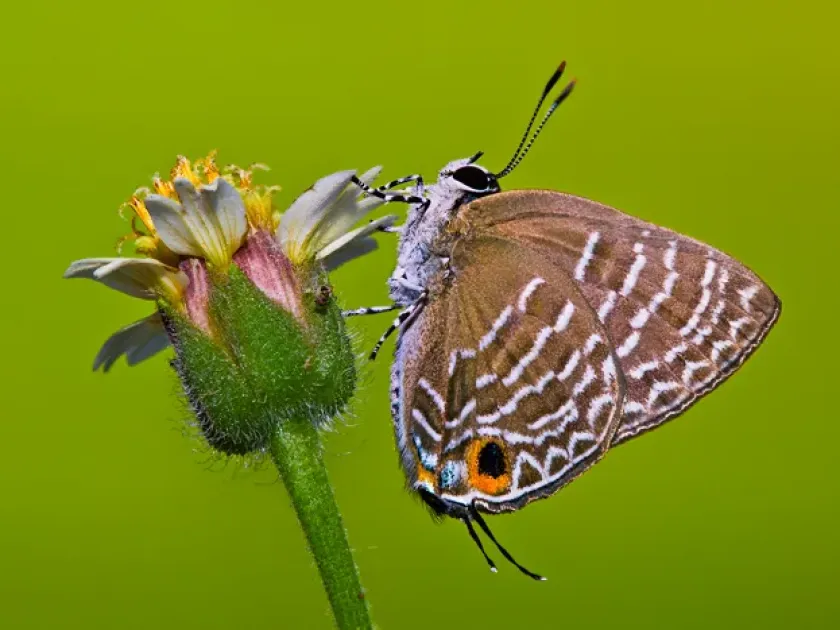
Description
How to identify
The genus Virachola belongs to the family Lycaenidae (gossamer-winged butterflies). While many butterflies are harmless, species in this genus are recognized as significant pests for various horticultural crops.
Adult moths are active during the day, which makes them easier to spot in the orchard. Females typically lay their eggs singly on the surface of developing fruit or flower buds to ensure immediate food supply.
The larval stage is the destructive one. Caterpillars are well-adapted to boring into fruits, possessing strong mandibles and specialized bodies that allow them to navigate inside dense fruit tissues.
Developmental speed of the pest is highly dependent on ambient temperature. In tropical and subtropical regions, the cycle can be continuous, leading to overlapping generations and persistent pressure on crops.
Identification often involves observing the behavior of adults during the peak blooming period of the host plant, as well as checking the fruit surfaces for oviposition signs.
What it damages
Virachola larvae are internal feeders. They target valuable crops such as pomegranates, citrus, and avocados, causing severe economic losses by destroying the fruit from the inside.
The entry of the larva into the fruit allows for the secondary invasion of pathogens, including bacteria and fungi, which quickly rot the fruit and lead to heavy pre-harvest drops.
Direct damage to the seeds and edible pulp makes the fruit unmarketable. Even if a fruit appears healthy from the outside, internal tunneling renders it completely spoiled for commercial use.
Outbreaks can occur rapidly, especially in poorly managed orchards. The pest has a high capacity for spread, as adults are capable fliers that move easily between host trees.
Economic impact is twofold: yield loss through fruit drop and the increased cost of necessary control programs, including labor-intensive orchard maintenance and pesticide applications.
Signs of infestation
The most visible sign of an infestation is the presence of small, circular holes on the skin of the fruit, frequently surrounded by a pile of larval frass (excrement).
A distorted or lopsided shape in developing fruits often indicates internal damage. If a fruit matures prematurely or changes color unexpectedly, it is usually a sign of larval activity.
Premature fruit drop is a strong indicator of a high infestation level. Collecting and inspecting these fallen fruits will reveal the presence of caterpillars inside.
Dark patches on the fruit surface, which later become soft and mushy, are typical of secondary rot triggered by the initial feeding galleries created by the caterpillar.
During the peak season, detecting these signs early is crucial for effective intervention. A quick inspection of the orchard floor for fallen fruit can alert the grower to start monitoring.
Control measures
The first line of defense is sanitation. Regularly collecting and destroying all fallen or damaged fruits prevents the larvae from completing their life cycle and emerging as adults.
Pheromone traps are highly effective for monitoring adult populations. This allows for precise timing of chemical or biological control applications, avoiding unnecessary spraying.
Biological control using natural predators or egg parasitoids can significantly reduce population density without harming the environment or beneficial pollinators.
Chemical applications should be strictly timed to the egg-laying phase of the butterfly. It is essential to use selective insecticides to preserve beneficial insects while targeting the larvae.
- Strict orchard sanitation and removal of infested fruit.
- Use of pheromone lures to track pest activity.
- Biological control using native parasitoid wasps.
- Targeted insecticide sprays during the fruit setting stage.
Taxonomy
- Latin name
- Virachola
- Order
- Lepidoptera (butterflies)
- Family
- Lycaenidae
- EPPO code
- VIRASP
Discussion
No discussions yet — be the first.