
Aricia artaxerxes
Aricia artaxerxes
Description
How to identify
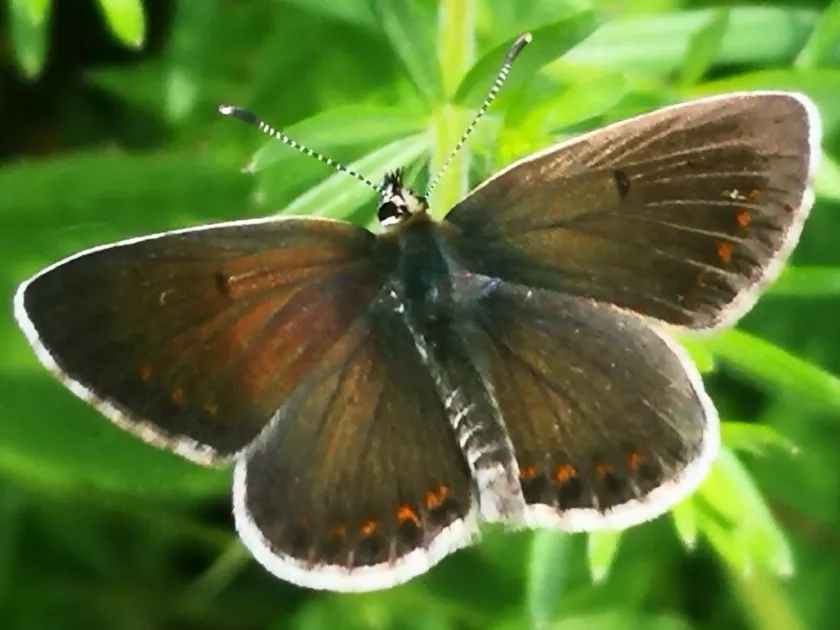
Aricia artaxerxes is a butterfly species belonging to the Lycaenidae family, commonly known as the Northern Brown Argus.
The adult butterfly is relatively small, with a wingspan of approximately 25 to 30 millimeters, featuring distinctive dark brown wings with orange spots along the margins.
The larvae are greenish in color with lighter lateral stripes, providing them with excellent camouflage against the foliage of their host plants.
The species undergoes complete metamorphosis, passing through egg, larval, pupal, and adult stages during its annual life cycle.
These butterflies typically inhabit sunlit meadows, grasslands, and forest clearings where their specific host plants are abundant.
What it damages
The primary damage is caused by the caterpillars, which feed on the leaves of plants within the Geraniaceae family, particularly wild and garden geraniums.
While the species rarely causes large-scale devastation, larvae can significantly impact the health and aesthetic value of potted geraniums and ornamental plantings.
Feeding damage involves skeletonizing or creating irregular holes in the leaf blades, which impairs the plant's photosynthetic efficiency.
Physical injuries to the leaf tissues can serve as entry points for bacterial or fungal pathogens, leading to secondary plant diseases.
Young plants or seedlings are particularly vulnerable, as significant leaf loss can severely stunt their growth and overall vitality.
When it appears
Adult butterflies are typically on the wing from June through August, depending on the climatic conditions of the specific region.
The species overwinters as a young larva, typically remaining dormant near the base of the host plant or in the leaf litter.
Larval activity resumes in the spring when temperatures rise, coinciding with the rapid growth of the host plant's foliage.
There is typically one generation per year, concentrating the damage period within the late spring and early summer months.
Pupation generally occurs in late spring, marking the transition from the larval feeding stage to the adult reproductive stage.
Signs of infestation
The presence of irregular holes and notched leaf edges is the most prominent indicator of larval infestation on geranium plants.
Frass (larval droppings) found on the surface of leaves or on the soil directly beneath the plant is a clear sign of active feeding.
Stunted development of new leaves or rolled-up foliage indicates that caterpillars are using silk threads to create shelters.
Careful examination of the underside of leaves during the early morning is necessary to locate the caterpillars due to their cryptic coloration.
Wilted or discolored leaf patches that appear without external pathogens often suggest the hidden presence of feeding larvae.
Control measures
Manual removal of caterpillars is the most sustainable and non-toxic approach, especially for small-scale garden or greenhouse settings.
Implementing proper cultural practices, such as removing weeds that act as alternative hosts, significantly reduces the local population pressure.
Biological control agents, including Bacillus thuringiensis sprays, are highly effective against these larvae and are safe for beneficial insects.
In cases of heavy infestation, specific chemical insecticides labeled for lepidopteran pests can be applied following local agricultural guidelines.
Pruning and disposing of heavily damaged foliage helps to limit the spread of larvae and prevents the maturation of the next generation.
Taxonomy
- Latin name
- Aricia artaxerxes
- Order
- Lepidoptera (butterflies)
- Family
- Lycaenidae
- EPPO code
- ARCZAR
Discussion
No discussions yet — be the first.