
Aricia
Aricia
Description
How to identify
The genus Aricia belongs to the family Lycaenidae (Blues) within the order Lepidoptera. These are small diurnal butterflies, typically with a wingspan of about 25–30 mm.
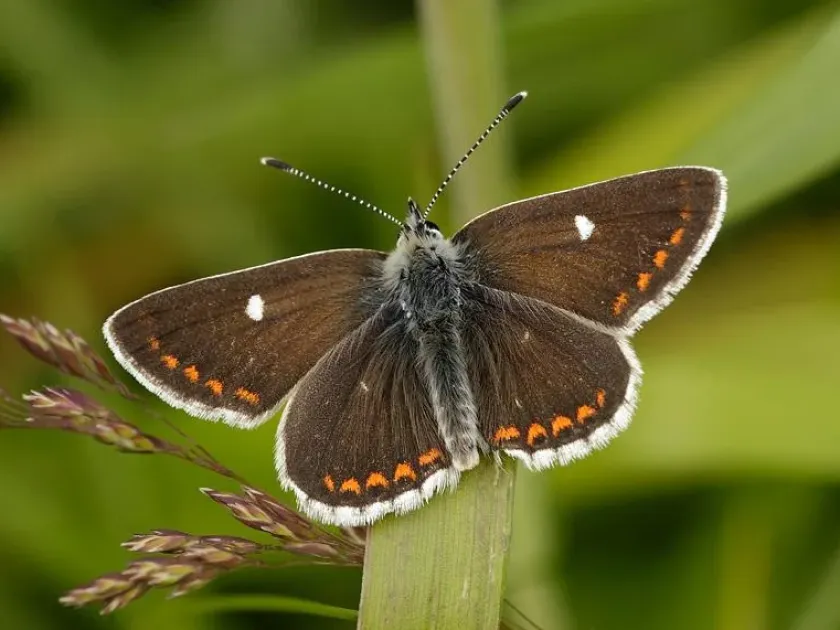
The dorsal side of the wings is primarily brown, often bordered with a distinct orange band, distinguishing them from other blue-colored members of the family.
On the ventral side, the wings are greyish or beige with a pattern of small black spots, each surrounded by a thin white ring, serving as a key identification mark.
The body is covered with fine hair, and the antennae are club-shaped, which is characteristic of this butterfly group.
The larvae are specialized, slug-like in appearance, usually exhibiting green coloration with pale longitudinal stripes to blend in with host plant foliage.
What it damages
The damage is primarily caused by the larvae, which feed on the leaves and sometimes the reproductive parts of various herbaceous plants.
Their host range includes various plants from the Geraniaceae and Fabaceae families, often targeting wild species and ornamental garden crops.
In nursery and greenhouse environments, they can cause significant aesthetic damage to geraniums and related bedding plants.
Feeding results in irregular leaf margins and holes, which weaken the plant's photosynthetic capacity and stunt overall growth.
High infestation rates can lead to the loss of buds, significantly reducing the decorative quality or seed yield of the affected plants.
When it appears
The life cycle typically includes one or two generations per year, influenced by regional climate conditions.
They overwinter as larvae, usually in the early or mid-instar stages, hiding within the plant debris or the root collar area.
In spring, the larvae emerge to feed on fresh growth before pupating, which usually occurs near the base of the plant or in the soil.
The adult flight period generally happens in two waves: the first in late spring and the second during mid-to-late summer.
Adult butterflies are sun-loving and actively forage for nectar, simultaneously laying eggs singly on the host plants.
Signs of infestation
Early symptoms include small, localized holes in the leaves created by young larvae during their initial feeding phases.
As the larvae mature, they consume larger portions of the leaf tissue, leading to jagged edges and skeletonized foliage patterns.
Small dark pellets of frass found on the leaves or on the ground beneath the plant are strong indicators of active infestation.
Deformed flowers or prematurely dropping buds are further signs that the larvae have been feeding on the plant's reproductive structures.
Due to their cryptic coloring and nocturnal feeding habits in some stages, they may be difficult to spot without careful inspection.
Control measures
Good agricultural practices are the first line of defense, including the removal of weeds that serve as alternative hosts.
Mechanical control, such as soil cultivation in autumn or early spring, can effectively destroy pupae or overwintering larvae in the soil.
For chemical control, targeted insecticides applied during the early larval stages prove most effective in preventing extensive leaf damage.
Biological control using formulations of Bacillus thuringiensis provides a selective approach that targets larvae while preserving beneficial insects.
Regular monitoring using yellow sticky traps helps track the adult population and allows for well-timed intervention before egg-laying reaches a peak.
Taxonomy
- Latin name
- Aricia
- Order
- Lepidoptera (butterflies)
- Family
- Lycaenidae
- EPPO code
- ARCZSP
Discussion
No discussions yet — be the first.