
Albulina orbitulus
Albulina
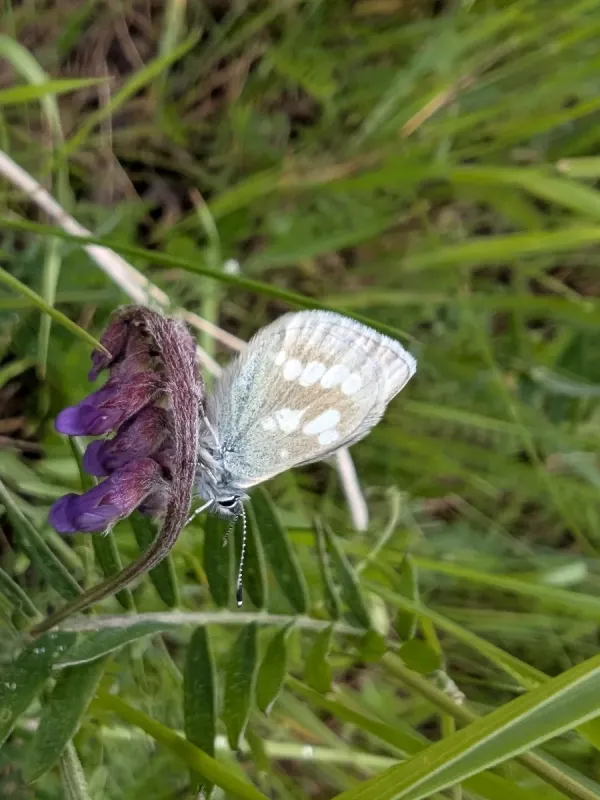
Description
How to identify
Albulina orbitulus is a species of butterfly in the Lycaenidae family. As an agricultural pest, it is characterized by its distinct life cycle involving significant larval development on host plants.
Adult butterflies have a wingspan typically ranging between 20 and 28 mm. Males are generally blue to violet on the dorsal side, while females display a more subdued, brownish-grey coloration.
The larvae are slug-like in appearance, a common trait among many blue butterfly species. They are often covered in fine setae and blend seamlessly with the foliage of their host plants.
The life cycle encompasses four stages: egg, larva, pupa, and adult. The pupal stage is often found attached to stalks or within the root zone of host legumes during the overwintering period.
This species is frequently encountered in subalpine meadows and mountainous regions where its specific host plants, primarily legumes, are abundant.
What it damages
Albulina orbitulus primarily targets leguminous crops, such as clover, astragalus, and various wild pulses. Larvae cause damage by feeding on both vegetative and reproductive plant parts.
The most severe damage occurs when larvae feed on flower buds and developing seed heads, directly impacting the seed yield of the crops. This makes the pest particularly problematic in seed production areas.
Feeding activity on points of growth can cause stunted development and foliage thinning. In instances of high infestation, entire stands of leguminous grasses may show signs of weakened physiological health.
The pest's impact is compounded by the plant's inability to compensate for the loss of reproductive organs. Weakened plants often become more susceptible to secondary pathogens and environmental stress.
While often classified as a minor or secondary pest, its local prevalence can cause significant economic losses for farmers specializing in fodder crops.
When it appears
The species generally follows a univoltine life cycle, meaning one generation per year. Adult activity is concentrated in the summer months, coinciding with the peak flowering of host plants.
Eggs are deposited individually on leaves or floral structures. The larval stage follows, characterized by intense feeding that usually lasts throughout the warmer months of the season.
Overwintering occurs as a pupa, sheltered within the soil or dense vegetation near the roots of the host plants. This allows the species to survive the harsh winter conditions of its habitat.
As spring temperatures rise, the pupae complete their metamorphosis, leading to the emergence of the next generation of adults. The precise timing is heavily dictated by local climatic variations.
Monitoring the flight period of adults is essential for predicting the timing of larval development and potential crop damage later in the season.
Signs of infestation
Visible signs of infestation include irregular holes in leaves, caused by larval feeding. Floral buds that fail to open or appear chewed are indicative of the pest's presence.
The accumulation of frass (larval excrement) on the plant surface is a reliable indicator of active feeding. Larvae may be found by carefully inspecting the underside of leaves and inside flower clusters.
Wilted or yellowing tips of stems, especially in clover fields, are symptomatic of larvae boring into plant tissues. Severe cases lead to widespread chlorosis across the affected area.
Adult activity, characterized by rapid flight patterns over fields during sunny weather, is a primary indicator for growers to initiate scouting procedures.
Sometimes, the presence of ants associated with the plant can be a sign of Lycaenid larvae, as some species form symbiotic relationships, offering sugary secretions in exchange for protection.
Control measures
Integrated pest management (IPM) is the most effective approach for controlling Albulina orbitulus. Cultural practices, such as crop rotation and timely harvesting, are primary lines of defense.
Biological control methods involve supporting natural populations of parasitoids, such as ichneumonid wasps, which significantly regulate butterfly populations in natural environments.
Chemical intervention should be reserved for scenarios where economic damage thresholds are exceeded. Selective insecticides are preferred to protect beneficial pollinator populations.
Deep plowing after harvest helps destroy overwintering pupae, significantly reducing the pest population for the subsequent season. This is a critical step in managing the pest's lifecycle.
Ongoing monitoring using pheromone traps or sweep-net sampling allows farmers to time interventions precisely, ensuring maximum efficacy while minimizing chemical usage.
Taxonomy
- Latin name
- Albulina
- Order
- Lepidoptera (butterflies)
- Family
- Lycaenidae
- EPPO code
- ALBLSP
Discussion
No discussions yet — be the first.