
Geranium bronze
Cacyreus
Description
How to identify
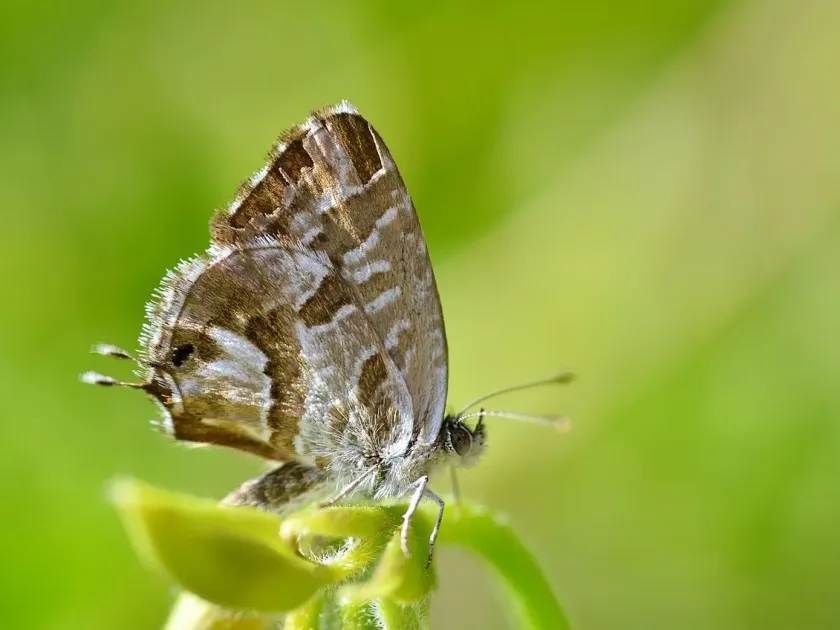
The geranium bronze (Cacyreus marshalli) is a small butterfly belonging to the Lycaenidae family. It originated in Africa but has become a significant invasive pest in Europe.
The adult butterfly has a wingspan of approximately 15–23 mm. Its wings are typically brown with a subtle metallic blue or copper sheen, which is the origin of its common name.
The larvae, or caterpillars, are the destructive stage of the life cycle. They are pale green initially and develop reddish-brown stripes as they grow, reaching up to 15 mm in length.
Pupae are found on the plant, usually attached to the stems or the undersides of leaves. They blend in perfectly with the plant tissue due to their greenish, mottled coloration.
The development cycle is rapid in warm climates, allowing multiple generations to occur throughout the growing season, which poses a continuous threat to plants.
What it damages
The primary hosts for Cacyreus marshalli are plants within the Pelargonium genus, commonly known as geraniums or storksbill.
The larvae are specialized to target the reproductive parts of the plant. They burrow into flower buds, effectively destroying the flower before it even has a chance to bloom.
Once the buds are exhausted, the caterpillars bore into the stems. This internal feeding activity severely compromises the structural integrity and vascular health of the plant.
The result of such infestation is the wilting and eventual death of the stems, leading to a loss of vigor and complete failure of the plant to grow properly.
High infestations often lead to total plant death, especially in outdoor gardens where environmental conditions favor the rapid population growth of the insect.
Signs of infestation
The earliest signs of infestation are small, circular holes in the flower buds, indicating where a larva has entered to feed on the developing petals.
Evidence of larval activity can also be observed as fine, dark frass or excrement scattered around the areas where the larvae have been feeding.
Buds that appear blackened, dried out, or fail to open are symptomatic of internal larval damage, signaling that the pest has already penetrated the tissue.
Weakened, wilting branches often suggest that a larva is currently residing inside the stem, disrupting the transport of nutrients and water.
Small, translucent or whitish eggs may be found attached to the underside of leaves or on the sepals of the flower buds during periods of high adult activity.
Control measures
Effective control starts with strict sanitation. All infested flowers and stem parts must be physically removed and disposed of to prevent further life cycles.
Systemic insecticides are the most recommended chemical solution, as they move within the plant's tissues to reach the larvae feeding protected inside the stems.
Monitoring the adult population is crucial; the use of yellow sticky traps in the vicinity of the plants helps in early detection and reducing the number of breeding adults.
- Inspect newly purchased plants before placing them in your garden.
- Cut back and destroy stems that show signs of internal tunneling.
- Use integrated pest management by encouraging natural predators where possible.
Biological control using Bacillus thuringiensis sprays can be effective if applied during the early larval stages before they tunnel deep into the stems.
Taxonomy
- Latin name
- Cacyreus
- Order
- Lepidoptera (butterflies)
- Family
- Lycaenidae
- EPPO code
- CACYSP
Discussion
No discussions yet — be the first.