
Alpine Blue
Albulina orbitulus
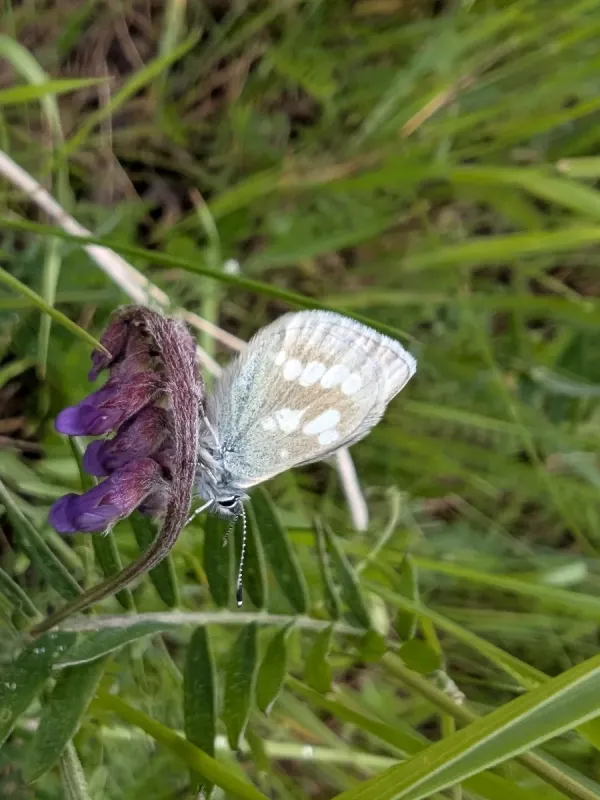
Description
How to identify
The Alpine Blue (Albulina orbitulus) is a butterfly belonging to the Lycaenidae family within the Lepidoptera order. This species is commonly found in alpine and subalpine meadows.
The adult butterfly has a wingspan ranging from 20 to 25 millimeters. Sexual dimorphism is clearly expressed in wing coloration and markings.
Males typically exhibit a bright blue upper wing surface with a narrow dark border. Females are generally browner, often with blue scales at the wing bases.
The underside of the wings is ash-grey with distinct dark spots surrounded by white rings, which is a key diagnostic feature for species recognition.
The body is covered with dense hairs, and the antennae are club-shaped with white ring-like segments, typical of the Polyommatinae subfamily.
What it damages
The larvae primarily feed on various Fabaceae species, including genera such as Astragalus and Oxytropis, which are their natural hosts in the wild.
In agricultural settings, these larvae can cause damage to cultivated legume crops by feeding on flower buds, young ovaries, and developing seeds.
Damage to reproductive organs results in lower crop yields and reduced quality of harvested legumes, as the larvae penetrate the pods to feed on seeds.
Severe infestations lead to premature flower drop and the formation of empty or deformed pods, which impacts both seed quantity and overall crop value.
The economic impact is most significant when high population densities coincide with the peak flowering period of the target host legume crops.
When it appears
Adult butterflies are typically active during the summer months, specifically from late June through early August, depending on the altitude and local climate.
The life cycle is closely synchronized with the phenology of their host plants, ensuring that larvae have sufficient food sources during their developmental stages.
Overwintering occurs primarily at the larval stage or as pupae, hidden within soil debris or at the base of host plants to survive cold conditions.
Spring activity begins as temperatures rise, allowing larvae to resume feeding as host plants enter their active vegetative and budding phases.
Depending on the region, the life cycle may be univoltine, though favorable conditions can sometimes lead to an extended period of larval development.
Signs of infestation
The most visible signs of infestation include small entry holes on the pods of legumes, indicating that larvae have burrowed inside to consume seeds.
Discolored, wilted, or dropped flowers often signal the presence of larvae feeding on the developing reproductive structures within the plant canopy.
Small amounts of frass, or insect droppings, found on the surface of pods or leaves are clear indicators of active larval feeding in the area.
Observing adult butterflies in the field during sunny hours is a common sign of mating and egg-laying activity, which precedes larval emergence.
- Entry holes in legume pods.
- Wilted and shed flowers.
- Presence of larval frass on leaves.
Control measures
Control strategies for the Alpine Blue include sound agronomic practices, such as crop rotation and the removal of wild legume hosts from field margins.
Autumn plowing is highly recommended to disrupt the overwintering pupae by exposing them to predators and harsh environmental conditions.
Chemical control, using insecticides, should be timed based on regular field monitoring to target larvae effectively before significant pod damage occurs.
Integrated Pest Management (IPM) techniques involve the use of beneficial insects and biological agents to maintain population levels below economic thresholds.
Frequent monitoring using traps and field scouting allows for early detection, enabling farmers to apply interventions only when and where strictly necessary.
Taxonomy
- Latin name
- Albulina orbitulus
- Order
- Lepidoptera (butterflies)
- Family
- Lycaenidae
- EPPO code
- ALBLOR
Discussion
No discussions yet — be the first.