
Apodemia
Apodemia
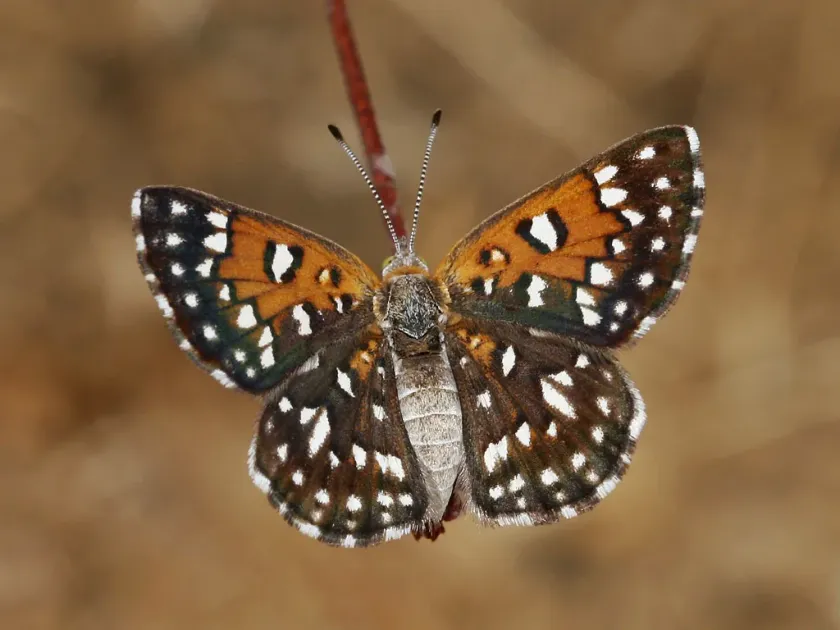
Description
How to identify
Apodemia is a genus of butterflies belonging to the Riodinidae family. These insects are known for their specific morphology, often featuring intricate, mottled wing patterns that provide excellent camouflage against tree bark and foliage.
The life cycle involves complete metamorphosis, progressing through egg, larval, pupal, and adult stages. The adult insects are typically small, possessing specialized mouthparts for nectar feeding and characteristic antennae structures.
Larvae, the stage responsible for plant damage, often possess specific hair-like structures or projections that aid in concealment. They are notoriously difficult to spot during their early stages of development.
The classification within the Riodinidae family highlights their evolutionary adaptation to specific forest environments. Their survival depends on the presence of suitable host plants within their habitat range.
Accurate identification usually requires expert analysis, as many species within the genus appear visually similar, complicating field monitoring for amateur gardeners.
What it damages
This pest primarily affects woody plants, including various shrubs and fruit trees. The damage is caused by the larvae, which feed on the leaf tissues, leading to significant defoliation if left unchecked.
Heavy infestations can lead to a drastic reduction in the photosynthetic capacity of the plant. This leaves the host weakened, making it more susceptible to environmental stresses and secondary diseases.
Young larvae may also target developing buds in the spring, which results in stunted shoot growth and a distorted appearance of the plant canopy throughout the growing season.
The damage often creates openings for pathogens, such as fungi and bacteria, to enter the plant tissues, leading to further necrosis or rot in affected areas.
Economic damage is most pronounced in ornamental plantings where the visual quality of the foliage is paramount, as well as in fruit-bearing trees where growth reduction impacts yields.
When it appears
Adult Apodemia activity typically peaks during the warm months of late spring and early summer. The timing of their emergence is highly dependent on cumulative heat units during the early season.
Egg-laying usually occurs on the underside of leaves or within crevices on the bark. Larval development then coincides with the period of peak vegetation growth, ensuring a stable food supply.
Overwintering generally takes place in the pupal stage, hidden within leaf litter or protected areas on the trunks of host trees. This dormant period is critical for the population cycle.
Environmental factors like humidity and temperature regulate the duration of each life stage. A sudden shift in weather can influence the synchronization between larval emergence and bud break.
Monitoring efforts should commence early in the spring, focusing on detecting the first adult flights to predict potential infestation timing for the season.
Signs of infestation
The primary indicator of an Apodemia infestation is the presence of irregular "window-like" holes in the leaves. The larvae often consume the leaf blade while avoiding the larger veins.
Presence of frass (larval droppings) on the leaf surface or the accumulation of fine silk webbing indicates that larvae are actively feeding nearby.
Egg masses, which may appear as tiny, textured specks on the underside of leaves, serve as an early warning sign before significant damage occurs to the plant.
Premature leaf yellowing or stunted shoot development can be indirect signs of an infestation, suggesting that the plant has been under persistent feeding pressure for some time.
A thorough visual inspection of the canopy, especially during early morning or late afternoon, is necessary to spot the larvae themselves, as they are often nocturnal or cryptic feeders.
Control measures
Effective management of Apodemia requires an integrated approach that prioritizes long-term garden health over short-term chemical fixes. Biological and cultural controls are highly recommended.
Cleaning up leaf litter in the fall is a crucial cultural practice, as it removes the primary overwintering sites for the pupae, thereby reducing the population size for the following spring.
Biological control methods include encouraging native predators such as birds and beneficial insects, which naturally feed on the larvae of this genus.
When chemical intervention is necessary, the use of selective, biorational insecticides is advised to ensure minimal impact on the local ecosystem and non-target beneficial species.
- Regular pruning to improve air circulation within the canopy
- Using pheromone traps for monitoring and early detection
- Applying Bacillus thuringiensis (Bt) treatments when larvae are small
Taxonomy
- Latin name
- Apodemia
- Order
- Lepidoptera (butterflies)
- Family
- Lycaenidae
- EPPO code
- APOISP
Discussion
No discussions yet — be the first.