
Common wasp
Vespula vulgaris
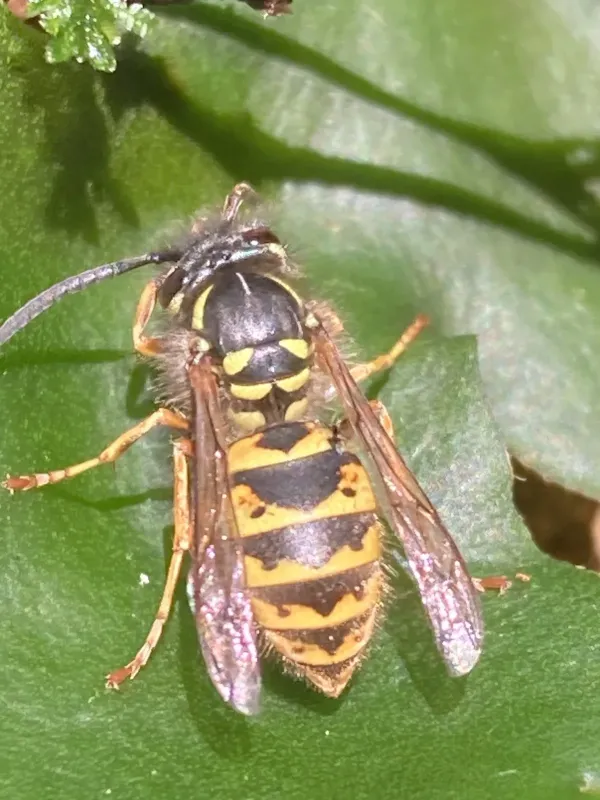
Description
How to identify
The common wasp (Vespula vulgaris) belongs to the order Hymenoptera, family Vespidae. Adults have a distinctive yellow and black abdominal pattern, measuring 12–17 mm for workers and up to 20 mm for queens. They are identified by a specific anchor-shaped mark on the clypeus.
What it damages
This species is a significant pest in orchards and vineyards. Wasps pierce the skin of ripening fruit to feed on the sweet flesh, causing rapid decay and secondary mold infections in the produce.
High-value crops like grapes, peaches, pears, plums, and raspberries are the most susceptible. Wasp damage destroys the marketability of the produce, leading to significant economic losses for growers.
When it appears
The colony cycle begins in early spring when the queen establishes a nest. The number of worker wasps increases throughout the summer, peaking in late July through September, which coincides with the harvest season.
As autumn approaches, the colony produces new queens and males. Once the reproductive cycle is complete, the old queen and workers perish, leaving the fertilized queens to overwinter in sheltered locations.
Signs of infestation
The presence of common wasps is easily detected by observing damaged fruit on the plant with hollowed-out sections of flesh. The activity around these fruits is usually high.
- Discovery of grey, paper-like nests in wall cavities, sheds, or underground.
- Persistent flight patterns of foraging wasps.
- Visible damage to skin of fruits, often leading to rapid fermentation and decay.
Control measures
Controlling Vespula vulgaris involves locating and destroying nests, ideally at night or dawn when the wasps are dormant. Use protective gear to avoid stings during removal.
Trapping is an effective non-toxic strategy for orchard protection. Hanging baited traps filled with sugary liquids or fermenting fruit extracts around the garden can reduce the number of foraging wasps significantly.
Cultural practices are essential: remove fallen fruit promptly and ensure waste bins are tightly sealed. Limit the use of chemical pesticides near harvest time to ensure the safety of the fruit for human consumption.
Taxonomy
- Latin name
- Vespula vulgaris
- Order
- Hymenoptera
- Family
- Vespidae
- EPPO code
- VESPVU
Discussion
No discussions yet — be the first.