
Odynerus
Odynerus
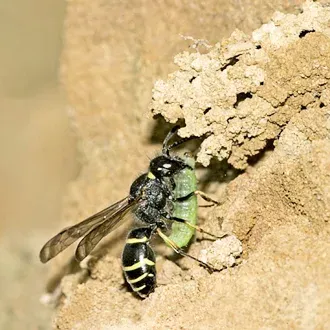
Description
How to identify
Odynerus is a genus of solitary wasps belonging to the family Vespidae. These insects typically exhibit a slender body structure with distinct black and yellow or black and white patterns, common among many vespid species.
Adults are characterized by well-developed mandibles and specific antennae structures, which in males often feature curved tips. Their body size generally ranges from 8 to 15 millimeters.
The life cycle involves complete metamorphosis, including egg, larva, pupa, and adult stages. Unlike social wasps, Odynerus wasps do not form large colonies and instead build individual nests within various cavities.
Females possess a stinger, which is primarily used to paralyze prey for their larvae rather than for defending the nest, as they maintain a secretive lifestyle.
The genus is widely distributed throughout Eurasia, often colonizing agricultural lands where they utilize natural hollows in plant stems or man-made structures as nesting sites.
What it damages
While Odynerus wasps are essentially entomophagous (predatory), their activity in agroecosystems can be detrimental to certain crops, as they use plant stems to construct their brood cells.
When colonizing the hollow stems of crops like sunflowers or raspberry canes, the females create partitions using mud or clay, which disrupts the structural integrity and nutrient flow of the plant.
The damage manifests as weakened stems that become brittle and susceptible to wind damage or mechanical stress, particularly during the fruit maturation stage.
Larvae developing within the stems can indirectly facilitate the entry of secondary pathogens, which may infect plant tissues through the holes made by the female during nest construction.
Mass colonization of plantations can lead to reduced crop yields, as the disruption of vascular tissues impairs the plant's overall vitality and productivity.
When it appears
The active development period for Odynerus occurs during the spring and summer months when stable temperatures facilitate the flight of adult wasps.
The first adult individuals typically emerge in May or June, which coincides with the period of active growth for most host plants suitable for nesting.
Depending on regional climatic conditions and the availability of prey, these insects may complete one or two generations within a single season.
Pupation generally occurs toward the end of summer or early autumn, after which the insects enter a state of diapause, remaining in their nests throughout the winter.
Environmental factors, such as prolonged rainfall or extreme heat, can influence the timing of emergence and the total population density for the current season.
Signs of infestation
The primary sign of Odynerus presence is the appearance of small, neatly formed holes on the cross-sections of stems, often sealed with clay or mud plugs.
One may observe dry, dying sections of the stem located above the nest site, indicating a blockage in the transport of nutrients due to the nest construction.
Evidence may include characteristic mud streaks on the exterior of stems, left behind by the female after completing the nesting and sealing process.
Upon splitting the damaged stems, one can find a series of individual cells separated by earthen partitions, containing cocoons or larvae of the wasp.
Heightened adult wasp activity around specific areas of the field is a common indicator, as they gather building materials for their nests.
Control measures
To prevent colonization by Odynerus, it is recommended to implement regular sanitary pruning and the destruction of post-harvest crop residues that may attract the wasps.
An essential element of management is agrotechnical control, specifically the timely removal of hollow plant stems that serve as potential overwintering sites.
Using protective netting on high-value crops during the peak period of wasp activity can effectively prevent females from entering and colonizing stems.
Chemical control is rarely advised, as Odynerus wasps act as natural predators, helping to regulate the populations of other insect pests in the ecosystem.
- Conduct regular field inspections for signs of stem damage.
- Promptly remove and destroy hollow plant debris.
- Follow crop rotation practices to reduce nesting grounds.
- Utilize biological control agents during peak adult activity if necessary.
Taxonomy
- Latin name
- Odynerus
- Order
- Hymenoptera
- Family
- Vespidae
- EPPO code
- ODYNSP
Discussion
No discussions yet — be the first.