
Saxon wasp
Dolichovespula saxonica
Description
How to identify
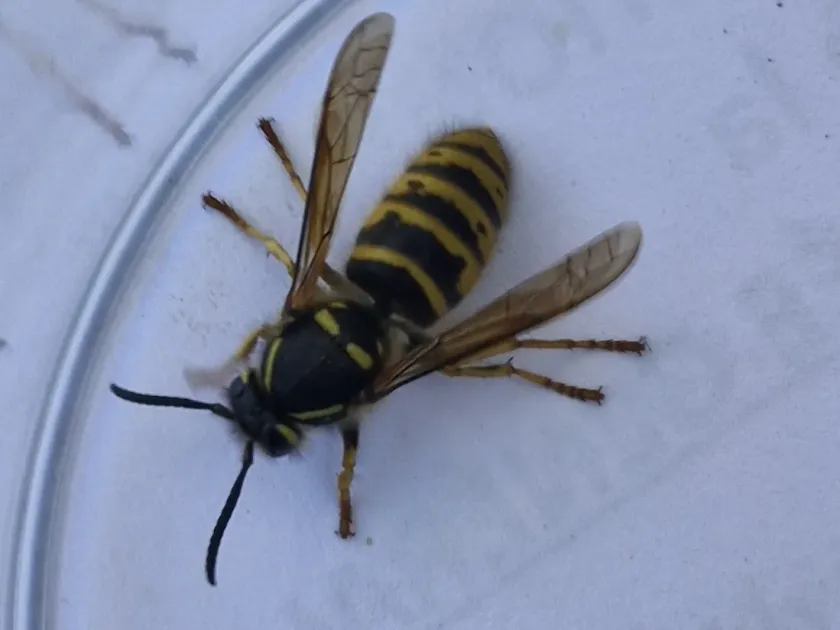
The Saxon wasp (Dolichovespula saxonica) is a species of social wasp belonging to the Vespidae family. It is easily identifiable by its black and yellow patterned abdomen and white facial markings.
These wasps are known for building aerial nests, often found in eaves of houses, on tree branches, or within dense garden shrubs, rather than underground.
The colony cycle is initiated by a single queen that emerges from hibernation in the spring to start building a new nest and rearing the first brood of workers.
As the season progresses, the colony expands, and workers become highly active in maintaining the nest and foraging for food to support the queen and developing larvae.
They are well-adapted to living near human settlements, which often leads to conflicts when their nesting sites are located in close proximity to human activity.
What it damages
Saxon wasps are considered agricultural pests because they frequently damage soft fruits, such as grapes, raspberries, apples, and pears, to feed on their sweet juices.
By chewing through the skin of the fruit, they render the crops aesthetically unappealing and susceptible to rapid decay due to introduced pathogens.
This feeding behavior facilitates the spread of various fungal and bacterial infections, leading to significant post-harvest losses and reduced shelf life of affected produce.
Beyond crop damage, the presence of these wasps poses a stinging hazard for orchard workers and gardeners, particularly during the harvesting period in late summer.
In commercial vineyards and fruit orchards, an unchecked population of Saxon wasps can lead to substantial financial losses and increased maintenance costs.
When it appears
The seasonal activity of the Saxon wasp begins in early spring, as queens become active and start constructing nests in suitable sheltered locations.
By mid-summer, the colony reaches its peak population size, coinciding with the period when many fruit crops begin to ripen and become vulnerable to wasp attacks.
Late summer and early autumn represent the period of highest interaction between the wasps and the fruit, as their natural food sources become scarcer.
As temperatures drop in autumn, the workers die off, and only the newly produced queens find protected sites to undergo winter diapause.
Understanding this timeline allows gardeners to implement preventative measures effectively before the colony reaches its full destructive potential.
Signs of infestation
The most visible sign of a Saxon wasp infestation is the presence of their gray, paper-like nests attached to structures or tree branches around the property.
Gardeners may observe irregular holes or chewed patches on the surface of ripe fruits, often accompanied by the presence of wasps feeding on the exposed flesh.
Consistent flight paths of wasps traveling to and from a specific point in a garden or hedge can indicate the precise location of a hidden nest.
An increased number of wasps congregating around areas where fruit is stored or processed is a clear indicator of a local colony's activity.
Agitated behavior of wasps near their nesting site or when disturbed by garden work confirms the proximity of a colony that may require management.
Control measures
The most effective strategy for managing Saxon wasps is the early detection and removal of nests in the spring before the colony size becomes significant.
Utilizing wasp traps containing sweet lures or fermented juices can help reduce the number of foraging adults and alleviate pressure on ripening fruits.
Mechanical protection, such as individual fruit bagging or installing fine-mesh netting over vineyards, offers a physical barrier against wasp access.
When handling large nests, it is essential to use appropriate personal protective equipment or contact professional pest control services to ensure safety.
- Regularly inspect eaves, sheds, and dense foliage for signs of new nests.
- Promptly clear away fallen and overripe fruit to minimize attractive food sources.
- Avoid leaving sweet drinks or uncovered food outdoors during peak wasp season.
Taxonomy
- Latin name
- Dolichovespula saxonica
- Order
- Hymenoptera
- Family
- Vespidae
- EPPO code
- DOLVSA
Discussion
No discussions yet — be the first.