
Median wasp
Dolichovespula media
Description
How to identify
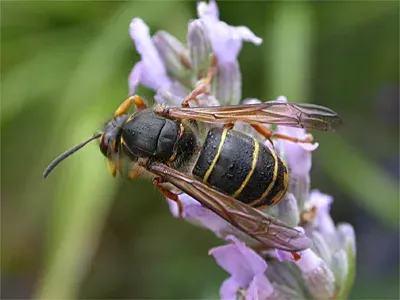
The median wasp (Dolichovespula media) is a social insect species belonging to the Vespidae family. Adults typically measure between 15 and 22 mm in length and are distinguished by their bright yellow and black coloration, along with dense hair on the thorax.
While queens and workers are physically similar in appearance, the queens are notably larger. A key diagnostic feature is their nest, which is typically spherical or elliptical in shape and usually suspended from tree branches or shrubs with a side entrance.
These wasps are generally less aggressive than other species, such as the common wasp, unless their nest is directly disturbed. Accurate identification often requires examining the structure of the clypeus, as the median wasp shares many visual characteristics with other Dolichovespula species.
The species follows a strict seasonal cycle. A single queen, having overwintered, initiates the colony in the spring. By mid-summer, the colony reaches its peak, often coinciding with the ripening season of various stone and pome fruits in orchards.
Taxonomically, the median wasp belongs to the order Hymenoptera. Its social structure and adaptability allow it to flourish in diverse environments, making it a regular visitor to gardens and orchards where it harvests both protein and carbohydrate sources.
What it damages
The median wasp causes significant damage to orchard fruits, particularly stone and pome varieties such as apples, pears, plums, and peaches. By chewing through the fruit's skin, they create access points for secondary infections, including fungal rots and bacteria.
Damaged fruits frequently lead to the rapid spoilage of surrounding crops on the tree, causing substantial loss of yield. This not only affects the harvest volume but also severely degrades the market quality of the fruit.
In addition to agricultural damage, these wasps can pose a threat to beekeeping operations. During periods of food scarcity, they may raid beehives, weakening the colonies and disrupting the vital pollination services that bees provide to the orchard ecosystem.
Human safety is a concern, especially during the harvest season. While the median wasp is not inherently aggressive, accidental contact with a nest hidden in the canopy can result in painful stings, necessitating caution during gardening activities.
Economic losses are particularly high during dry, hot summers. Under these conditions, the natural insect-based prey of the wasps becomes limited, forcing the colonies to rely more heavily on the sugary juices of ripening orchard fruits.
Signs of infestation
The presence of Dolichovespula media is primarily indicated by the discovery of their distinct paper nests. These structures are often found hanging from branches in the upper canopy of trees or attached to the eaves of outbuildings.
Visual inspection of the orchard usually reveals fruits with deep, irregular cavities or eaten patches. The edges of these wounds often appear darkened and shriveled due to the onset of decay accelerated by wasp feeding.
A high density of wasps hovering around ripening or fallen fruit is a clear sign of an established colony in the vicinity. Persistent activity on specific trees often correlates with the presence of a nest within that tree's crown.
An audible buzzing sound when approaching certain areas of the orchard is a strong indicator of nest activity. During the summer peak, workers are visibly active as they transport nectar and fruit pulp to sustain the developing brood.
Finding "emptied" skins of grapes or segments of fruit left on the trees is a primary indicator of wasp activity. These hollowed-out remnants prove that the colony is actively processing fruit sugars to fuel their development.
Control measures
The most effective management strategy is to identify and remove nests early in the season before the colony reaches its full size. Control measures should be carried out at night when the wasps are inside the nest and less active.
Using baited traps containing fermented juices, beer, or sweet syrups can successfully reduce the number of foraging workers. This method helps protect the main harvest by diverting the wasps away from the ripening fruit.
Orchard sanitation is a vital preventive practice. Promptly removing fallen, overripe fruit from the ground eliminates a primary food source for the wasps, making the orchard environment less attractive for colony expansion.
Chemical control with insecticides should be reserved for cases where nests are located in high-traffic areas posing a danger to humans. Always select products with low impact on beneficial pollinators and follow recommended safety intervals.
Mechanical protection, such as using fine mesh fruit bags or orchard netting, provides the most reliable and non-toxic way to safeguard high-value crops from wasp damage, ensuring a clean and safe harvest.
Taxonomy
- Latin name
- Dolichovespula media
- Order
- Hymenoptera
- Family
- Vespidae
- EPPO code
- DOLVME
Discussion
No discussions yet — be the first.