
Tree wasp
Dolichovespula sylvestris
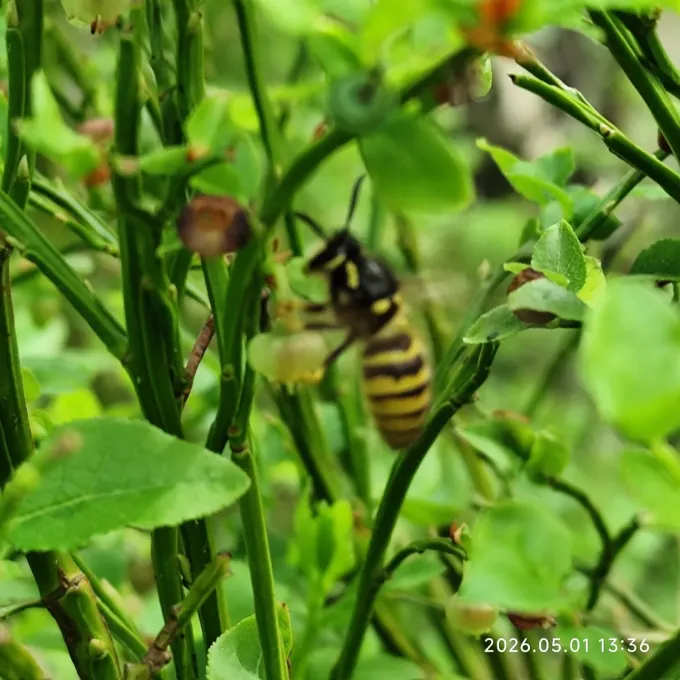
Description
How to identify
The tree wasp is a species of social wasp that is easily recognized by its distinct black and yellow markings on the abdomen. Workers typically grow to about 15-18 mm in length.
Unlike many other wasp species, the tree wasp constructs nests in aerial locations, often suspending them from tree branches or attaching them to the eaves of buildings.
The nest structure is composed of a paper-like material created by chewing wood fibers, which is formed into a characteristic rounded, multi-layered shell.
The colony cycle is strictly annual, initiated in the spring by a single queen that has survived the winter and is responsible for building the first stages of the nest.
As the season progresses, the queen focuses on egg-laying, while the emerging workers take over the duties of nest maintenance, foraging, and larvae rearing.
What it damages
The tree wasp is considered a pest in commercial orchards and private gardens because of its habit of feeding on sugary substances found in ripening fruits.
They often damage thin-skinned fruits like grapes, peaches, pears, and plums by chewing holes in the skin to reach the juice and pulp inside.
Once the fruit skin is broken, it becomes highly susceptible to fungal infections and rot, which leads to significant yield losses and reduces the market quality of the produce.
In vineyards, the damage can be particularly severe, as wasps can hollow out entire berries, leaving only the skins and attracting other pests like vinegar flies.
Furthermore, the defensive behavior of wasps when their nest is disturbed poses a health risk to gardeners and orchard workers during harvest time.
When it appears
The life cycle begins in early spring when queens emerge from their overwintering sites to find suitable locations to start new colonies.
The peak activity of the colony usually occurs between mid-summer and early autumn, which coincides with the maturation period of many fruit crops.
By late autumn, the colony begins to decline as the workers die off, and only the newly mated queens seek out sheltered locations to hibernate.
Proactive monitoring of tree canopies and building structures during the late spring months is essential to identify developing colonies before they reach peak size.
Environmental factors, such as unusually dry summers, can increase the pressure of wasps on orchards as they desperately seek water and carbohydrates from fruits.
Signs of infestation
The most obvious sign of an infestation is the presence of the wasps themselves, especially when they are seen foraging in high numbers around fruit trees.
Visual identification of paper nests hanging from branches or hidden in dense vegetation is a definitive indicator of the tree wasp's presence.
Evidence of damage includes small circular holes in fruit skins, often accompanied by decay or the presence of liquid exudate where the fruit was punctured.
Increased wasp activity around waste bins or compost piles, which contain fermenting organic matter, can also suggest a large colony is nearby.
Observing the flight paths of workers in the morning can lead a gardener directly to the location of the hidden nest.
Control measures
Effective management of tree wasp populations requires a combination of physical removal, trapping, and proper orchard sanitation.
- Removal of active nests should be done at night when the wasps are lethargic and most of the colony is inside.
- Setting up bait traps containing fermented juice, sugar water, or honey can help reduce the number of foraging workers.
- Strict sanitation practices, such as removing fallen fruit immediately, help to minimize the attractants in the garden.
- Using protective netting or fruit bags to shield individual grapes or high-value fruit clusters from wasp damage.
- Wearing protective clothing and ensuring caution during harvest periods when working in proximity to nests.
Taxonomy
- Latin name
- Dolichovespula sylvestris
- Order
- Hymenoptera
- Family
- Vespidae
- EPPO code
- VESPSI
Discussion
No discussions yet — be the first.