
Southern yellowjacket
Vespula squamosa
Description
How to identify
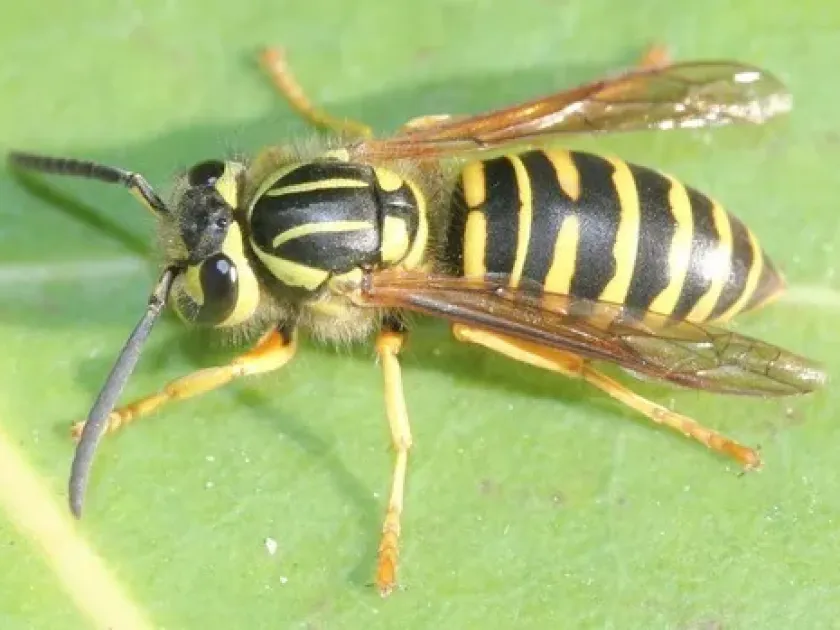
The Southern yellowjacket, scientifically known as Vespula squamosa, belongs to the Vespidae family of social wasps.
These insects are characterized by a distinct black and yellow pattern, with the queens often exhibiting a unique reddish-orange coloration on their thorax.
Unlike many other species, they are primarily ground-nesting, often occupying abandoned rodent burrows or other subterranean cavities.
Their life cycle involves a queen emerging from hibernation in the spring to establish a new colony, followed by the development of workers.
Colonies can grow quite large throughout the summer, reaching their peak population just before the onset of cooler autumn weather.
What it damages
This species is considered an agricultural pest because it feeds on various fruits, including grapes, peaches, plums, and figs.
The wasps tear into the skin of the fruit to reach the sugary pulp, causing physical damage that leads to rapid spoilage.
The damaged areas on the fruit provide entry points for secondary infections such as fungal rots and various bacteria.
Their aggressive nature toward humans makes harvesting operations dangerous, often forcing workers to stop activities in infested areas.
By consuming ripening crops, they can significantly reduce the marketability and yield of orchard products.
Signs of infestation
One primary sign of an infestation is the presence of fruit with small, irregular holes or hollowed-out sections still on the tree or vine.
Increased activity of yellow wasps around the base of trees or shrubs often indicates a hidden subterranean nest nearby.
The presence of moldy, rotting fruit that has been partially consumed by insects is a strong indicator of yellowjacket foraging activity.
During warm days, a noticeable increase in buzzing noise near the ground often signifies a busy entrance to a colony's nest.
Finding individual worker wasps repeatedly returning to a specific spot in the soil is a direct visual clue of nest location.
Control measures
Setting up traps containing bait, such as fruit juice or sugar water, can help reduce the local population of foraging workers.
Removing fallen and overripe fruit from the orchard floor is critical, as it eliminates essential food sources for the wasps.
Targeted nest destruction using approved insecticidal dusts or aerosols applied at night is the most effective way to eliminate a colony.
For high-value crops, utilizing fine mesh netting can physically exclude wasps and protect the ripening harvest from damage.
Maintaining soil health and performing regular cultivation can discourage wasps from selecting certain areas to establish their underground nests.
Taxonomy
- Latin name
- Vespula squamosa
- Order
- Hymenoptera
- Family
- Vespidae
- EPPO code
- VESUSQ
Discussion
No discussions yet — be the first.