
Red wasp
Vespula rufa
Description
How to identify
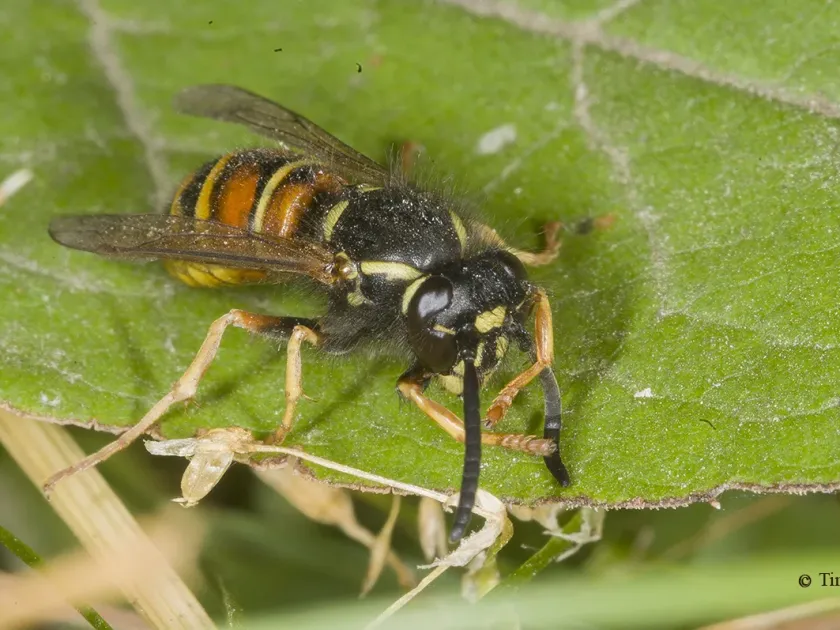
The red wasp (Vespula rufa) is a species of social wasp belonging to the family Vespidae, order Hymenoptera. It is characterized by the distinct reddish-brown color of the first and second abdominal tergites.
The queens reach up to 20 mm in length, while workers typically measure between 12 and 15 mm. They feature a specific yellow head pattern and yellowish spots on the sides of the pronotum.
Unlike many other common wasp species, Vespula rufa typically builds its nests underground, often utilizing abandoned rodent burrows or cavities under thick turf or dense vegetation.
The nest is encased in a papery, spherical envelope made by the workers, who chew wood fibers and mix them with saliva to create this protective structure.
These wasps can be highly defensive, especially near their nest entrance. Due to their territorial nature, manual intervention near nest sites requires significant caution.
What it damages
The red wasp is known for its impact on horticulture, particularly during the late summer when ripening fruits become their primary target for carbohydrate intake.
They damage a wide range of crops including strawberries, raspberries, currants, cherries, and grapes by gnawing into the skin and consuming the sweet juices.
Once a fruit is damaged, it quickly loses its market value and becomes susceptible to secondary infections like mold or fermentation, which can lead to rapid fruit rot.
In hot and dry weather conditions, the wasps' need for moisture increases, leading to more frequent attacks on fruit crops as they exploit the high water content of berries.
Beyond crop loss, the presence of large populations poses a health risk to workers, as the insects may sting if they are disturbed during feeding or foraging.
When it appears
The colony cycle begins in early spring when the hibernated queen emerges from her overwintering site to locate a suitable spot to start a new nest.
The first batch of worker wasps emerges in June, at which point the nest starts growing rapidly as the workforce expands to provide for the brood.
Peak activity and colony population density occur in July and August, coinciding perfectly with the peak harvest season for many soft fruit crops.
By September, the colony starts to decline as workers die off and new reproductive queens look for protected areas to hibernate until the following year.
The duration of the active season is highly dependent on local climate, typically lasting until the first hard autumn frosts arrive in the region.
Signs of infestation
One of the earliest signs of activity is the presence of small, circular holes in ripening fruit, often accompanied by the visual confirmation of wasps on the plants.
Frequent flight activity near specific points in the ground or hidden areas within the garden suggests the presence of a nearby underground nest.
Finding discarded "paper" debris near roots or shrubbery indicates that a nest is being actively expanded or maintained by the colony workers.
A sudden, high concentration of wasps around watering holes, garden hoses, or ripening fruit clusters is a strong indicator of a significant local population.
Persistent buzzing sounds in areas with abundant fruit are tell-tale signs that these insects are foraging in the immediate vicinity.
Control measures
Direct nest control is most effective when performed at night, as the entire colony is gathered inside and less aggressive than during the daytime.
Hanging traps baited with fermenting sugar solutions, syrups, or beer can effectively capture foraging workers and alleviate pressure on the fruit crops.
Exclusion methods, such as covering fruit clusters or entire rows with fine-mesh netting, provide the most reliable protection against wasp damage.
Maintaining a clean garden environment by promptly harvesting ripe produce and disposing of fallen fruit reduces the incentive for wasps to congregate.
When chemical control is necessary, use products approved for use in gardens, always following the label instructions to ensure safety and effectiveness.
Taxonomy
- Latin name
- Vespula rufa
- Order
- Hymenoptera
- Family
- Vespidae
- EPPO code
- PAVSRU
Discussion
No discussions yet — be the first.