
Western yellowjacket
Vespula pensylvanica
Description
How to identify
The Western yellowjacket (Vespula pensylvanica) is a member of the Vespidae family. It is a highly social insect that constructs large colonies organized into a complex caste system.
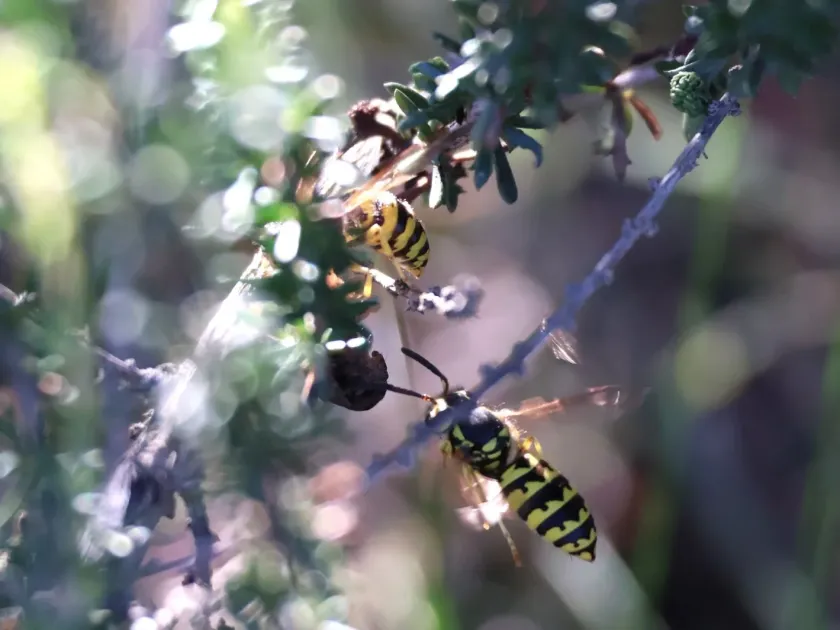
Visually, these wasps are recognized by their distinct yellow and black abdominal patterns and a specific yellow ring around each eye, which helps distinguish them from other species.
Worker wasps typically measure 10 to 15 mm in length, while the queen is noticeably larger. They are known for their aggressive territorial defense if their nest is disturbed.
The primary habit of this species is nesting underground, often utilizing abandoned rodent burrows. This subterranean lifestyle makes their nests difficult to locate and manage.
The colony cycle is annual; the entire colony dies out in the late autumn, leaving only the newly mated queens to hibernate and start the cycle anew the following spring.
What it damages
The Western yellowjacket is a major pest for orchardists and vineyard owners, as it feeds on soft, sugar-rich fruits including grapes, apples, pears, and stone fruits.
By chewing through the skin of ripening fruits, they cause extensive damage, rendering the harvest unmarketable and inviting secondary mold and bacterial decay.
Furthermore, these wasps are notorious for bothering apiaries, where they may enter beehives to steal honey or prey upon bee larvae, weakening the honey bee colonies.
In addition to agricultural damage, they pose a significant stinging hazard to agricultural workers during the harvest season when the wasps are most active and defensive.
- Direct consumption of fruit pulp.
- Secondary damage via fungal rot in damaged fruits.
- Interference with beekeeping operations.
- Safety hazards for human workers during fruit collection.
When it appears
The season begins in spring when the queen emerges from hibernation to select a nesting site. During this phase, population levels are extremely low and unnoticeable.
As the season progresses into summer, the number of workers increases rapidly as the colony focuses on expanding the nest and rearing new brood.
Late summer and early autumn represent the peak activity period, as the colony shifts its nutritional needs toward carbohydrates, leading them to infest orchards.
The activity level remains high until the arrival of colder temperatures and frost, which trigger the collapse of the social structure of the colony.
Climatic factors play a crucial role in the lifespan of the colony, with warmer, longer summers leading to larger colonies and more prolonged damage periods.
Signs of infestation
The most common sign is the discovery of an entry hole in the soil, often accompanied by active flight paths of workers entering and exiting the nest throughout the day.
Large congregations of yellowjackets feeding on fallen or hanging fruits in an orchard indicate a nearby colony that is foraging for sugar sources.
The physical destruction of fruit skins, characterized by hollowed-out areas or jagged punctures, is a primary indicator of wasp feeding activity in the vineyard or orchard.
Increased wasp presence near specific areas of the property, especially when they display defensive flight patterns, often signals a hidden subterranean nest location.
During the harvest, the presence of these wasps around collection bins or processing equipment is a common sign of high localized populations.
Control measures
The most effective strategy for nest management involves locating the underground entrance and applying approved residual insecticides, preferably after dusk when activity is minimal.
Trapping using bait stations with specific attractants can help reduce the population of foraging workers, though this is often insufficient as a standalone control method.
Proper orchard sanitation is vital; regularly removing fallen, decaying, or overripe fruit denies the wasps a crucial food source, discouraging them from nesting nearby.
Physical exclusion methods, such as bagging individual fruit bunches or covering trees with fine mesh netting, provide excellent protection in high-value fruit production.
Always use personal protective equipment when dealing with yellowjackets, as they are prone to stinging in large numbers if the colony feels threatened.
Taxonomy
- Latin name
- Vespula pensylvanica
- Order
- Hymenoptera
- Family
- Vespidae
- EPPO code
- VESUPE
Discussion
No discussions yet — be the first.