
Eastern yellowjacket
Vespula maculifrons
Description
How to identify
The Eastern yellowjacket (Vespula maculifrons) is a social wasp species belonging to the family Vespidae, known for its complex colony structure.
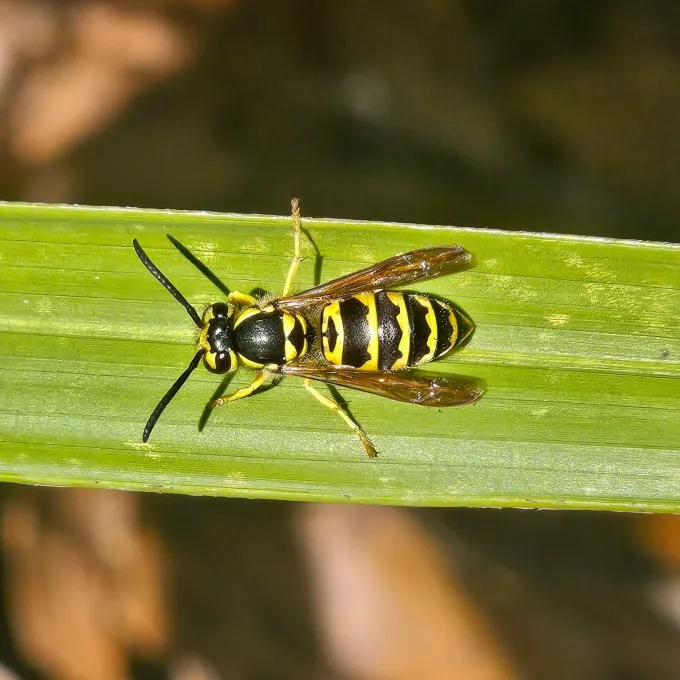
Workers are typically 10–12 mm long, displaying the iconic yellow and black striped coloration typical of the genus Vespula.
They can be identified by specific markings on the clypeus and the abdominal pattern, which helps distinguish them from other look-alike hornet species.
The colony is founded by a single queen, who emerges in the spring to select a nesting site and begin rearing the first generation of workers.
Nests are primarily constructed underground, often in old rodent burrows or cavities, making them difficult to locate until the colony becomes large.
What it damages
While Eastern yellowjackets are not direct herbivores, they pose a significant threat to agriculture by damaging ripening fruits and berries in orchards.
They consume the flesh of fruits like grapes, peaches, pears, and plums, often causing cosmetic damage that makes the produce unmarketable.
By breaking the skin of the fruit, they facilitate the entry of rot-inducing fungi and bacteria, which can lead to rapid post-harvest losses.
Their presence disrupts harvesting operations, as workers become highly protective of their nests and will sting if disturbed during farm work.
They also act as competitors for nectar resources, displacing beneficial pollinators like honeybees and thus potentially reducing pollination rates.
When it appears
The colony cycle begins in early spring as overwintering queens emerge from hibernation to initiate the development of a new nest.
As the season progresses through summer, the worker population grows rapidly, peaking in late summer and early autumn when food needs are greatest.
In late autumn, the colony produces reproductive individuals, and the workers eventually die off as temperatures begin to drop significantly.
Only the newly mated queens survive the winter, seeking out sheltered locations such as soil crevices or woodpiles to enter diapause.
The success of the colony in the following year depends heavily on the survival of these queens during the winter and favorable spring weather.
Signs of infestation
Visible activity of wasps congregating around ripening fruit or sugary spills is a primary indicator of a nearby Eastern yellowjacket presence.
Fruits showing irregular, deep feeding holes or hollowed-out sections are classic signs of wasp feeding damage in the orchard or vineyard.
The presence of steady flight paths of wasps traveling to a single point on the ground often reveals the entrance to an underground nest.
Increased aggression when human activity occurs near specific areas of the yard suggests the location of an active colony entrance.
Finding large numbers of wasps in trash bins, near fruit trees, or around sweet baits consistently throughout the day points to a large local colony.
Control measures
The most effective long-term management strategy is locating and destroying the nest, preferably at night when the colony is less active.
Using traps baited with sugar water, fruit juices, or proteins can help reduce the number of foraging workers in localized areas.
Sanitation is key; removing fallen, overripe, and damaged fruit from the ground reduces the primary food source attracting wasps to the area.
Protecting valuable fruit, such as table grapes, with fine mesh bags can physically exclude wasps and prevent damage during the ripening phase.
Chemical control should be used sparingly and targeted directly at the nest entrance according to the product label to minimize environmental impact.
Taxonomy
- Latin name
- Vespula maculifrons
- Order
- Hymenoptera
- Family
- Vespidae
- EPPO code
- VESUMF
Discussion
No discussions yet — be the first.