
Yellow-haired wasp
Vespula flavopilosa
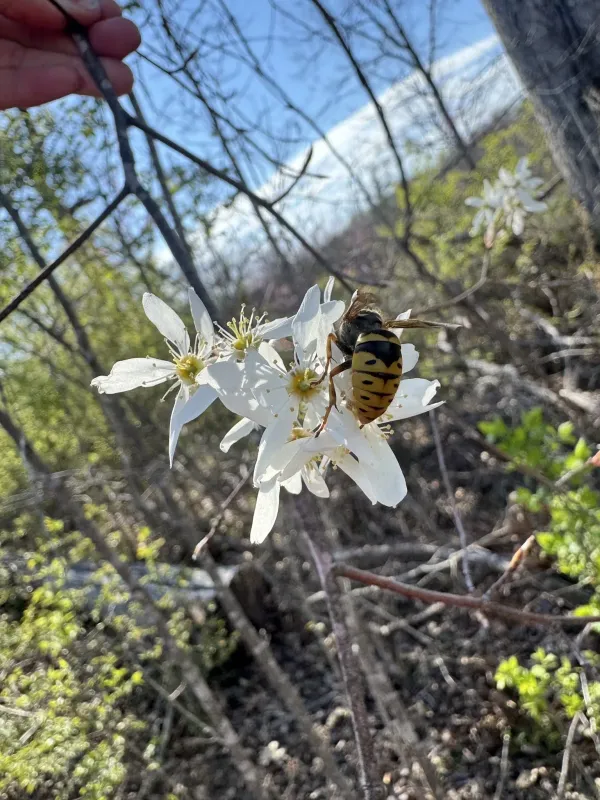
Description
How to identify
The yellow-haired wasp (Vespula flavopilosa) belongs to the Hymenoptera order and the Vespidae family. It is a social insect that lives in colonies with a strict caste system.
The species is named for the dense, yellowish hairs covering its body, which distinguish it from other related wasp species. The abdomen exhibits the standard yellow and black warning coloration.
Workers measure between 12 and 15 mm in length, while the queen is significantly larger, being the sole reproductive member of the colony.
These wasps typically construct their nests underground, often utilizing abandoned rodent burrows or natural soil cavities.
They are active during daylight hours and are highly protective of their nests, often displaying aggressive behavior when disturbed.
What it damages
This species is considered an agricultural pest, primarily damaging fruit and berry crops such as grapes, peaches, pears, and raspberries.
The wasps damage fruits by chewing through the skin to feed on the sugary juices, which leads to fruit rot and secondary fungal infections.
The damage caused by wasps often attracts other pests, such as ants and beetles, to the fruit, worsening the overall condition of the yield.
In cases of high infestation, wasps can cause significant economic losses, affecting up to a quarter of the harvest in susceptible orchards.
Even minor feeding damage makes fruit unmarketable and unsuitable for storage, as the affected areas quickly deteriorate.
When it appears
The lifecycle begins in early spring when the hibernating queen emerges to establish a new nesting site.
Colony numbers increase throughout the summer, reaching their peak in late summer and early autumn when the number of workers is highest.
The period of greatest agricultural concern is August and September, which aligns with the ripening of many late-season fruit varieties.
As temperatures drop in autumn, the colony begins to decline, and new queens disperse to find secure hibernation sites.
The length of the active season is highly dependent on climate, with warmer regions seeing extended periods of wasp activity.
Signs of infestation
A primary indicator of a yellow-haired wasp presence is a large number of individuals congregating around ripening fruit.
Visual evidence includes small, jagged holes in the skin of fruit, often accompanied by moist, darkened patches of rotting tissue.
Observing flight paths that converge at a single point on the ground often reveals the location of an underground nest.
The presence of hollowed-out berry skins, particularly on grape clusters, indicates that the colony has been feeding in the area for some time.
Increased buzzing and aggressive behavior near fruit trees or specific ground locations indicate a well-established colony.
Control measures
Using bait traps filled with fermented fruit juice or sugar water mixed with a contact insecticide is a common and effective control method.
Locating and destroying underground nests by applying boiling water or insecticide dust during the evening hours can significantly reduce local populations.
For high-value crops like grapes, covering clusters with fine-mesh protective bags is the most reliable non-chemical way to prevent wasp damage.
Sanitation practices, such as removing all fallen or rotting fruit from the orchard floor, help eliminate food sources that attract wasps.
Managing the orchard environment by filling in abandoned rodent holes and removing garden debris reduces suitable nesting sites for the wasps.
Taxonomy
- Latin name
- Vespula flavopilosa
- Order
- Hymenoptera
- Family
- Vespidae
- EPPO code
- VESUFL
Discussion
No discussions yet — be the first.