
Western yellowjacket
Vespula atropilosa
Description
How to identify
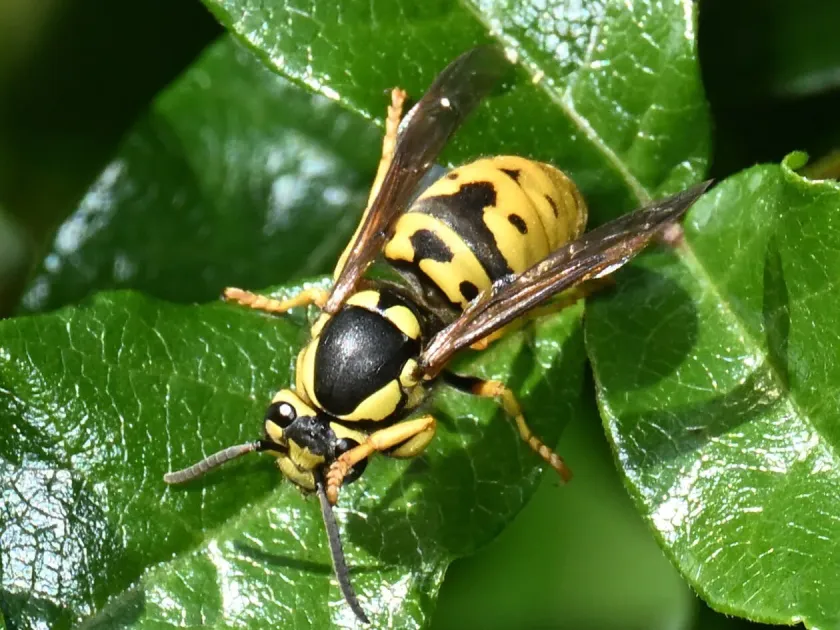
The Western yellowjacket belongs to the order Hymenoptera and the family Vespidae. This species is easily identified by the distinct, dense hair covering its thorax, which differentiates it from other yellowjackets.
Adults exhibit the classic black and yellow warning coloration typical of the genus Vespula, but their fuzzy appearance gives them a more robust and darker look.
Worker wasps typically measure between 12 and 15 mm in length, with queens being notably larger. The dense pale hair on the head and thorax is a key diagnostic feature.
These wasps are ground-nesters, frequently utilizing abandoned rodent burrows or cavities under tree roots. They are primarily distributed across western North America.
For accurate identification in the field, look for their specific nesting habits and observe the thick pubescence using macro photography, which distinguishes them from "smooth" wasp species.
What it damages
The primary agricultural concern is the damage caused to ripening fruits and berries. The wasps chew through the fruit skin, causing rapid decay and spoilage.
Vineyards, apple orchards, and pear trees are particularly susceptible. Damaged fruit quickly loses marketability and becomes an entry point for fungal infections and rot.
In addition to feeding on fruit juices, these wasps act as vectors for various plant pathogens that enter the fruit tissue through the feeding wounds.
The peak foraging activity coincides with the final ripening phase of the harvest, making it a critical period for protecting crops during the summer months.
While they may act as occasional predators of other small insects, the damage they inflict on crops and the risk of stings to orchard workers make them undesirable in agricultural settings.
When it appears
The life cycle begins in early spring, when the overwintering queen emerges from dormancy to establish a new colony within a soil cavity.
Worker activity reaches its maximum during mid-summer, as the colony population grows and the demand for carbohydrate-rich food for larvae increases.
August and September are the months of highest fruit damage, as the natural availability of alternative prey and nectar sources begins to decline.
As autumn temperatures drop, colony activity decreases significantly, workers die off, and newly fertilized queens seek sheltered locations for overwintering.
Understanding this seasonal progression allows agronomists to implement early-season management strategies to prevent population explosions during the harvest window.
Signs of infestation
The first sign of an infestation is the appearance of numerous small, excavated holes in ripe fruit, often accompanied by leaking sap.
High insect activity around fruit trees or vines, characterized by persistent buzzing and circling, is a clear indicator of a foraging population.
The presence of soil-level openings with worker wasps entering and exiting suggests the location of a nest in the immediate vicinity.
Damaged fruit often becomes sticky due to exuding juices, which subsequently attracts secondary pests such as ants, fruit flies, and beetles.
If fruit begins to fall prematurely or shows deep, jagged craters in the skin, it is a primary cue to inspect the orchard for Vespula atropilosa nests.
Control measures
Locating and destroying ground nests during the evening or night, when wasps are least active, is the most effective way to eliminate a localized problem.
The use of commercial or DIY traps baited with sugar solutions or fermented fruit juices can significantly reduce the number of foraging workers in the area.
Physical exclusion methods, such as bagging individual grape clusters or using fine-mesh netting, are highly effective in protecting high-value crops.
Maintaining orchard hygiene by promptly removing fallen and overripe fruit removes the primary attractant and food source for the wasps.
- Deploying pheromone or bait traps around the perimeter.
- Conducting routine ground surveys to identify and mark nest entrances.
- Using plant-based essential oil repellents for temporary protection.
Taxonomy
- Latin name
- Vespula atropilosa
- Order
- Hymenoptera
- Family
- Vespidae
- EPPO code
- VESUAT
Discussion
No discussions yet — be the first.