
Aerial yellowjacket
Vespula arenaria
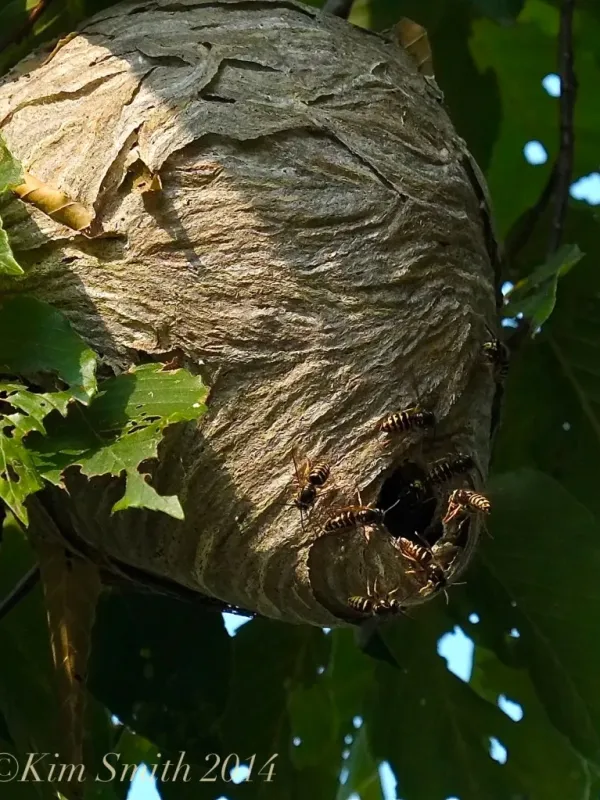
Description
How to identify
The aerial yellowjacket, scientifically known as Dolichovespula arenaria, is a common social wasp species easily recognized by its distinctive yellow and black abdominal patterns.
These wasps are known for building aerial nests, which are typically paper-like structures suspended from tree branches, shrubbery, or the eaves of buildings and sheds.
The colony structure is organized around a single queen, with a large workforce of female workers responsible for nest expansion, foraging, and protecting the hive from threats.
They are characterized by a relatively hairy body compared to other Vespula species, which helps them regulate internal nest temperatures in varying weather conditions.
When disturbed, these wasps exhibit high levels of defensive behavior, making the vicinity of a nest a high-risk zone for workers and gardeners alike.
What it damages
Although they provide ecological benefits by preying on other pest insects, aerial yellowjackets become problematic when they shift their diet to include ripe fruit in late summer.
They use their powerful mandibles to puncture the skin of thin-skinned fruits like grapes, peaches, pears, and apples, creating access points for fruit juices and pulp.
This damage serves as a primary vector for secondary infections, including fungal rots and mold, which can rapidly spread across the entire harvested crop if not addressed.
In addition to direct fruit losses, their presence significantly complicates manual harvesting activities, forcing workers to work in hazardous conditions near active nests.
While they do not consume large amounts of plant foliage, the cumulative impact of their feeding behavior on orchard productivity can be economically significant.
When it appears
The lifecycle kicks off in early spring when overwintered queens emerge to scout for suitable nesting sites and start building the foundation of a new colony.
As the season progresses into June and July, the colony enters a rapid growth phase, with the worker population expanding significantly to meet the needs of the developing brood.
By late summer, specifically August and September, the shift towards carbohydrate-rich diets leads the wasps to feed aggressively on ripe, sugar-rich fruits in the garden.
During the onset of autumn, the queen stops laying eggs, and the colony production of new queens and males occurs before the nest eventually declines in activity.
Only the newly fertilized queens survive the winter by hibernating in protected locations, such as rotting logs, soil crevices, or man-made structures.
Control measures
Effective management begins with regular inspections of property and garden structures to identify and remove nascent nests early in the spring before population numbers explode.
Installing baited traps with sugary fluids or fermenting fruit juices can successfully divert foraging workers away from the ripening harvest and reduce pressure on the crops.
Sanitation is key; frequent removal of fallen, overripe, or damaged fruit from the ground significantly limits the food supply that draws wasps into the orchard area.
In cases of high infestation, professional pest control services should be contacted, as destroying large nests manually carries a high risk of aggressive defensive stings.
Physical exclusion methods, such as netting over sensitive fruit-bearing trees or vines, provide a safe and chemical-free way to ensure crops remain untouched by wasps.
Taxonomy
- Latin name
- Vespula arenaria
- Order
- Hymenoptera
- Family
- Vespidae
- EPPO code
- VESUAR
Discussion
No discussions yet — be the first.