
Acadian yellowjacket
Vespula acadica
Description
How to identify
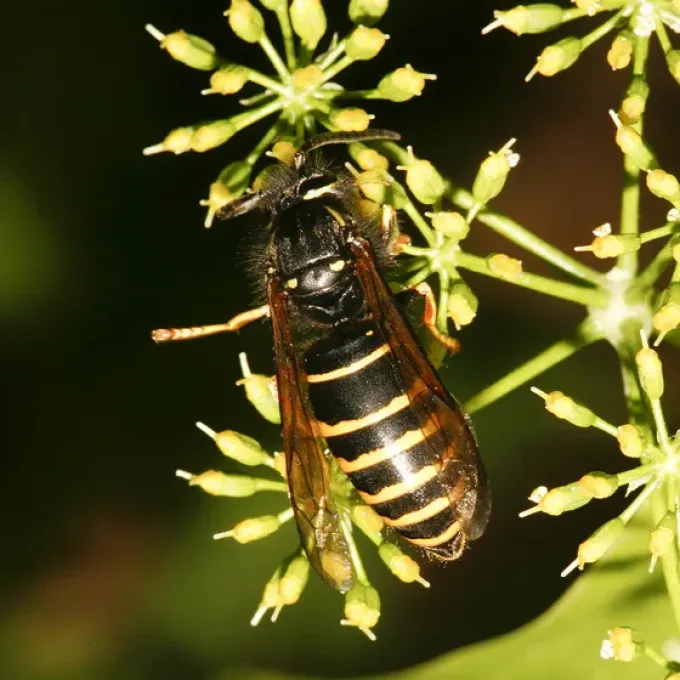
The Acadian yellowjacket (Vespula acadica) is a species of social wasp belonging to the Vespidae family. Adults exhibit the characteristic yellow and black coloration typical of the Vespula genus.
These wasps are often difficult to distinguish from other yellowjacket species in the field, as they share similar morphological characteristics and coloration patterns on the head and abdomen.
The colony cycle begins when an overwintering queen emerges in spring to establish a new nest. Worker wasps soon take over the tasks of foraging and colony maintenance.
Acadian yellowjackets typically nest in the ground or in hidden cavities, making their nests less conspicuous than aerial ones, which often leads to late detection by gardeners and farmers.
The colony size is generally moderate, yet they can become highly problematic when nesting in areas adjacent to high-value fruit orchards or vineyard plots.
What it damages
The primary economic damage caused by the Acadian yellowjacket occurs when they feed on ripening fruits, such as grapes, plums, pears, and various berry crops.
By chewing through the skin of the fruit, these wasps expose the flesh to air and moisture, which quickly leads to the development of rots, molds, and secondary fungal infections.
This damage significantly reduces the marketability of the crop, as the fruit becomes unsightly and prone to rapid decomposition, often resulting in total loss of affected clusters.
Beyond direct damage to fruit, these wasps pose a nuisance to orchard workers, as their tendency to defend their food sources leads to frequent stings during harvest periods.
During hot and dry summers, the pressure on fruit crops increases as these wasps seek out sugary moisture sources, making the damage more widespread across the garden.
When it appears
The activity of the Acadian yellowjacket is seasonal, beginning with the queen's emergence and nest site selection in the early spring months.
The peak activity of worker wasps occurs during the mid-to-late summer months, coinciding perfectly with the ripening times of most major fruit and berry varieties.
As summer progresses, the demand for carbohydrates to feed the growing brood increases, leading to more aggressive foraging behavior near agricultural sites.
As autumn approaches, the activity level starts to decline, although workers remain a constant threat to late-season produce until the first frost kills the colony.
The annual cycle ends with the death of the workers and the old queen, leaving only newly mated queens to enter diapause and survive the winter.
Control measures
Effective control measures include the strategic placement of wasp traps baited with fruit-based lures to reduce the local population of foraging workers.
Good sanitation practices are crucial; removing fallen or rotting fruit from the orchard floor prevents the concentration of wasps in the harvest area.
In cases of infestation, direct treatment of the ground nest with approved insecticides during evening hours can be effective, as the entire colony is typically present.
Physical barriers, such as protective netting over grapevines or fruit trees, offer the most reliable protection against wasp damage in small-scale home gardens.
- Regular monitoring of the garden for nest entrances.
- Use of pheromone or bait-based trapping stations.
- Timely removal of damaged fruit to reduce attraction.
Taxonomy
- Latin name
- Vespula acadica
- Order
- Hymenoptera
- Family
- Vespidae
- EPPO code
- VESUAC
Discussion
No discussions yet — be the first.