
Common wasp
Vespula
Description
How to identify
The common wasp (Vespula vulgaris) belongs to the Hymenoptera order, Vespidae family. It is a social insect known for its complex colony structure.
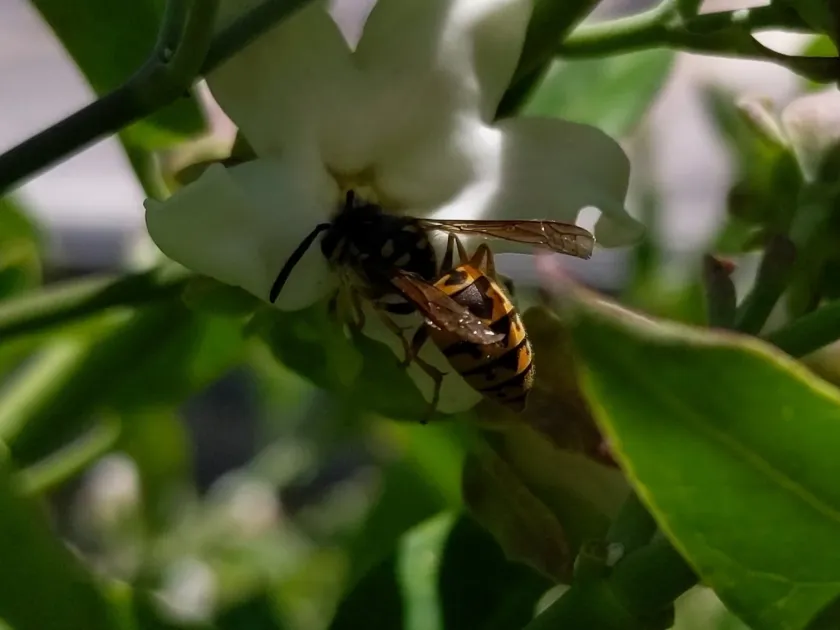
Worker wasps measure 12–17 mm in length. They are easily identified by their iconic yellow and black striped abdominal pattern and narrow waist.
Queens are significantly larger, growing up to 20 mm. Larvae are soft-bodied and develop within hexagonal wax cells inside the nest, fed by workers.
Wasps are highly active diurnal insects with strong, chewing mandibles capable of piercing even the tough skins of various fruits and berries.
The colony operates through a caste system, with a single queen responsible for reproduction and thousands of workers maintaining the nest and foraging.
What it damages
Common wasps are significant pests in orchards and vineyards, causing substantial economic loss during the ripening of fruits.
Grapes are particularly vulnerable; wasps hollow out the berries, which invites rot, fermentation, and secondary infestations by other insects.
Orchard fruits such as pears, apples, peaches, and plums are frequently damaged, as wasps feed on their juicy flesh, leaving behind deep cavities.
Damage to the outer skin of fruits ruins their marketability and makes them susceptible to rapid spoilage during storage and transportation.
In addition to agricultural damage, wasps can sometimes prey on beneficial insects, potentially disrupting the natural biocenosis of the garden.
When it appears
The cycle begins in spring when the overwintered queen emerges to establish a new nesting site and begin the first brood.
Colony numbers expand rapidly throughout June and July, reaching their maximum size and activity levels in late August and September.
This peak season corresponds with the ripening of many fall fruits, making the damage inflicted by wasps most severe at this time.
As temperatures drop in October, the colony begins to decline, workers die off, and young queens seek protected locations for hibernation.
The overall damage potential is highest when warm weather coincides with the peak abundance of ripe fruit in the orchard.
Signs of infestation
The primary indicator of a wasp infestation is the visual observation of high numbers of insects swarming around fruit-bearing trees or vines.
Specific signs include hollowed-out fruit or berries with visible entrance holes that often start to ferment or rot on the branch.
Locating active nests in building eaves, hollow trees, wall cavities, or underground is a certain sign of a resident colony nearby.
Persistent flight paths of wasps to and from a specific location during sunny hours often reveal the proximity of a hidden nest.
The presence of aggressive behavior and a loud buzzing sound near fruit harvest sites is a classic warning sign of high wasp activity.
Control measures
Effective management involves reducing the colony's attraction to the garden and implementing physical control methods.
- Deploying pheromone or liquid-based traps (e.g., sugar water with yeast) to capture workers and reduce foraging pressure.
- Regular harvesting of ripe fruit and cleanup of fallen produce to eliminate accessible food sources.
- Applying protective netting to fruit trees and grape vines to physically block wasps from accessing the ripening crops.
- Destroying nests during late evening or early morning when insects are inactive and inside, using appropriate safety gear.
- Applying professional-grade insecticides to nest entrances if physical destruction is not viable or deemed too dangerous.
Taxonomy
- Latin name
- Vespula
- Order
- Hymenoptera
- Family
- Vespidae
- EPPO code
- VESUSP
Discussion
No discussions yet — be the first.