
Vespa soror
Vespa soror
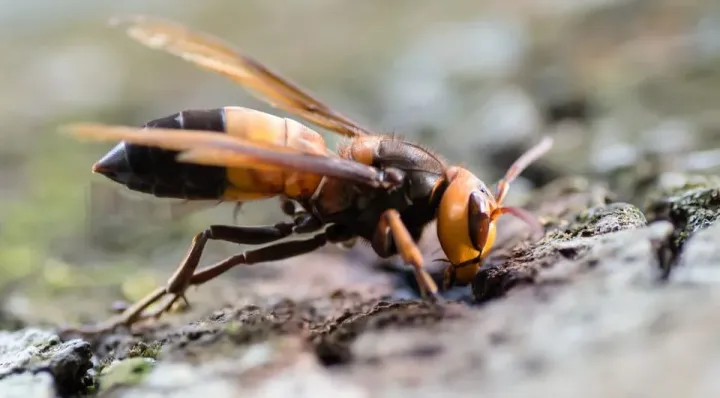
Description
How to identify
Vespa soror is a large species of hornet belonging to the Vespidae family, order Hymenoptera. Known for its significant size and robust build, this insect is a formidable presence in forest and agricultural landscapes.
The hornet displays distinct coloration with yellow and black patterns. The head and thorax are often characterized by specific dark markings, and their overall size is larger than that of many common European hornet species.
These hornets are highly social insects that build intricate nests. These structures are typically composed of a paper-like material created from chewed wood fibers, usually situated in well-protected areas such as hollow logs or building cavities.
A colony is established by a single queen in the spring. As the season progresses, she produces a large workforce that handles the foraging, nest maintenance, and defense duties for the duration of the cycle.
Due to their aggressive nature, especially when the nest is disturbed, they pose a significant challenge to farmers and orchard owners during maintenance and harvesting activities.
What it damages
The primary agricultural damage caused by Vespa soror is the destruction of ripening fruit. Hornets use their mandibles to chew through the skin of fruits like peaches, pears, grapes, and apples to reach the sweet pulp.
This feeding behavior creates open wounds on the fruits, which serve as entry points for secondary infections such as fungal rot. As a result, healthy fruit in the surrounding cluster often begins to decay rapidly.
Furthermore, Vespa soror is a direct threat to apiculture. They are known to attack honey bee colonies, killing workers and consuming the brood, which can lead to the total collapse of the hive.
The presence of large numbers of hornets in an orchard environment significantly hinders the work of human pickers, increasing the risk of painful stings during the harvest season.
The cumulative economic impact is severe, as damaged produce is rendered unsellable, and the stress placed on the orchards affects overall yield quality and quantity.
When it appears
The annual life cycle begins in early spring, when the queen emerges from hibernation to start a new colony. At this stage, the population is low and the insects are rarely seen.
Activity reaches its peak in mid-to-late summer, coinciding with the rapid growth of the colony. This is the period when the workforce is most active in foraging for both proteins for larvae and sugars for adults.
The highest level of damage to crops occurs as autumn approaches and fruit sugar content reaches its maximum. Hornets are relentless in their search for these high-energy sources.
As winter nears, activity declines significantly. The colony enters a phase where it produces new queens, which will then leave the nest to find a suitable location for hibernation.
By late autumn, the old nest is abandoned, and only the newly mated queens survive through the winter period to repeat the cycle the following year.
Signs of infestation
The most prominent sign of a Vespa soror infestation is the discovery of partially eaten fruit that appears as if it has been carved into, featuring deep and irregular pits.
Observing a consistent flight path of large insects moving to and from a specific area in a building or a tree is a strong indicator of a nearby colony.
An audible buzzing sound emanating from fruit trees during peak harvest hours is a common warning sign that hornets are actively feeding in the canopy.
Occasionally, foragers may be seen entering attics, eaves, or sheds, where they are actively establishing or expanding their nest structures.
- Deep irregular chew marks on ripe produce.
- Consistent flight activity between nesting sites and orchards.
- Visible nests constructed of grayish, paper-like materials.
Control measures
The most effective strategy for orchards is the use of bait-based traps. These traps should be filled with fermented fruit mixtures or sugar solutions containing targeted insecticides to effectively reduce local populations.
Sanitation practices are essential. Regularly removing fallen, overripe, and damaged fruit from the orchard floor prevents the accumulation of attractants that draw hornets to the area.
Physical removal of nests should only be performed by professionals or individuals wearing full protective equipment, preferably at night when the entire colony is inside and less active.
Exclusion methods, such as installing fine netting over valuable grapevines or individual fruit clusters, can provide a physical barrier preventing hornet access to the produce.
Maintaining a clean farm environment by managing food waste and sugar sources is vital for long-term deterrence of hornet colonies near agricultural zones.
Taxonomy
- Latin name
- Vespa soror
- Order
- Hymenoptera
- Family
- Vespidae
- EPPO code
- VESPSO
Discussion
No discussions yet — be the first.