
Vespa ducalis
Vespa ducalis
Description
How to identify
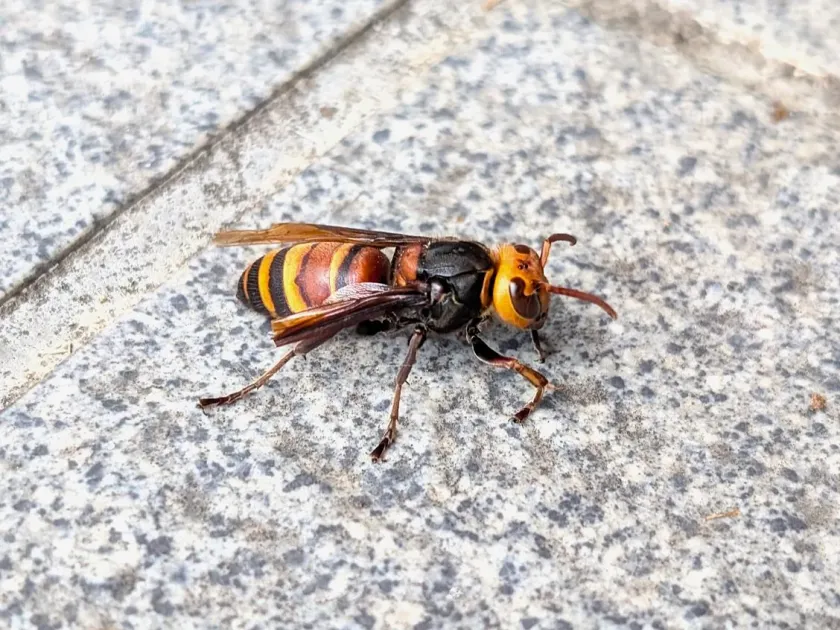
Vespa ducalis is a large species of hornet known for its distinct reddish-brown and black markings. It is significantly larger than the common hornet, making it easily distinguishable in the garden environment.
The insect is covered in dense hairs, and its mouthparts are highly developed for both predatory activities and for chewing through tough fruit skins or wooden materials for nest construction.
Taxonomically, it belongs to the Vespidae family. It is widely distributed across parts of Asia, where it plays an ecological role but can cause significant agricultural disruption when its populations grow near orchards.
They are identifiable by their low-frequency buzzing sound during flight and their preference for building nests in sheltered cavities, such as tree hollows or crevices in wooden structures.
Due to their size and potential for defensive aggression, it is advised to observe them from a safe distance. Their sting is powerful and can pose health risks to humans and pets.
What it damages
Vespa ducalis causes severe damage to fruit and berry crops, particularly grapes, peaches, pears, and plums. They feed on the succulent pulp, leaving behind damaged fruit that is essentially ruined for market sale.
Besides direct consumption, the feeding sites create open wounds on the fruits. These wounds become perfect entry points for secondary pathogens, such as mold, yeast, and various bacteria, leading to widespread rot.
They are also known to prey upon honey bees. By reducing the number of local pollinators, these hornets indirectly lower the overall yield of crops that rely on insect cross-pollination.
In regions with high infestation levels, agricultural producers may suffer significant economic losses, as the hornets become active exactly when the fruit is nearing its peak ripeness.
Additionally, they may strip bark from young twigs to collect cellulose for their nests, which can weaken sensitive young trees and increase their susceptibility to environmental stress.
When it appears
The life cycle begins in early spring when the queen emerges from hibernation to establish a new colony. At this stage, the activity is low and mostly confined to nest building.
Activity peaks from late summer through early autumn. During this period, worker hornets are highly active in foraging, which coincides perfectly with the harvest season of many fruit varieties.
By late autumn, the colony begins to decline as temperatures drop. The workers die off, and only the newly mated queens seek out safe locations to survive the winter period.
Temperature fluctuations directly affect the population growth rate. A warm, humid season provides optimal conditions for rapid brood development, leading to larger worker populations in late summer.
Monitoring the activity levels in early spring can help farmers estimate the potential risk and prepare necessary protective measures before the main fruit-ripening phase begins.
Signs of infestation
The most prominent sign of a Vespa ducalis infestation is the presence of fruit with large, excavated holes. These cavities are created as the hornet consumes the sweet interior of the fruit.
Frequent sightings of large, distinctively colored hornets near vines or fruit trees, particularly in the late afternoon, are strong indicators of a nearby colony or a favored food source.
The discovery of large paper-like nests in sheltered areas, such as attics, hollow trees, or even subterranean tunnels, confirms that the species has established a permanent presence.
Their characteristic deep, rhythmic buzzing sound is a reliable indicator of their presence when they are actively foraging or defending the nest entrance.
- Deep, hollowed-out cavities in fruit
- Signs of secondary mold growth around feeding sites
- High concentrations of flying insects near orchards
Control measures
The most effective long-term strategy is the location and removal of nests. This should be performed by professionals or under strict safety precautions, typically during the night.
Trapping can be an effective management tool. Using baited traps filled with a sugary solution, often mixed with a bit of vinegar or alcohol, can attract and capture foraging workers.
Good orchard hygiene is essential. Prompt harvesting of ripe fruits and the immediate removal of fallen, decaying fruit help to eliminate food sources that attract the hornets.
Physical protection, such as using fine mesh bags on grape clusters or protective netting over fruit trees, provides a chemical-free barrier that prevents hornets from accessing the crop.
Avoid excessive use of broad-spectrum pesticides, as these can harm beneficial insects and natural predators, potentially worsening the pest problem in the long run.
Taxonomy
- Latin name
- Vespa ducalis
- Order
- Hymenoptera
- Family
- Vespidae
- EPPO code
- VESPDU
Discussion
No discussions yet — be the first.