
European hornet
Vespa crabro
Description
How to identify
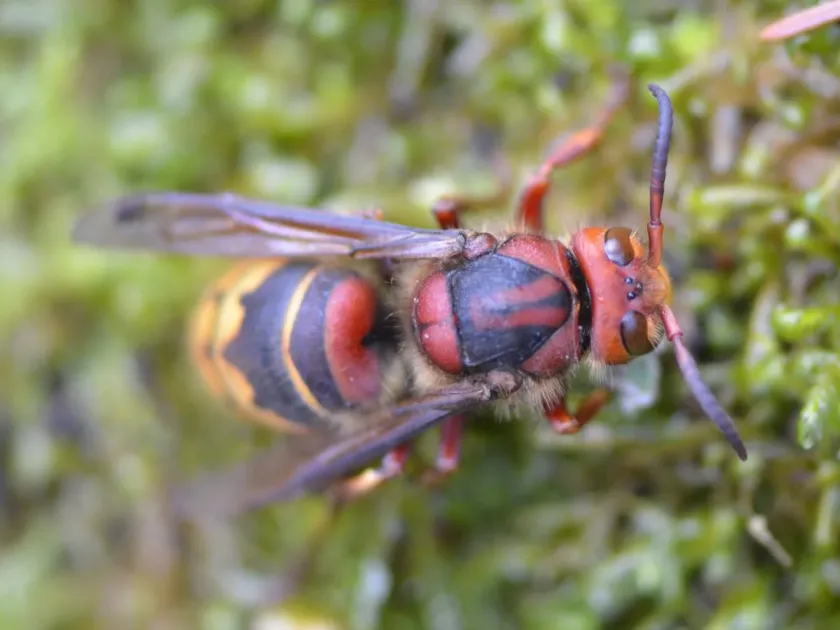
The European hornet (Vespa crabro) is a member of the Hymenoptera order and the Vespidae family. It is the largest eusocial wasp species native to Europe.
Adult hornets feature a distinctive reddish-brown head and thorax, combined with a yellow abdomen marked with black bands, and brownish wings.
The species operates in colonies with a complex social structure, where a single queen manages the reproduction while worker hornets handle foraging and hive construction.
Nests are typically built in hollow trees, wall voids, attics, or underground, constructed from wood fibers masticated into a paper-like substance.
The lifecycle begins with a queen emerging in spring, with the colony expanding throughout the summer months before reaching a maximum population in autumn.
What it damages
The primary agricultural damage is caused by hornets feeding on ripe fruit. They chew holes in the skin of apples, pears, peaches, plums, and grapes to drink the juice.
Once the skin of a fruit is punctured, it is susceptible to rapid decay, yeast fermentation, and secondary infestations by other pests like common wasps and flies.
Besides fruit damage, hornets are known to strip bark from twigs of young trees, such as lilacs and fruit saplings, to harvest wood pulp for building their nests.
Significant infestations can lead to substantial loss of commercial fruit quality, making the produce unsellable and attracting even more pests to the site.
While hornets are beneficial predators that hunt other insects, their habit of congregating on fruit makes them a nuisance in high-value crop production areas.
Signs of infestation
The most common sign of a hornet problem is the presence of large, uneven holes in otherwise ripening fruit, often found hanging on branches or on the ground.
Frequent sightings of large, buzzing hornets around orchard trees or buildings are strong indicators that a colony is active nearby.
Observing hornets collecting wood fibers from dead branches or fences can help identify where they are sourcing materials for their hive.
Discovery of a large, grayish, papery nest located in a building void, hollow tree, or dark sheltered area confirms an active infestation.
Increased activity of insects near damaged fruit, combined with a distinctive low-frequency humming sound, typically signals the presence of Vespa crabro.
Control measures
Placement of baited traps containing fermented fruit juice, cider, or sugar water can effectively reduce the number of foraging workers in the orchard.
Sanitation is key; daily removal of fallen, overripe fruit prevents hornets from establishing a consistent food source in the growing area.
If a nest must be removed, it should be done at night when the colony is less active, utilizing professional-grade protective gear to avoid aggressive stings.
Applying specialized wasp-killing aerosol sprays directly into the nest entrance at night is an effective way to neutralize the colony when necessary.
Preventative measures include sealing gaps in wooden buildings and covering hollows in trees to limit potential nesting sites on the property.
Taxonomy
- Latin name
- Vespa crabro
- Order
- Hymenoptera
- Family
- Vespidae
- EPPO code
- VESPCR
Discussion
No discussions yet — be the first.