
European hornet
Vespa
Description
How to identify
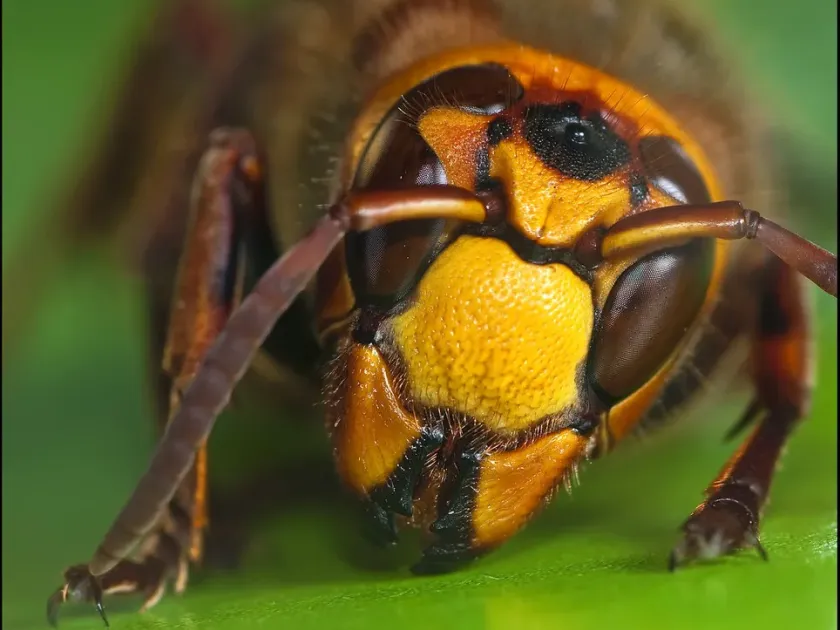
The European hornet (Vespa crabro) is a species of social wasp belonging to the Vespidae family. It is the largest eusocial wasp native to Europe and is also found in North America.
These insects are distinct due to their large size, with workers measuring around 25 mm and queens reaching up to 35 mm. They feature a reddish-brown head and a yellow-and-black striped abdomen.
European hornets are largely nocturnal and are strongly attracted to artificial lights, which often leads them into homes or garden sheds during the night.
The colony cycle is annual; only the fertilized queens survive the winter, emerging in spring to establish new nests in hollow trees, walls, or birdhouses.
Unlike some aggressive wasp species, the European hornet is generally less inclined to attack unless its nest is directly threatened or handled roughly.
What it damages
The primary agricultural damage caused by the European hornet involves the consumption of ripe fruits, including apples, pears, peaches, plums, and grapes.
Beyond feeding on fruit, they cause structural damage to trees by stripping the bark from young branches to feed on the sugary sap, leading to the desiccation of limbs.
Fruits attacked by hornets are often ruined for harvest, as the entry points encourage secondary infections from fungi, bacteria, and other opportunistic insects.
Their presence in high numbers creates a nuisance and hazard for farmers and gardeners, particularly during the critical harvest period in late summer.
In addition to orchard damage, they can pose a threat to apiaries, where they may hunt honeybees, causing disruption and potential losses in honey production.
Signs of infestation
A tell-tale sign of a hornet infestation is the presence of large, crater-like holes in ripening fruit, often found hanging on the tree or fallen on the ground.
Look for circular patches of missing bark on young twigs and shoots, which may result in branch dieback or "girdling" of the stems on woody shrubs.
Frequent, loud buzzing sounds in the canopy during late summer evenings are strong indicators of hornet foraging activity in the orchard.
Observing a high number of hornets circling porch lights or outdoor lanterns after sunset is a clear sign that a nest exists in the immediate vicinity.
Discovering "paper-like" debris near structures, wall cavities, or abandoned sheds confirms the existence of a nearby nesting colony.
Control measures
The most effective management strategy is to locate and remove the nest, preferably at night or early morning when the hornets are inside and less active.
Trapping can be an effective control method. Placing bait traps containing beer, sugar water, or fruit juice helps reduce the population of foraging workers.
- Remove all fallen fruit from the orchard floor daily to eliminate food sources that attract hornets.
- Use protective mesh bags over individual clusters of grapes or high-value fruits to prevent access.
- Seal potential nesting sites such as cracks in masonry, roof gaps, or empty birdhouses before spring starts.
When working in the garden, wear protective clothing if hornets are present to minimize the risk of stings from accidental contact.
For large or inaccessible nests, it is highly recommended to contact a professional pest control service to ensure safe and complete removal of the colony.
Taxonomy
- Latin name
- Vespa
- Order
- Hymenoptera
- Family
- Vespidae
- EPPO code
- VESPSP
Discussion
No discussions yet — be the first.