
Cassava lace bug
Vatiga manihotae
Description
How to identify
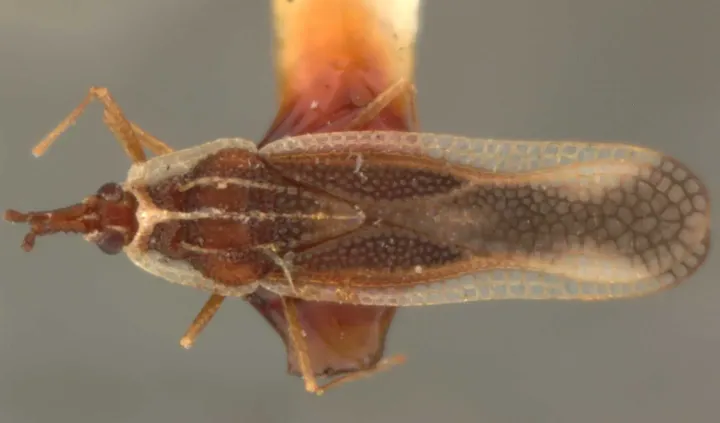
The cassava lace bug (Vatiga manihotae) is an insect species belonging to the Tingidae family. It is easily recognized by its distinct lacy, net-like wing structure, which gives the insect its common name.
Adult bugs are small, typically measuring between 3 and 4 millimeters in length. Their coloration is generally pale brown, which provides excellent camouflage against the foliage of the host plant.
The head and pronotum have characteristic outgrowths that cover part of the scutellum. The antennae are slender and long, acting as vital sensory organs for navigating the surface of the cassava leaf.
Females lay eggs individually within the leaf tissue, often near the veins, where they are protected from environmental extremes. Nymphs, or immature stages, appear similar to adults but lack wings and feature numerous protective spines.
This species is largely sedentary, preferring the underside of leaves. Due to their tendency to stay in one place, large colonies can build up quickly if left unchecked by natural enemies.
What it damages
Cassava (Manihot esculenta) is the primary host for Vatiga manihotae. The bug feeds by piercing the leaf surface with its stylet to extract sap, directly affecting the plant's physiological health.
As the bugs feed, they damage the chlorophyll-containing cells. This significantly impairs photosynthesis, which is essential for the plant to accumulate starch in its tuberous roots.
The primary economic impact is a decrease in root yield. Studies indicate that severe infestations can cause yield losses of up to 50% if the population density is not managed effectively during the growing season.
In addition to yield reduction, the physical stress caused by heavy feeding makes the cassava plants more susceptible to secondary fungal pathogens and environmental stresses like prolonged drought.
In cases of extreme infestation, the foliage becomes necrotic and drops prematurely. This leads to the exposure of stems and can cause the plant to stop growing entirely during critical development stages.
When it appears
The population dynamics of Vatiga manihotae are highly dependent on climatic conditions. The bugs thrive in warm, dry weather, which allows them to complete their life cycle rapidly.
The developmental period from egg to adult is shortened in high temperatures, often taking less than three weeks. This allows for multiple generations to occur throughout the year in tropical climates.
The beginning of the dry season usually marks the period of highest pest activity. During this time, the lack of rain prevents the natural decline of populations, leading to rapid colonisation of new cassava fields.
High humidity and consistent rainfall are natural suppressors of the lace bug. Rain can mechanically wash nymphs off the plants, while wet conditions promote the growth of entomopathogenic fungi that prey on the insects.
Effective scouting is necessary throughout the year, but special attention should be given to the transition periods between wet and dry seasons when pest populations are most likely to explode.
Signs of infestation
The first signs of infestation are small, pale chlorotic spots on the upper leaf surface. These spots are the result of the bug feeding on the underside of the leaf, causing local tissue death.
As the infestation progresses, these chlorotic spots coalesce, causing the leaf to turn yellow and eventually develop a bronze or brown appearance before dying completely.
Looking at the underside of the leaves reveals the presence of tiny black fecal spots and exuviae (discarded skins from molting). These signs are clear indicators of a lace bug colony's presence.
Deformed or curled young leaves are often a sign of feeding damage during the plant's active growth phase. The leaves may appear shriveled and unhealthy, reducing the plant's overall canopy area.
Significant defoliation is a sign of an advanced infestation. When a large portion of the canopy is lost, the plant loses its ability to photosynthesize, leading to a drastic decline in final harvest quality.
Control measures
Cultural control strategies include the use of resistant or tolerant cassava cultivars. Selecting planting dates that avoid peak pest populations can also significantly reduce early infestation risks.
Sanitation is crucial; removing alternative weed hosts, particularly those in the Euphorbiaceae family, helps reduce the reservoir of bugs surrounding the cassava fields.
Biological control involves the preservation and augmentation of natural enemies. Predators such as pirate bugs and various parasitic wasps play a key role in keeping lace bug populations below the economic injury level.
Chemical control should be considered a last resort. If insecticides are necessary, they must be applied to the underside of the leaves, as that is where the bugs reside and feed.
- Regular monitoring and scouting of fields.
- Intercropping to disrupt pest colonization patterns.
- Using microbial insecticides like Beauveria bassiana.
- Post-harvest cleaning to eliminate overwintering sites.
Taxonomy
- Latin name
- Vatiga manihotae
- Order
- Hemiptera (bugs, aphids, leafhoppers)
- Family
- Tingidae
- EPPO code
- VATIMA
Discussion
No discussions yet — be the first.