
Lace bug (Cochlochila)
Cochlochila
Description
How to identify
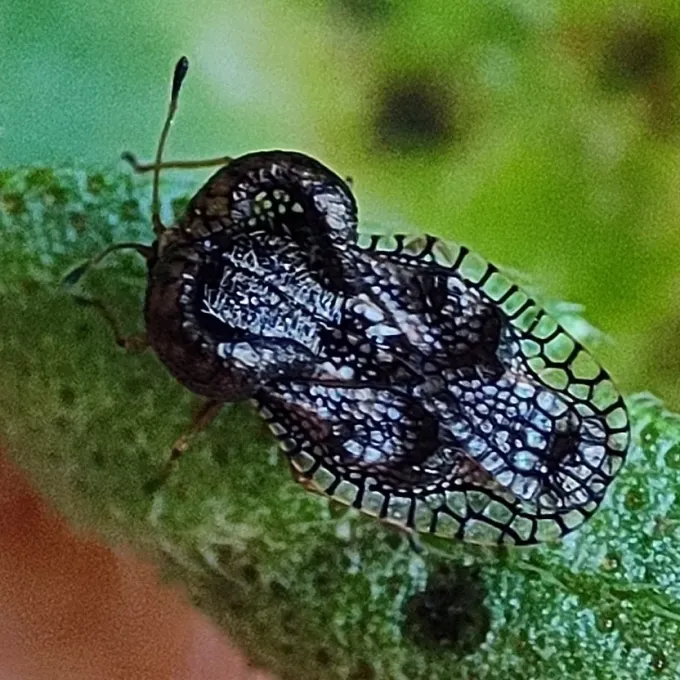
Cochlochila is a genus of insects belonging to the lace bug family (Tingidae), order Hemiptera. They are named for the intricate, net-like, or lace-like appearance of their hemelytra and pronotum.
These bugs are generally small, typically measuring between 3 and 5 millimeters in length. Their coloration often provides excellent camouflage, blending in with the leaf surface where they feed.
Nymphs are physically distinct from adults, often possessing spines or bristles and undergoing several molts through various instars before reaching maturity.
Identification often requires careful inspection with a magnifying lens, as specific species traits are found in the structural details of the head and the reticulated patterns of the wing structures.
Due to their small size and tendency to aggregate on the underside of leaves, they often remain unnoticed until the plant shows visible symptoms of stress or damage.
What it damages
The genus Cochlochila primarily targets plants within the Lamiaceae family, which includes essential economic crops like basil, sage, lavender, and mint.
Equipped with piercing-sucking mouthparts, these insects penetrate the leaf tissue and extract sap, which leads to the destruction of chlorophyll-containing cells.
In commercial herb production, heavy infestations can cause significant economic losses by reducing the yield of essential oils and degrading the quality of the harvested biomass.
Sustained feeding activity leads to stunted growth, reduced photosynthetic efficiency, and, in severe cases, the premature death of the affected plant tissues.
By weakening the plant through nutrient extraction, these bugs can also predispose the crops to secondary infections by various fungal and bacterial pathogens.
When it appears
The activity of Cochlochila is heavily dictated by temperature, with peak populations usually occurring during warm, dry summer months.
Depending on the climatic zone, these bugs can complete multiple generations within a single growing season, leading to a rapid buildup of the pest population.
Adult bugs typically overwinter in protected areas, such as leaf litter, bark crevices, or the upper layers of soil, waiting for favorable spring temperatures to emerge.
The most intense damage is observed during the height of the summer, as the overlap of different generations ensures a constant presence of nymphs and adults feeding on the foliage.
As daylight hours decrease and temperatures begin to fall in late autumn, the insects transition into their overwintering sites, ending their active feeding cycle.
Signs of infestation
The most prominent sign of a Cochlochila infestation is the appearance of chlorotic, white, or yellow stippling on the upper surface of the leaves.
A closer look at the underside of the foliage will reveal the presence of adult bugs, nymphs, and dark, sticky fecal droplets that indicate active feeding sites.
Severe infestations result in yellowing, curling, and eventually the browning of leaves, which can sometimes be mistaken for drought stress or other sucking pest damage.
The lace-like bleaching pattern is a diagnostic feature caused by the insects removing cell contents, leaving behind an empty, papery leaf structure.
- Chlorotic stippling (white or yellow dots) on upper leaf surfaces.
- Dark fecal spots on the underside of leaves.
- Presence of nymphs and adult bugs on the leaf undersides.
- Leaf yellowing, curling, and premature senescence.
Control measures
Effective cultural control measures include the thorough removal and destruction of crop debris and weeds after harvest, which eliminates potential overwintering sites.
Biological control, including the use of beneficial predators or entomopathogenic fungi such as Beauveria bassiana, is recommended for sustainable management.
Chemical control necessitates the use of insecticides with contact or systemic action, ensuring that applications specifically target the underside of the leaves.
Farmers should implement a rotation of pesticides with different modes of action to prevent the development of insecticide resistance in the bug population.
Regular scouting and monitoring during the summer are crucial to detect infestations early and minimize the reliance on broad-spectrum chemical interventions.
Taxonomy
- Latin name
- Cochlochila
- Order
- Hemiptera (bugs, aphids, leafhoppers)
- Family
- Tingidae
- EPPO code
- COKLSP
Discussion
No discussions yet — be the first.