
Cotton lace bug
Corythaica carinata
Description
How to identify
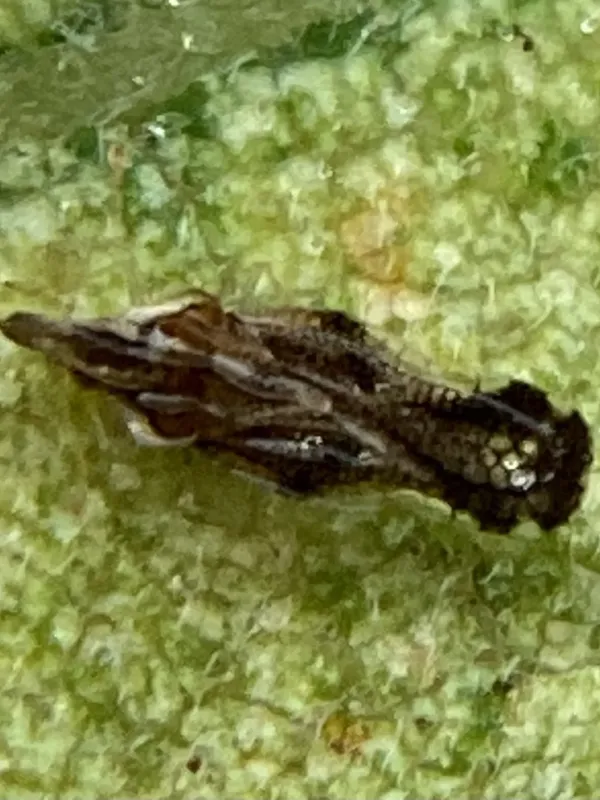
The cotton lace bug (Corythaica carinata) is a member of the Tingidae family within the order Hemiptera. It is named for the distinctive lace-like, reticulated patterns on its wings and pronotum.
Adult insects are small, typically measuring 3–4 mm in length. They display a light brown to grayish coloration with dark spots, providing excellent camouflage against the foliage of host plants.
The nymphs resemble the adults in general shape but are smaller and wingless. Many species within this family, including this one, have small spines on their body as a defense mechanism.
The eggs are tiny, elongated structures usually deposited in clusters on the undersides of leaves, often anchored with a sticky secretion produced by the female.
The life cycle involves an egg stage, five nymphal instars, and the adult stage. Development speed is highly dependent on ambient temperature, allowing for multiple generations per season.
What it damages
As the common name suggests, cotton (Gossypium) is a primary host for this pest. However, the insect is polyphagous and feeds on a wide range of botanical species.
Besides cotton, the bug frequently attacks solanaceous plants, including tomatoes, eggplants, and potatoes, causing economic damage in both commercial fields and home gardens.
The pests feed by inserting their piercing-sucking mouthparts into plant tissues and extracting sap, which disrupts the plant's metabolic functions.
Early-season infestations can significantly reduce the vigor of young plants, leading to stunted growth and delays in crop development.
Under heavy infestation levels, the overall loss in photosynthetic capacity leads to reduced yield and poor quality of the harvested produce.
Signs of infestation
The initial sign of infestation is the appearance of small, pale, or yellowish chlorotic spots on the upper leaf surface, which correspond to the feeding sites on the underside.
As the population grows, these spots coalesce, giving the leaves a mottled, stippled, or bleached appearance that is characteristic of lace bug damage.
Careful inspection of the leaf undersides usually reveals clusters of nymphs and adults, along with their cast skins (exuviae) left behind after molting.
Small dark spots of excrement are often visible on the leaf underside, which creates a dirty, contaminated look across the foliage.
Advanced stages of infestation result in leaf curling, yellowing, and premature senescence, eventually causing the leaves to drop from the plant.
Control measures
Cultural control includes the removal of alternative host weeds, particularly those in the Malvaceae family, which act as overwintering sites for the population.
Implementing crop rotation and ensuring spatial separation from susceptible crops are essential strategies to prevent the buildup of pest numbers.
Biological control involves conserving natural predators such as assassin bugs, lacewings, and lady beetles, which help keep lace bug populations below damaging levels.
When chemical intervention is necessary, insecticides with systemic or contact action should be applied, focusing on reaching the underside of the leaves.
Regular monitoring of fields is crucial for the timely application of control measures, ensuring the protection of the crop throughout its vegetative growth cycle.
Taxonomy
- Latin name
- Corythaica carinata
- Order
- Hemiptera (bugs, aphids, leafhoppers)
- Family
- Tingidae
- EPPO code
- CORCCA
Discussion
No discussions yet — be the first.