
Lace bug
Corythaica
Description
How to identify
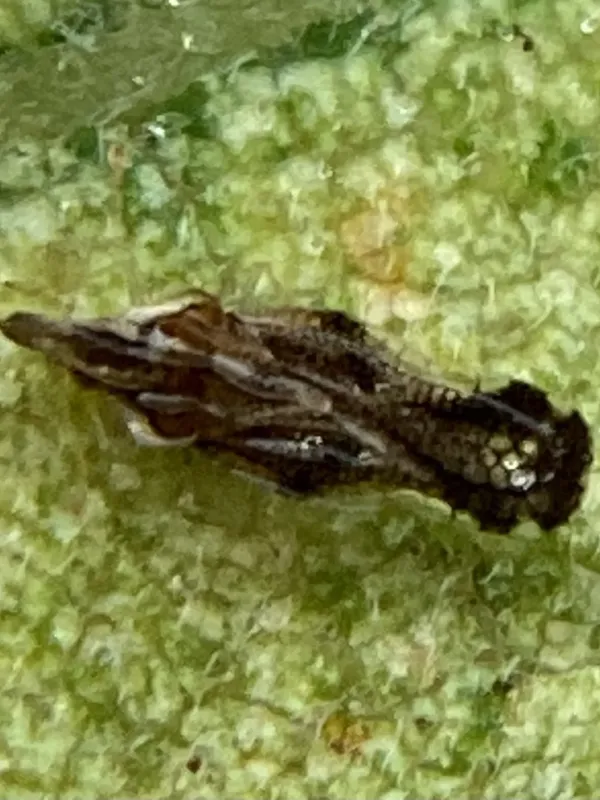
The lace bug (Corythaica) belongs to the family Tingidae. These insects are easily identified by the unique, intricate, lace-like patterns on their wings and pronotum, which provide effective camouflage on host plant foliage.
Adult insects are small, typically measuring 2–4 mm in length. Their bodies are flattened, ranging in color from pale yellowish to dark brown with mottled markings. Nymphs (juveniles) lack fully developed wings and are characterized by various spines and protrusions on their bodies.
These bugs are notorious for their cryptic behavior, preferring to reside on the underside of leaves. They thrive in warm, dry environments, which often leads to significant infestations in greenhouses and during hot, dry summer months in open fields.
The life cycle consists of the egg stage, five nymphal instars, and the adult stage. Females lay their eggs in clusters on the undersides of leaves, often securing them with a sticky secretion that helps protect the eggs from environmental stress and predators.
The rate of development is highly temperature-dependent. Under optimal warm conditions, the population can multiply rapidly, with several generations occurring within a single growing season, making them difficult to eradicate once established.
What it damages
The lace bug is a significant pest of the Solanaceae family. Primary host plants include eggplants, potatoes, tomatoes, and peppers, though they may also attack various ornamental plants and solanaceous weeds.
Eggplants are particularly susceptible to severe damage. Infestations often result in extensive leaf chlorosis, significantly reducing the plant's ability to photosynthesize and leading to stunted growth and reduced fruit production.
The damage is caused by the insects using their piercing-sucking mouthparts to feed on plant sap. As they feed, they inject toxic saliva, which leads to the localized death of plant cells and the characteristic stippling effect seen on the upper leaf surface.
As the infestation progresses, the stippled areas enlarge and turn into necrotic patches. This causes the leaves to curl, yellow, and drop prematurely, which significantly weakens the plant and decreases overall harvest quality and quantity.
Additionally, the physical damage to leaf tissue provides entry points for various plant pathogens. The stress caused by the feeding activity makes the plants more susceptible to secondary infections and viral diseases carried by insects.
Signs of infestation
The earliest symptom is the appearance of tiny, light-colored or white spots on the upper leaf surface, commonly referred to as stippling. This indicates that a colony of lace bugs is feeding actively on the leaf's underside.
On the underside of the leaves, you will typically find adult bugs, nymphs, and their dark, sticky fecal droplets. The presence of numerous translucent cast skins (exuviae) left behind after molting is a definitive sign of an active infestation.
In cases of heavy infestation, the foliage takes on a dusty or greyish appearance due to the accumulation of frass and debris. The leaves may become brittle and deformed, eventually falling off the plant entirely.
Plants affected by lace bugs often look prematurely aged or wilted. Even with sufficient watering, the plants may show signs of severe stress because the damaged foliage can no longer maintain proper transpiration and physiological functions.
Inspection for these pests requires careful observation. When disturbed, adults may attempt to fly away, but nymphs are often stationary and can be difficult to spot without a magnifying glass, especially if they are well-hidden among the leaf veins.
Control measures
Cultural control is the first line of defense. This includes the removal and destruction of solanaceous weeds around the garden or greenhouse, which serve as alternate hosts and refuges for the bugs during the winter or off-season.
In greenhouses, yellow sticky traps are useful tools for monitoring the presence and movement of adult lace bugs. Maintaining proper ventilation and managing humidity levels can help create a less favorable environment for their reproduction.
Biological control methods are highly effective in protected environments. Introducing natural predators such as lacewings or predatory bugs can provide sustainable control of the lace bug population without the use of harsh chemicals.
Chemical control may be necessary for heavy infestations. Systemic insecticides are generally most effective because the bugs feed on the internal sap. Applications should be thorough, specifically targeting the underside of the leaves.
Always rotate insecticide products with different modes of action to prevent the development of resistance in the lace bug population. Early detection is key; treatments should be initiated as soon as the first signs of damage appear.
Taxonomy
- Latin name
- Corythaica
- Order
- Hemiptera (bugs, aphids, leafhoppers)
- Family
- Tingidae
- EPPO code
- CORCSP
Discussion
No discussions yet — be the first.