
Jasmine lace bug
Corythauma
Description
How to identify
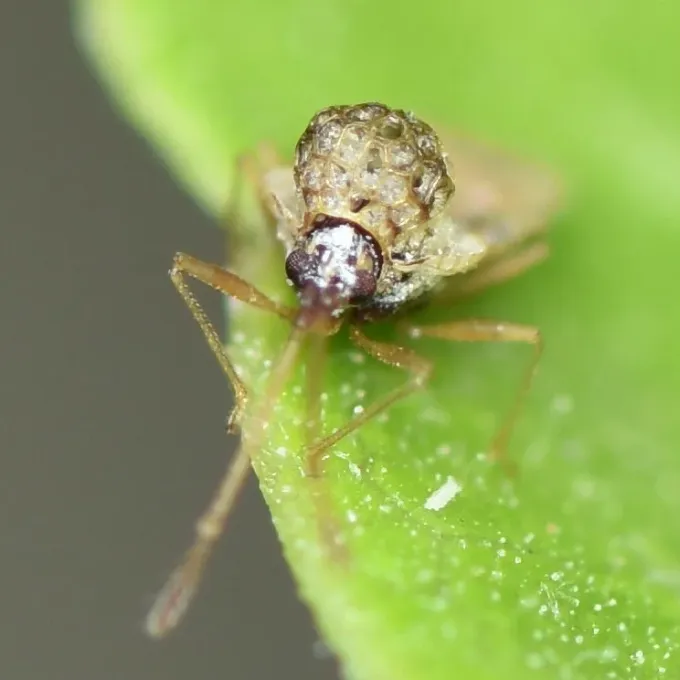
The Jasmine lace bug (Corythauma ayyari) is a small insect belonging to the family Tingidae (order Hemiptera). It is named for the distinctive, delicate, lacy-patterned wings that cover its body.
Adult insects are tiny, typically measuring between 2 to 3 mm in length. Their coloration ranges from pale cream to light brown, which provides excellent camouflage against plant foliage.
Nymphs resemble smaller, wingless versions of the adults. They are often found in clusters, sometimes with spiky outgrowths, and tend to be slow-moving, staying on the underside of leaves.
The eggs are microscopic and usually deposited in batches along the leaf veins on the undersides. Because of their size and placement, they are extremely difficult to detect without magnification.
Proper identification requires careful inspection using a hand lens, as the insects are adept at hiding and blending into the texture of the leaves.
What it damages
The primary host plant is Jasmine (genus Jasminum). However, in warmer regions, this pest may also infest other ornamental plants belonging to the Oleaceae family.
The insect feeds by piercing the leaf surface with its specialized mouthparts to extract sap. This feeding process drains the plant of essential nutrients and causes localized tissue damage.
Heavy infestations result in severe yellowing, premature leaf drop, and a significant loss of aesthetic value, often leading to a reduction in flowering for the current and future seasons.
The feeding process is accompanied by the secretion of dark, sticky waste, which accumulates on the leaves and can serve as a medium for the growth of sooty mold.
Weakened plants show reduced vigor, making them more susceptible to secondary fungal infections and general environmental stressors, potentially leading to plant death.
When it appears
The life cycle and population growth of this pest are highly dependent on ambient temperatures. In warm climates, the bug can produce multiple generations within a single growing season.
Adults typically emerge in early spring as temperatures rise, coinciding with the active growth period of the host plant's foliage.
Population density usually peaks during the hottest summer months, as dry and hot weather conditions significantly accelerate both the maturation and reproduction cycles.
As autumn approaches and temperatures drop, the metabolic activity of the insects decreases, and they enter a state of diapause to survive the cooler months.
Overwintering occurs primarily in the adult stage, with insects finding shelter in bark crevices, leaf litter, or debris around the base of the shrub.
Signs of infestation
The first indicator of infestation is the appearance of tiny white or yellow stippling marks on the upper surface of the leaves, resulting from sap depletion.
As the damage progresses, these spots merge, giving the leaves a mottled or marbled appearance before they eventually yellow, curl, and wither away.
- Presence of dark fecal spotting on the leaf undersides.
- Accumulation of white, papery-looking shed skins (exuviae) left by nymphs.
- General decline in plant vigor and lack of new healthy growth.
- Direct observation of nymphal colonies on the back of the leaves.
When infested branches are shaken, adults may be seen flying away, confirming an active presence within the plant canopy.
Control measures
Effective management begins with cultural practices, such as pruning and disposing of infested foliage at the end of the season to reduce overwintering sites.
Maintaining proper plant health through adequate irrigation and overhead watering can help mitigate damage, as lace bugs thrive in dry, dusty environments.
For chemical control, systemic insecticides are the most effective, as they are absorbed into the plant tissues and kill the pests as they feed on the sap.
Application should be performed during cooler times of the day, ensuring thorough coverage of the leaf undersides where the insects congregate.
Biological control options, including the use of entomopathogenic fungi or neem oil, provide effective alternatives that are often safer for the local ecosystem and beneficial insects.
Taxonomy
- Latin name
- Corythauma
- Order
- Hemiptera (bugs, aphids, leafhoppers)
- Family
- Tingidae
- EPPO code
- COTMSP
Discussion
No discussions yet — be the first.