
Basil lace bug
Cochlochila bullita
Description
How to identify
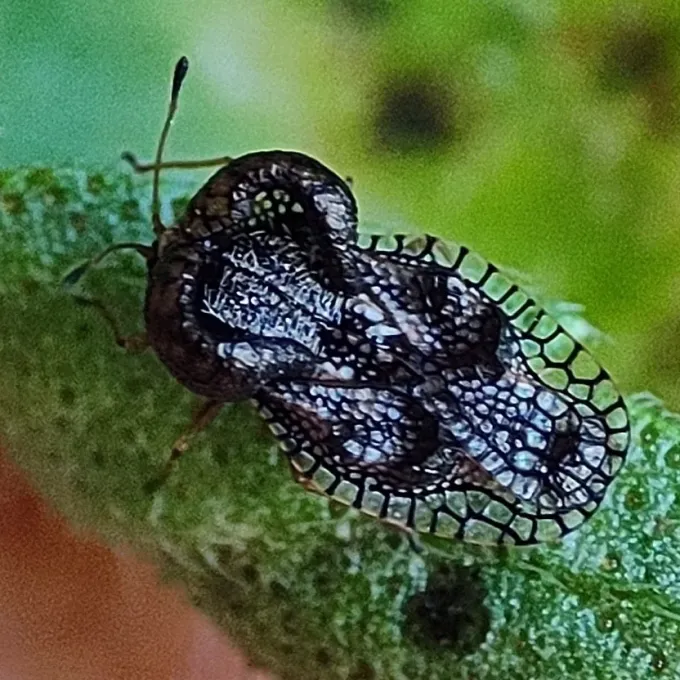
The Basil lace bug (Cochlochila bullita) is a true bug belonging to the family Tingidae within the order Hemiptera. They are named for the intricate, net-like appearance of their wings and pronotum, which resemble delicate lace.
Adults are small, typically measuring 3 to 4 millimeters in length. Their coloration is usually mottled brown, providing excellent camouflage against the foliage of their host plants, which makes them quite difficult to spot.
The nymphs go through several developmental stages (instars) before reaching adulthood. They are generally lighter in color, wingless, and often cluster together on the undersides of leaves, feeding in groups.
A distinctive physical characteristic of this species is the prominent, bubble-like hood on the pronotum. This structure is highly diagnostic when using a magnifying lens for identification in the field.
These insects are elusive and prefer the sheltered environment of the leaf underside, which often allows their population to grow unnoticed until significant damage to the plant becomes visible.
What it damages
Cochlochila bullita primarily targets basil (Ocimum basilicum), though it can occasionally infest other members of the Lamiaceae family, such as mint, rosemary, and lavender.
Both nymphs and adults feed by piercing the leaf epidermis and sucking out cell contents. This feeding method effectively destroys the mesophyll tissue, which is critical for the plant's photosynthesis.
The initial damage manifests as small, chlorotic stippling or white spots on the upper leaf surface. Over time, these spots merge, leading to widespread bleaching and necrosis of the entire leaf.
As the plant loses its ability to photosynthesize, growth becomes severely stunted. Furthermore, the oil glands in the basil leaves are compromised, leading to a significant loss of flavor and aromatic quality.
Heavy infestations lead to leaf senescence, premature drop, and in severe cases, the death of the entire plant, making the basil crop commercially unviable for fresh market sale.
When it appears
The Basil lace bug thrives in warm and arid environmental conditions. Their population growth is most explosive during hot summer months when temperatures are consistently high.
Initial infestations typically begin in late spring or early summer as the basil plants develop dense canopies, providing both a food source and a protective environment for the bugs.
These insects can produce multiple generations within a single growing season. The length of the life cycle is highly dependent on ambient temperature, shortening significantly during peak summer heat.
As autumn approaches and temperatures drop, the bugs enter a state of dormancy. They typically overwinter as adults in plant debris, mulch, or sheltered areas near the garden beds.
In greenhouse or protected cultivation environments, their reproductive cycle can remain active throughout the year, provided that temperatures remain within the optimal range for the species.
Signs of infestation
The most reliable sign of an infestation is the appearance of pale or silvery stippling on the leaves, which occurs due to the extraction of chlorophyll from individual cells.
A careful inspection of the leaf undersides will reveal the presence of nymphs, adults, and their characteristic black, varnish-like excrement spots which serve as a clear indicator of activity.
Infested plants exhibit a lack of vigor, often appearing dull or yellowish. The leaves may curl, become brittle, and develop a rough texture due to the damage inflicted on the leaf tissue.
If the plant is gently shaken, you might observe the adult bugs moving quickly across the leaf surface, which is a common behavioral response to disturbances in their habitat.
Increased susceptibility to secondary pathogens is another sign; as the leaf tissue is opened by the bug's feeding, fungi and bacteria can easily enter, causing rotting of the foliage.
Control measures
Managing the Basil lace bug requires a proactive strategy that integrates cultural practices, biological controls, and judicious use of insecticides.
- Monitor crops weekly, paying close attention to the underside of the leaves for early detection of nymphs.
- Practice strict weed control by removing alternative host plants (Lamiaceae weeds) from around the perimeter of the garden.
- Prune and destroy heavily infested plant parts to reduce the immediate pressure on the rest of the crop.
- Introduce natural predators like lady beetles, lacewings, or predatory bugs which can help keep populations in check.
- Use horticultural oils or insecticidal soaps as a first line of defense, ensuring thorough coverage of the leaf undersides where the bugs reside.
Taxonomy
- Latin name
- Cochlochila bullita
- Order
- Hemiptera (bugs, aphids, leafhoppers)
- Family
- Tingidae
- EPPO code
- COKLBU
Discussion
No discussions yet — be the first.