
American painted lady
Vanessa virginiensis
Description
How to identify
The American painted lady (Vanessa virginiensis) is a butterfly species within the Nymphalidae family, order Lepidoptera. Adults typically display orange and black wings with white spots, easily distinguished by the presence of two distinct eyespots on the underside of the hindwings.
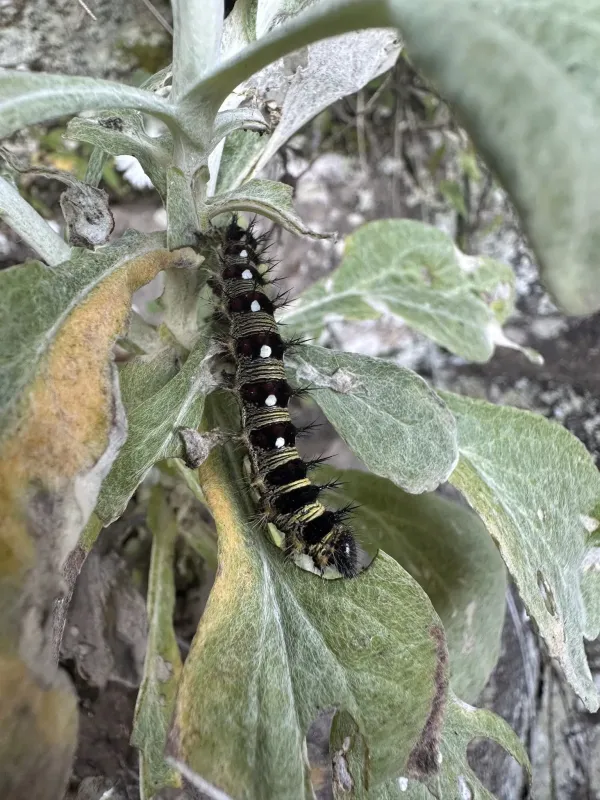
The larvae, or caterpillars, are dark with white speckles and covered in branched spines, providing a natural defense against predators such as birds and wasps.
Pupation occurs within a chrysalis that often features metallic or golden markings, camouflaging it among leaves or plant debris near the feeding site.
As a migratory species, its prevalence in agricultural areas can fluctuate significantly depending on seasonal migration patterns and regional climatic conditions.
The life cycle encompasses four distinct stages: egg, larva, pupa, and adult, with development speed governed by ambient temperatures and host plant availability.
What it damages
Caterpillars primarily feed on plants within the Asteraceae family, with a strong preference for the genera Artemisia, Gnaphalium, and Anaphalis.
In agricultural settings, they can cause damage to sunflower crops, asters, and various ornamental species belonging to the Asteraceae family.
Young larvae skeletonize leaf tissue, feeding on the parenchyma while leaving the larger veins intact, which reduces the plant's overall photosynthetic capacity.
Older larvae consume large portions of the leaf surface, significantly weakening the plant and potentially leading to stunted growth if infestation rates are high.
The loss of foliage and damage to terminal buds can disrupt plant development, affecting yield in commercial crops and aesthetic value in ornamental gardens.
Signs of infestation
A primary indicator of infestation is the presence of silk nests, where caterpillars fold and stitch leaves together with webbing for protection.
The accumulation of dark, pellet-like frass (excrement) on the leaves or on the ground beneath the plant indicates the presence of actively feeding caterpillars.
Visual identification of eggs on the undersides of young, tender leaves is an early sign that a new generation of larvae may emerge soon.
Curled, distorted, or skeletonized leaves are classic symptoms, often observed in the upper canopy where caterpillars prefer to establish their nests.
Observing adult butterflies hovering near host plants during the egg-laying season can also be a helpful cue for monitoring potential caterpillar outbreaks.
Control measures
Mechanical control is effective in small areas, involving the manual removal and destruction of leaf nests containing larvae before they cause significant damage.
Biological control using microbial insecticides based on Bacillus thuringiensis is highly effective and safe for non-target species in diverse landscapes.
Chemical control with appropriate contact or systemic insecticides should be considered if monitoring shows populations exceeding the economic threshold for the crop.
Cultural management, such as the removal of host-plant weeds (like native thistles or cudweeds) around field margins, reduces the breeding habitat for the butterflies.
Conserving natural predators and parasitoids, such as parasitic wasps, provides a sustainable way to suppress population growth and minimize the need for chemical intervention.
Taxonomy
- Latin name
- Vanessa virginiensis
- Order
- Lepidoptera (butterflies)
- Family
- Nymphalidae
- EPPO code
- VANSVI
Discussion
No discussions yet — be the first.