
Agraulis vanillae
Agraulis vanillae
Description
How to identify
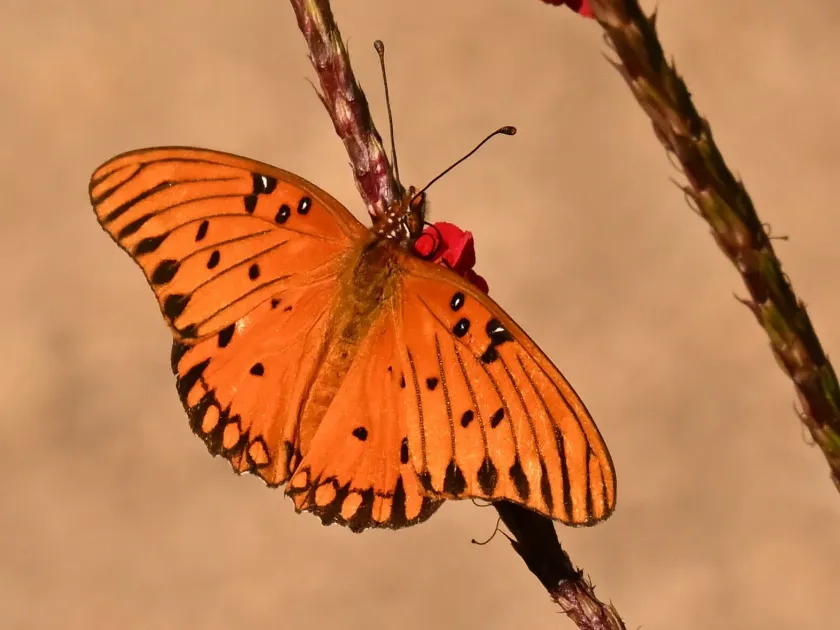
Agraulis vanillae, commonly known as the Gulf fritillary, is a butterfly in the Nymphalidae family, recognized by its vibrant orange wings with black patterns and white spots.
The larvae are bright orange caterpillars characterized by black stripes and rows of branched black spines, which are harmless to humans but serve as a defense mechanism.
The life cycle encompasses four distinct stages: egg, larva, pupa, and adult, with development speed heavily dependent on ambient temperature and food availability.
Pupae are brown and mottled, closely resembling a withered, dry leaf, which provides excellent camouflage against predators in the natural ecosystem.
Females typically deposit eggs individually on the leaves of host plants, ensuring that the larvae have an immediate food source upon hatching.
What it damages
This pest exclusively targets plants in the Passifloraceae family, with commercial passion fruit (Passiflora edulis) being its primary host and victim.
The larvae cause significant damage by consuming foliage, which can lead to rapid defoliation and severe stress for the host plant if left unchecked.
High caterpillar densities can result in total destruction of leaf area, forcing the plant to divert energy from fruit production to biomass recovery.
In addition to leaves, the caterpillars may consume buds, flowers, and tender shoots, directly reducing the potential harvest of passion fruit.
Weakened plants show reduced vigor and are often more susceptible to secondary infections, ultimately leading to lower crop yields and poor fruit quality.
When it appears
The Gulf fritillary is most active during the warm months, as tropical and subtropical temperatures facilitate rapid breeding cycles and high population growth.
In regions with mild winters, the species can continue its life cycle throughout the year, making it a persistent threat to passion fruit plantations.
Adult butterflies are highly mobile and capable of migrating long distances, allowing them to colonize new fields and gardens quickly during the growing season.
As temperatures decline in temperate zones, activity slows down, though greenhouse conditions often allow the population to remain active indefinitely.
Early identification of adult activity is vital for effective pest management, as preventing the initial egg-laying phase is the key to population control.
Signs of infestation
The most evident sign of an infestation is the presence of chewed leaf margins or large holes within the leaves, indicating the feeding of larvae.
Direct sightings of the distinct orange, spiny caterpillars on the underside of leaves or on stems are definitive indicators of Agraulis vanillae presence.
Frass (caterpillar droppings) accumulating on the soil surface beneath the plants is a clear indicator of active feeding occurring in the canopy above.
Stunted growth or missing leaf tissue on new shoots often suggests that larvae have been grazing on the most nutrient-dense parts of the plant.
- skeletonized leaves;
- accumulated frass;
- visible orange larvae;
- damaged flower buds;
- eggs on leaves.
Control measures
Hand-picking caterpillars is a highly effective and eco-friendly control method for small-scale gardens or home-grown passion fruit vines.
Biological control, particularly the application of Bacillus thuringiensis (Bt) sprays, effectively manages larval populations while preserving beneficial garden insects.
Installing fine-mesh netting over plants is a proven physical barrier that prevents butterflies from laying eggs on the foliage during peak season.
Chemical intervention with systemic insecticides should be considered a last resort, strictly adhering to safety guidelines regarding harvest intervals for edible crops.
Maintaining a clean garden by removing wild Passiflora species reduces the alternative food sources that allow this pest to thrive during the off-season.
Taxonomy
- Latin name
- Agraulis vanillae
- Order
- Lepidoptera (butterflies)
- Family
- Nymphalidae
- EPPO code
- AGRAVA
Discussion
No discussions yet — be the first.