
Gulf fritillary
Agraulis
Description
How to identify
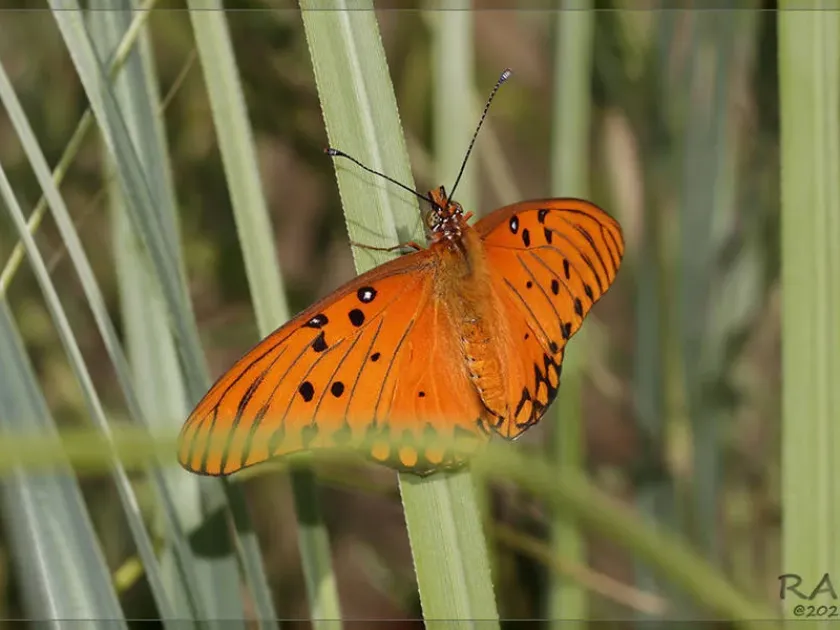
The Gulf fritillary (Agraulis vanillae) belongs to the order Lepidoptera and the family Nymphalidae. The adult butterfly has a wingspan of up to 8-9 cm, with a vibrant orange-brown upper surface featuring distinct black spots and white markings on the forewings.
The larvae of this species are easily identified by their appearance: the body is covered with numerous black branching spines, which serve as a deterrent to many predators. The color of the caterpillars ranges from bright orange to deep brown, aiding in camouflage on host plants.
The life cycle encompasses four stages: egg, larva (caterpillar), pupa, and imago (adult). Females lay eggs singly or in small groups on the leaves of host plants, ensuring food availability immediately upon hatching.
The pupa of the Gulf fritillary has a specific shape resembling a dried, twisted leaf, which provides an effective defense mechanism against predators. In warm climates, the insect can produce multiple generations per year, breeding actively throughout the growing season.
While the butterfly acts as a beneficial pollinator in natural ecosystems, its caterpillars are classified as significant pests in agricultural and ornamental settings, capable of defoliating plants rapidly.
What it damages
The primary food source for Gulf fritillary larvae is plants from the Passifloraceae family. The most significant damage is inflicted on passion vine (Passiflora) plantations, grown both for commercial fruit production and decorative landscape purposes.
The pest does not limit itself to cultivated passion flower species but also attacks wild varieties, which serve as population reservoirs. During heavy infestations, larvae can damage stems and young fruit set.
In addition to passion vines, if food sources are limited, the caterpillars may occasionally feed on related plant species, expanding the range of potential hosts in gardens and greenhouses.
The severity of damage is directly correlated with caterpillar population density. Initially, they feed on young, tender leaves, moving toward tougher tissue as they age, eventually leading to significant defoliation and overall plant decline.
For commercial growers, loss of foliage is critical as it disrupts photosynthesis, reduces fruit yields, and compromises product quality, necessitating consistent monitoring and management strategies.
Signs of infestation
The first visual sign of infestation is the presence of skeletonized or completely consumed leaves on passion flower vines. Caterpillars typically start feeding from the leaf margins, gradually progressing toward the main veins.
Accumulation of larval frass, appearing as small black pellets, on lower leaves and the soil surface underneath the plant is a clear indicator of active feeding in the upper canopy.
Upon close inspection, the larvae themselves can be spotted, often clustering on the undersides of leaves or along stems. Their prominent spines make them easily detectable even at early growth stages.
In later stages of infestation, massive leaf rolling occurs, as larvae or pupae may use foliage for protection during the transition stages. The plant quickly loses its aesthetic appeal and appears stunted.
Increased butterfly activity around the site serves as a secondary indicator. Observing butterflies hovering near host plants suggests egg-laying behavior and the imminent emergence of a new generation of larvae.
Control measures
Regular manual collection of caterpillars and eggs is the most effective control method for small-scale passion vine plantings. This approach is environmentally friendly and offers complete control over the local population.
Biological insecticides based on Bacillus thuringiensis have shown high efficacy against young-instar larvae without harming beneficial pollinators, which is vital for the health of passion flower crops.
The use of broad-spectrum chemical insecticides should be limited to emergency cases only, as they can inadvertently kill beneficial entomophagous insects and disrupt the ecological balance in the garden.
To prevent butterfly access to host plants, using fine-mesh netting or row covers during peak insect activity periods is highly recommended, effectively blocking the site from egg-laying.
Integrated cultural practices, including regular pruning and maintaining optimal plant vigor, improve the natural resilience of the plants against pest attacks and facilitate easier monitoring of plant health.
Taxonomy
- Latin name
- Agraulis
- Order
- Lepidoptera (butterflies)
- Family
- Nymphalidae
- EPPO code
- AGRASP
Discussion
No discussions yet — be the first.