
Large Tortoiseshell
Aglais
Description
How to identify
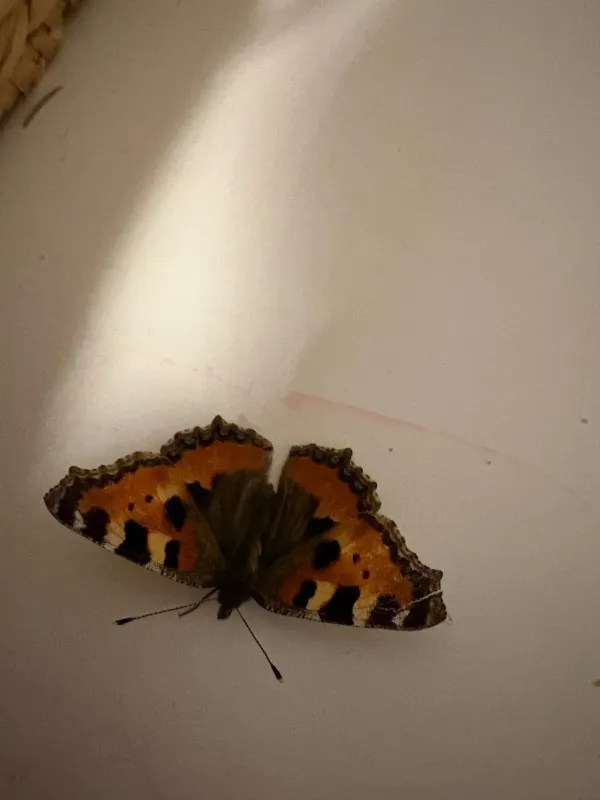
The Large Tortoiseshell (Aglais xanthomelas) is a butterfly from the Nymphalidae family. Adult butterflies are characterized by a vibrant orange-brown wing color with distinct black spots, spanning approximately 50-60 mm.
Larvae (caterpillars) are identified by their dark, spiny bodies, often with lighter longitudinal lines, which serve as a defense mechanism against predators.
This species undergoes a complete metamorphosis, including egg, larva, pupa, and imago stages. Only adult butterflies hibernate during winter, seeking shelter in tree cavities or buildings.
Unlike some colonial web-spinning moths, Large Tortoiseshell larvae do not build dense silken tents, but they are often found feeding in groups during their early larval stages.
The species is widely distributed across temperate regions, frequently inhabiting orchards and woodland fringes where host plants are abundant.
What it damages
The primary damage is caused by the caterpillars, which possess a voracious appetite and can cause significant defoliation of fruit trees in a short period.
Preferred hosts include various Rosaceae species such as apple, pear, plum, and cherry, as well as deciduous trees like elm, willow, and poplar.
Extensive foliage loss reduces the tree's photosynthetic capacity, which impairs the growth of new shoots and negatively impacts fruit development and overall crop quality.
Heavy infestations weaken the host tree's vigor, increasing its susceptibility to secondary diseases and physiological stress during the dormant season.
- Severe defoliation of the canopy
- Reduced vigor of fruit trees
- Stunted growth of younger saplings
- Increased vulnerability to pathogens
When it appears
Overwintering adults emerge in early spring, as soon as temperatures rise, and lay eggs on the young twigs of their host plants.
Larval development typically occurs during May and June, coinciding with the peak period of vegetative growth in gardens and orchards.
Pupation takes place in mid-to-late June, with pupae often camouflaged as dried leaves or bark fragments to avoid detection by predators.
The next generation of butterflies emerges in mid-summer, typically July, feeding on floral nectar and preparing for the end-of-season cycle.
As autumn approaches, the butterflies seek protected sites for hibernation, entering a state of diapause to survive the winter temperatures.
Signs of infestation
The most visible sign of infestation is the presence of groups of caterpillars feeding on leaves, often leaving only the main veins behind.
Accumulation of frass (caterpillar droppings) on leaves below the feeding area is a strong indicator of the presence of the larvae in the upper canopy.
Lace-like holes in the leaves are a classic symptom, indicating the larval feeding patterns during their rapid growth phases.
Observing pupae attached to branches, stems, or nearby structures confirms the successful completion of the breeding cycle in the vicinity.
In cases of high population density, one can hear the audible sound of hundreds of larvae feeding on foliage throughout the day.
Control measures
In domestic gardens, manual removal of caterpillars in the early morning is an effective and non-toxic way to manage small infestations.
Biological insecticides containing Bacillus thuringiensis are highly effective against young larvae and represent an environmentally friendly control option.
If population levels exceed economic thresholds, commercial growers may use systemic insecticides, ensuring application timing avoids harm to pollinators.
Promoting a garden environment that supports insectivorous birds helps manage larval populations through natural predation.
Good orchard hygiene, including bark scraping and whitewashing trunks, can limit the availability of safe overwintering sites for the adults.
Taxonomy
- Latin name
- Aglais
- Order
- Lepidoptera (butterflies)
- Family
- Nymphalidae
- EPPO code
- AGGASP
Discussion
No discussions yet — be the first.