
Indian Admiral
Vanessa indica
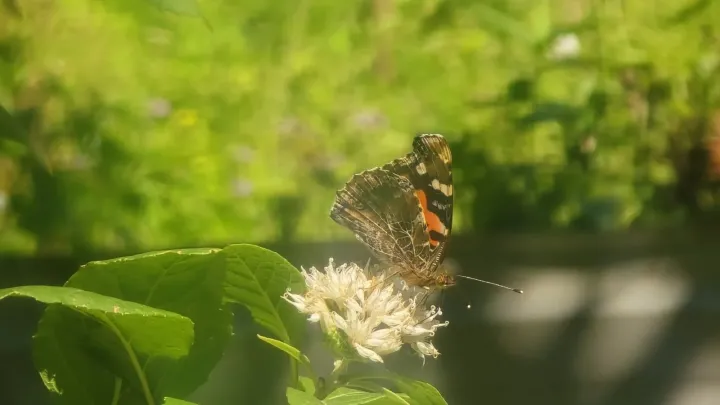
Description
How to identify
The Indian Admiral (Vanessa indica) is a butterfly belonging to the Nymphalidae family, easily recognizable by its striking orange-red band across dark, patterned wings.
Adult butterflies have a wingspan reaching 60–70 mm. They are swift fliers, frequently seen moving between flowers and plants in sunny, open areas.
The larvae, or caterpillars, are the destructive stage of this species. They are typically dark or greenish, adorned with numerous branching spines that act as a deterrent to predators.
Taxonomically, the Indian Admiral is part of the order Lepidoptera. Their biological success is attributed to their ability to adapt to various climates and their broad distribution.
Understanding their morphology is key to identification: they differ from the closely related Red Admiral by subtle wing patterns and specific geographic preferences.
What it damages
The primary damage is caused by larvae feeding on the foliage of host plants, most notably stinging nettles and occasionally various industrial or ornamental crops.
In cases of high infestation, the caterpillars can strip leaves entirely, leaving only the veins behind, which severely hinders the plant's ability to photosynthesize.
Stunted growth, decreased vigor, and overall loss of plant quality are the main consequences for agricultural crops damaged by these larvae.
The structural integrity of the plant is compromised, making it more susceptible to secondary infections from pathogens and opportunistic plant diseases.
While often considered a pest of minor economic importance compared to major agricultural threats, their local impact can be severe in areas with intensive cultivation.
When it appears
The Indian Admiral is active from early spring through late autumn, with the ability to complete multiple generations within a single growing season in warm climates.
Peak damage generally occurs during the warm summer months when larval feeding activity reaches its maximum due to accelerated developmental rates.
They overwinter as both pupae and adults in sheltered locations, allowing for rapid colonization of host plants as soon as temperatures rise in spring.
Migration patterns of the adult butterflies ensure the species can quickly spread to new regions, finding suitable host plants for oviposition.
Weather patterns significantly influence their population dynamics; mild, moist springs often lead to higher survival rates of the early larval instars.
Signs of infestation
Visible signs of infestation include rolled or tied leaves where larvae create protective shelters by spinning silk threads around the edges of the foliage.
Fecal pellets found on the leaves or the ground beneath the plant are a strong indicator of an active caterpillar infestation in the upper foliage.
- Irregular ragged edges on leaf margins.
- Silk webbing connecting leaf surfaces.
- Skeletonized leaves with only major veins remaining.
- Visible larvae feeding on the underside of leaves during cooler hours.
- Presence of cast larval skins after molting.
Early stage detection involves inspecting the underside of leaves for small eggs, which is the most effective way to manage the population before damage starts.
If left unmanaged, the cumulative damage becomes apparent as large portions of the plant canopy become withered or completely defoliated.
Control measures
Cultural control includes the regular removal of nettles and related weed species from the periphery of crop fields, as these serve as the primary reservoir for the pest.
In residential gardens, hand-picking larvae during early morning or evening hours provides an easy and effective method of control for small populations.
Biological control using formulations of Bacillus thuringiensis (Bt) is highly effective against young larvae while remaining safe for beneficial insects and the environment.
Chemical intervention should be reserved for severe outbreaks, utilizing approved insecticides and ensuring that the safety interval before harvest is strictly maintained.
Encouraging beneficial predators and parasitoids, such as ichneumon wasps, can significantly keep the Indian Admiral population below the economic threshold.
Taxonomy
- Latin name
- Vanessa indica
- Order
- Lepidoptera (butterflies)
- Family
- Nymphalidae
- EPPO code
- VANSIN
Discussion
No discussions yet — be the first.