
Northern lapwing
Vanellus vanellus
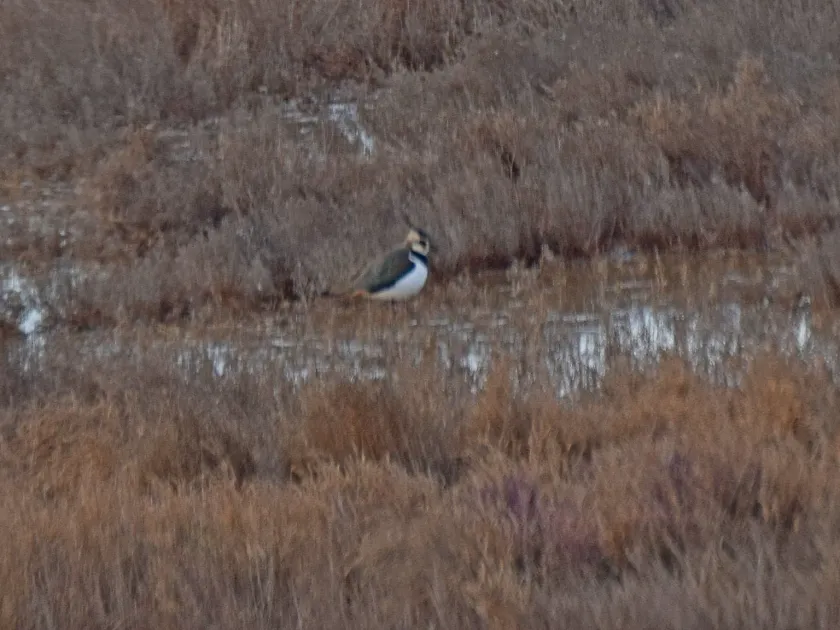
Description
How to identify
The Northern lapwing (Latin: Vanellus vanellus) belongs to the order Charadriiformes and the family Charadriidae. This medium-sized bird is easily recognizable by the long, thin crest on its head and iridescent greenish-black plumage.
Adult lapwings weigh between 200 and 300 grams. Their broad wings appear almost black in flight, and their movement is characterized by erratic, jerky wingbeats, often accompanied by a distinct, plaintive vocalization.
They prefer open landscapes such as farmlands, meadows, and pastures. During the spring, they frequently build their nests directly on plowed fields or within sparse grain crop stands.
The biology of the species is strictly linked to open ground, as lapwings are ground-nesting birds. The nest is a simple scrape in the soil, often lined with dry plant stems, making it difficult to spot from the air.
Sexual maturity is reached in the second year, and they breed once per season. High nesting densities can create significant management challenges during spring planting operations.
What it damages
The primary agricultural concern regarding the Northern lapwing is not the consumption of crops, but rather the trampling of seedlings during the nesting and brood-rearing period. They often settle in winter or early spring crop fields.
During the process of nest defense and territory maintenance, a pair of lapwings can destroy seedlings in an area of several square meters around the nest, damaging tender shoots through repeated movement.
Another issue is the disruption of fieldwork schedules. Discovering a clutch in the middle of a field forces operators to bypass the area, leaving uncultivated patches that quickly become prone to weed infestation.
After the chicks hatch, the broods move through the field searching for food, causing further mechanical damage and compaction of the topsoil around the nesting site.
Although lapwings may eat small amounts of insect pests, their negative impact on field structure, operational efficiency, and crop density often outweighs any potential biological benefit.
Signs of infestation
Signs of lapwing presence include characteristic "gaps" in crop density that expand as the chicks grow. At the center of these damaged spots, one can usually find traces of the nest lining.
The birds are easily identified by their defensive behavior: when a human approaches the nest, the adults fly low overhead and scream loudly to distract potential threats.
Spring field inspections reveal small soil depressions used for laying eggs. These sites are often surrounded by flattened vegetation or trampled crop remains.
In damp areas of the field, characteristic footprints are visible, identifiable by three forward-pointing toes with no visible trace of a rear toe, which is typical for this species.
Seedlings at the nesting sites appear crushed, deformed, or entirely missing, forming localized patches of damage that are clearly visible during drone monitoring of the crop canopy.
Control measures
To minimize damage, it is recommended to use visual and auditory bird deterrents installed before the peak nesting season begins, preventing birds from selecting the field for nesting.
Bioacoustic systems that broadcast lapwing distress calls have proven effective, compelling the population to seek safer nesting environments further away from the cultivated land.
Deploying reflective fluttering ribbons or dynamic scarecrows helps protect critical areas of the field during the early stages of crop development, discouraging birds from landing.
Timely tillage and early planting operations create unfavorable conditions for nesting, as lapwings prefer fields that are stable and remain undisturbed for longer periods.
In cases of high bird concentration, creating non-arable buffer zones on the field edges provides a space where lapwings can nest without causing economic loss to the main crop.
Taxonomy
- Latin name
- Vanellus vanellus
- Family
- Charadriidae
- EPPO code
- VANLVA
Discussion
No discussions yet — be the first.