
Long-billed Plover
Charadrius placidus
Description
How to identify
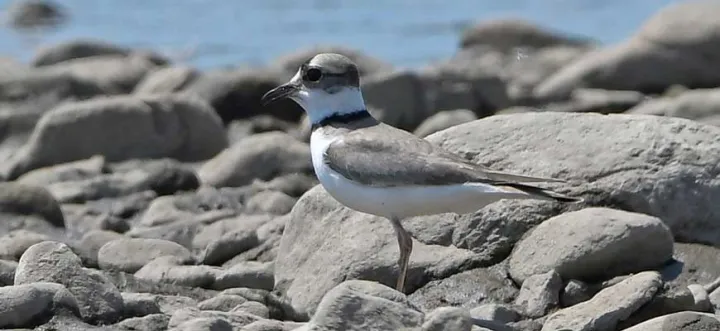
The Long-billed Plover (Charadrius placidus) is a bird species belonging to the plover family (Charadriidae) within the order Charadriiformes.
It is a medium-sized plover, characterized by a grey-brown upper body and a white underbelly, with a distinctive dark band across its chest.
The bird has a relatively long and strong beak compared to other plovers, which is adapted for probing the ground for invertebrate prey.
Identification is aided by its dark eye mask and the specific habitat preference for gravel beds and riverbanks in its native range.
Taxonomically, it is closely related to the Little Ringed Plover but is significantly larger and exhibits different social and breeding behaviors.
What it damages
From an agronomic perspective, the Long-billed Plover is not classified as a plant pest. It is an insectivore that poses no threat to cultivated crops.
The species feeds on various invertebrates, including insects and small crustaceans, and it has no interest in seeds, leaves, or stems of agricultural plants.
The plover provides a neutral or slightly beneficial service to agriculture by helping to regulate insect populations in riparian zones near farmland.
There is no evidence of the Long-billed Plover causing economic damage to harvests or damaging seedlings during any growth phase.
Labeling this bird as a "pest" is fundamentally incorrect as it does not consume, trample, or otherwise interfere with commercial plant production.
When it appears
The breeding season occurs during the spring and summer months, when the birds return to their nesting sites near riverbeds.
During the peak of the season, individuals may be seen foraging in open areas, sometimes close to agricultural borders adjacent to waterways.
Migration typically begins in late autumn, around September or October, as the birds move toward warmer wintering grounds in Southern Asia.
They are strictly seasonal visitors to northern regions and are entirely absent from agricultural lands during the winter period.
Their presence is dictated by the river water levels, which must be low enough to expose the nesting grounds required for their life cycle.
Signs of infestation
Signs of their presence include footprints on muddy or sandy soil banks near the agricultural water supply sources or drainage ditches.
They can be identified by their distinctive, sharp whistling alarm calls when an intruder approaches their nesting area.
Nests are difficult to locate because they consist of simple scrapes in the gravel, perfectly camouflaged against the riverine substrate.
The absence of crop damage or foliage destruction is the most reliable indicator that the birds are not interfering with agricultural activities.
These birds typically show avoidance behavior towards humans and agricultural machinery, preferring the quiet environment of riverbeds.
Control measures
No agricultural control measures are necessary, as the Long-billed Plover does not interfere with crop health or productivity.
In many regions, the species is protected by law due to its conservation status, making any intervention illegal and ecologically damaging.
Management should focus on preserving the riparian corridors that provide natural habitat for the birds, effectively separating them from the fields.
If required for specific non-agricultural site management, bioacoustic deterrents are the only recommended form of intervention.
Agronomists should view the Long-billed Plover as a benign part of the local ecosystem that contributes to natural insect regulation in the area.
Taxonomy
- Latin name
- Charadrius placidus
- Family
- Charadriidae
- EPPO code
- CHDRPL
Discussion
No discussions yet — be the first.