
Plover
Pluvialis
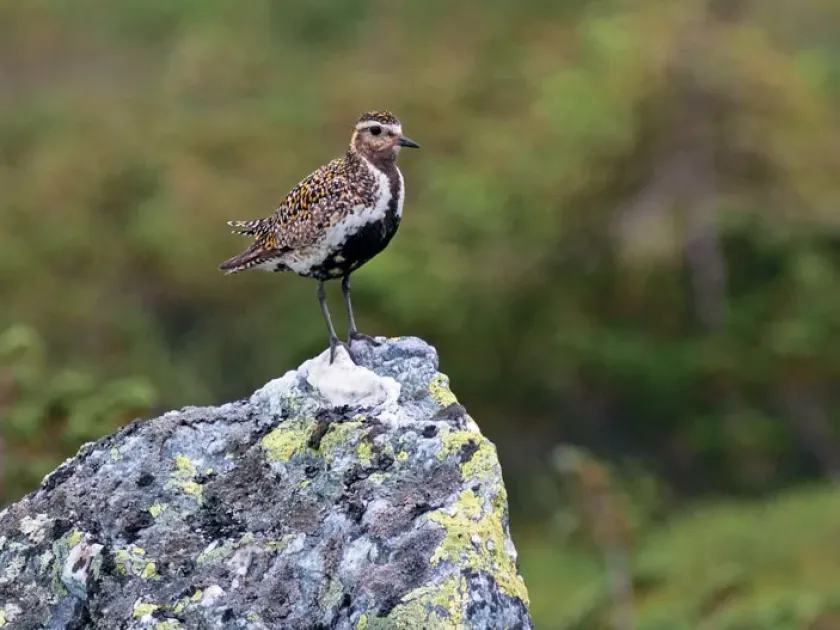
Description
How to identify
Plovers (genus Pluvialis) belong to the order Charadriiformes and the family Charadriidae. These are medium-sized birds with compact bodies, short necks, and strong bills adapted for foraging on the ground.
Their plumage often features camouflage patterns, allowing them to blend into open landscapes. During migration, they often form large flocks, which makes them highly visible on agricultural lands.
The biology of these birds is closely linked to wetlands, open pastures, and plowed fields where they hunt for invertebrates.
Their life cycle includes seasonal migrations, during which they frequently settle on agricultural plots to rest and feed intensively.
While primarily insectivorous, their presence in large numbers causes physical damage to crops, classifying them as a potential biological threat to intensive farming.
What it damages
The main damage occurs when birds probe the soil for insects, inadvertently uprooting young seedlings of cereals and vegetables.
Crops are most vulnerable during the early stages of growth when seeds are easily accessible near the surface and tender sprouts are easily pulled out.
Large flocks cause mechanical damage by trampling crops, which leads to uneven plant density and potential yield loss across the field.
Soil compaction caused by the weight of the flock inhibits root development and air circulation in the surface layer, further weakening the seedlings.
Economic damage is most significant in fields located along migration routes, where high density of birds can cause localized crop failure.
When it appears
Activity is highest during the spring planting season when open soil attracts the birds to forage for larvae and worms.
In autumn, plovers pose a threat to winter crops, as they continue to search for food in the topsoil before migrating to wintering grounds.
Weather conditions significantly impact their activity: wet weather makes the soil easier to probe, increasing the attractiveness of the field.
Migration periods are critical for monitoring, as bird populations can reach high levels on a single plot within a few days.
The duration of a flock's stay depends on food availability and the level of disturbance caused by farm machinery or bird deterrent systems.
Signs of infestation
The presence of plovers is indicated by characteristic small holes in the soil left by their bills during foraging.
Visual signs of crop damage include missing sprouts and shallow pits where seeds have been consumed or displaced.
Patchy stands of crops and footprints in the soil reveal the path of the flock across the field during their feeding sessions.
Droppings left in the area and loud, specific vocalizations are reliable indicators of their recent or ongoing activity.
Early morning surveys of fields are essential for detecting the presence of these birds before significant damage occurs.
Control measures
Acoustic deterrents that play recordings of predator calls are highly effective at discouraging flocks from settling on crops.
Visual aids such as reflective tapes, predator silhouettes, or movement-based deterrents can help protect high-value agricultural fields.
Implementing deeper seed planting techniques reduces the vulnerability of seeds to being pulled out by foraging birds.
Integrated pest management to control soil-dwelling insects reduces the primary food source that attracts plovers to the fields.
- Frequent monitoring during vulnerable growth stages.
- Using deterrents with varying frequencies to prevent habituation.
- Maintaining soil surface structure to limit ease of probing.
Taxonomy
- Latin name
- Pluvialis
- Family
- Charadriidae
- EPPO code
- PLUVSP
Discussion
No discussions yet — be the first.