
Northern lapwing
Vanellus
Description
How to identify
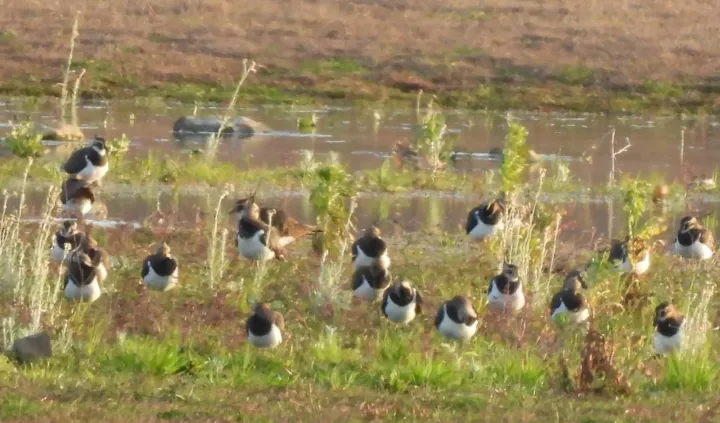
The Northern lapwing (Latin Vanellus vanellus) is a bird of the plover family, Charadriidae. It is easily identified by its distinctive black and white plumage with a greenish-purple iridescent sheen and a long, thin crest on its head.
In the field, lapwings are known for their frantic, acrobatic flight patterns and loud, wailing calls, often described as «pee-wit,» which become persistent when the birds feel threatened.
Adult lapwings measure approximately 30 centimeters in length with a wingspan of up to 80 centimeters, making them highly visible inhabitants of open agricultural landscapes.
As migratory birds, they appear on farmland in early spring, favoring open fields, damp meadows, and fallow land for nesting before the vegetation grows too dense.
The birds exhibit social behavior, often nesting in loose colonies, and they are notoriously protective of their nesting sites, showing significant aggression toward intruders, including humans and machinery.
What it damages
While the Northern lapwing is not classified as a primary crop pest—since its diet mainly consists of insects—its nesting and foraging habits can lead to localized damage in arable fields.
The primary concern is the physical destruction of seedlings. By nesting directly within crop rows, lapwings cause areas of trampled soil where young plants are crushed or removed.
When foraging, lapwings probe the soft soil with their beaks to find larvae, which can disturb the root systems of sensitive seedlings or create small depressions that hinder uniform crop development.
High concentrations of lapwings in a single field can lead to localized soil compaction, which inhibits the initial growth phase of cereal crops or newly sown vegetables.
Additionally, their territorial behavior complicates agricultural operations. Operators often have to avoid nesting areas with heavy machinery, leading to uneven management of the field and potential yield losses in those spots.
Signs of infestation
The most reliable sign of lapwing presence is their behavior; pairs will swoop and circle persistently above an area while emitting distressed, loud calls if a tractor approaches.
Visually, one may notice bare patches in the field where seedlings are missing, and upon closer inspection, shallow scrape nests found directly on the ground in the soil.
Evidence of bird droppings on the foliage of young plants near nesting sites is a strong indicator that the birds have been occupying that specific part of the field for some time.
Fragments of eggshells or soft down feathers near a patch of damaged crops clearly signify that a nest has been established in that location.
Inconsistent plant density throughout a field, particularly if gaps are clustered together, is often a secondary symptom of lapwing colony activity during the early spring season.
Control measures
Because Northern lapwings are often protected and serve as valuable biological control agents against harmful insects, management should focus on non-lethal, humane deterrence methods.
Visual deterrents, such as raptor silhouettes or reflective tape, are effective when placed strategically around the perimeter of the field and moved regularly to maintain their effectiveness.
Bioacoustic systems that broadcast bird alarm calls can deter lapwings from settling in sensitive areas at the beginning of the nesting season, encouraging them to find alternative locations.
Good agricultural practices, such as prompt field preparation and surface smoothing after sowing, reduce the attractiveness of the terrain for lapwings looking to lay eggs.
If a nest is discovered, local farm management should consider marking the area and temporarily avoiding it with machinery to prevent accidental damage while the eggs are incubating.
Taxonomy
- Latin name
- Vanellus
- Family
- Charadriidae
- EPPO code
- VANLSP
Discussion
No discussions yet — be the first.