
Plover
Charadrius
Description
How to identify
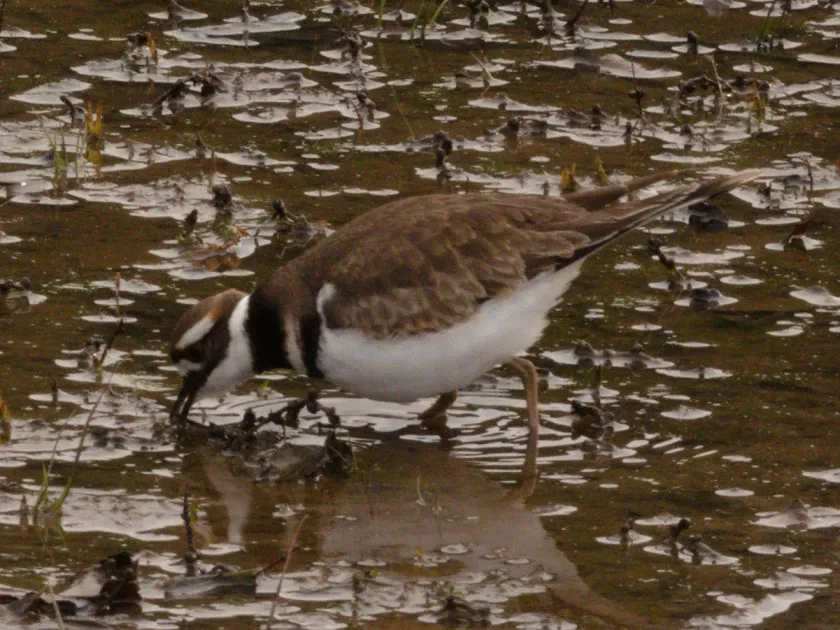
The Plover (genus Charadrius) is a member of the Charadriidae family, characterized by a compact body, short bill, and distinct, often bold, plumage patterns.
These birds are predominantly found in open, flat environments, including mudflats, beaches, and occasionally agricultural fields that offer sparse vegetation.
They are known for their unique foraging behavior, which involves rapid runs across the ground interrupted by sudden pauses to inspect the soil surface for small prey.
Ornithologically, they are identified by their plaintive calls and the tendency to nest in shallow depressions on the bare ground, often blending into their surroundings.
In an agricultural context, their presence is usually transient, linked to migratory stopovers or specific breeding conditions in moist, low-lying fields.
What it damages
Plovers are not typical agricultural pests, as they feed primarily on insects, larvae, and small invertebrates found in the topsoil rather than cultivated crops.
Physical damage can occur if nesting occurs within planting areas, potentially leading to the crushing of seedlings by ground-nesting activities or maternal movement.
Soil compaction may occur in localized patches if a large flock gathers to forage on moist soil, though this is rare compared to impacts from larger animals.
Conversely, they act as natural controllers of pest populations, consuming various soil-dwelling larvae that could otherwise damage root systems of crops.
Overall, their impact is considered neutral, and they are frequently welcomed by farmers as indicators of a healthy ecosystem on the farm's perimeter.
When it appears
Plover activity on farmland is most prevalent during the early spring, coinciding with the sowing season when fields are often left bare and damp.
The breeding season, which occurs in late spring and early summer, is when nesting pairs are most likely to be found on or near agricultural land.
During the autumn migration period, large groups may congregate on fallow fields to rest and feed before continuing their long-distance flights.
Seasonal patterns are heavily influenced by the drainage cycles of the local area, as birds prefer the moist conditions created after heavy spring rains.
Farmers can expect decreased activity once the crop canopy closes and the vegetation becomes too dense for the birds to forage or nest comfortably.
Control measures
Control methods should be focused on non-lethal deterrents, given that many plover species are protected under wildlife conservation laws and international agreements.
Cultural practices, such as maintaining well-drained fields and reducing standing water, are the most effective ways to discourage birds from nesting on crop lands.
Visual deterrents, including hawk kites or reflective holographic tape, can be deployed to discourage birds from settling in high-value planting zones.
If nests are discovered, it is recommended to demarcate the area and avoid mechanical operations until the eggs have hatched and the chicks have fledged.
Integrated pest management should prioritize the benefits of plovers as biological controls, minimizing human interference unless there is clear evidence of economic loss.
Taxonomy
- Latin name
- Charadrius
- Family
- Charadriidae
- EPPO code
- CHDRSP
Discussion
No discussions yet — be the first.