
Citrus rust mite
Valencia
Description
How to identify
The citrus rust mite (Aculus pelekassi) is a microscopic pest belonging to the Eriophyidae family. Because of their tiny size, usually around 0.15 mm, they are extremely difficult to detect without the use of a magnifying lens or microscope.
They are characterized by an elongated, wedge-shaped body that is yellowish-white, which allows them to blend in with the tissue of citrus leaves and fruit surfaces.
Unlike other common mites, this species possesses only two pairs of legs, both situated at the anterior portion of the body, which is a key diagnostic feature for identification.
These mites rely on high humidity and specific temperature ranges to thrive, enabling them to complete their life cycle rapidly and build large populations in a relatively short period.
They do not produce webs, which makes their presence less obvious to growers until significant physical damage to the plant tissue has already occurred.
What it damages
Citrus rust mites primarily feed on citrus plants, including oranges, lemons, and mandarins. They penetrate the epidermal cells of leaves and fruits to extract plant sap.
The feeding process results in a distinct discoloration of the fruit peel, turning it silvery or bronzed, which significantly reduces the aesthetic and commercial quality of the produce.
Affected leaves often curl and develop necrotic spots, leading to premature leaf drop and a reduction in the plant's overall photosynthetic capacity, which weakens the tree.
In cases of severe infestation, the mites can cause stunting in young shoots and decrease the sugar content in the fruit, negatively impacting both yield and market value.
Since the damage is often localized on the outer surface of the fruit, it can make entire harvests unsuitable for the fresh market, leading to substantial economic losses for citrus growers.
When it appears
The activity of these mites is highly dependent on environmental conditions, with populations rising rapidly during the warmer months of the year.
Optimal conditions for development include temperatures between +20 °C and +28 °C combined with high humidity, which can lead to multiple generations appearing in a single month.
As temperatures drop during the late autumn and winter months, the development rate slows down, though they may persist in protected environments or warmer climatic zones.
Overwintering typically occurs as adult females found in protected areas like dormant buds, crevices in the bark, or even on leaves that remain on the tree through the winter.
Periods of active plant growth are the most critical, as the abundance of tender new tissue provides an ideal food source for expanding mite populations.
Signs of infestation
The first indicator of an infestation is a subtle change in the appearance of leaves or fruit, often described as a dusty or metallic sheen on the surface.
- Loss of natural gloss on leaves.
- Appearance of bronzed or silver patches on the fruit skin.
- Curling or deformation of young, tender leaves.
- Small necrotic marks or stippling on the epidermis.
- Overall lack of vigor in shoot growth compared to non-infested trees.
As the infestation progresses, the surface of the fruit may develop a dry, leathery rind that does not recover, permanently damaging the fruit's appearance.
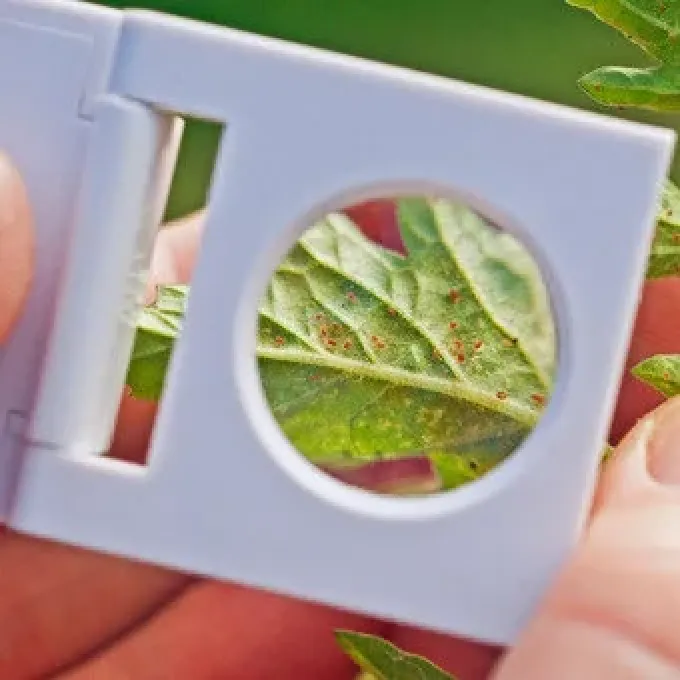
Visual inspection with a 10x or 20x magnification lens can help confirm their presence, as they are often found clustered around the stems or on the undersides of leaves.
Early detection is crucial, as the mites can spread quickly throughout the orchard via wind dispersal or contaminated pruning equipment.
Control measures
Managing the citrus rust mite requires an integrated approach that focuses on both chemical suppression and sound orchard management practices.
Targeted acaricides are effective at controlling mite populations, but it is essential to rotate products with different modes of action to mitigate the development of chemical resistance.
Cultural control, such as proper pruning, helps to open up the canopy, which improves air circulation, increases light penetration, and reduces the humidity favored by the mites.
Biological control using predatory mites (phytoseiids) can be highly effective in maintaining mite populations below damaging levels without relying exclusively on pesticides.
Regular scouting and monitoring during the spring and summer phases are vital to catching outbreaks early, which reduces the need for extensive chemical applications.
Taxonomy
- Latin name
- Valencia
- Family
- Cyprinodontidae
- EPPO code
- VALESP
Discussion
No discussions yet — be the first.