
Japanese horntail
Urocerus japonicus
Description
How to identify
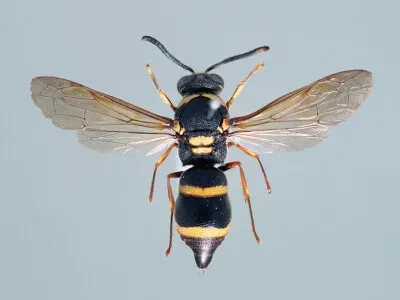
The Japanese horntail (lat. Urocerus japonicus) is a member of the Hymenoptera order and the Siricidae family, commonly known as wood wasps. The insect features an elongated body, and females are equipped with a prominent ovipositor, which looks like a stinger but is used specifically for drilling into wood to lay eggs.
Adults typically measure between 20 and 40 mm. Females are characterized by a dark, almost black body with distinctive yellow markings on the abdomen and legs. Their transparent wings often have a yellowish tint, making them identifiable during flight or resting periods.
The larvae, which develop inside tree trunks, are cylindrical and white. They possess strong mandibles capable of boring through hardwood, while their legs are vestigial, as they spend their entire larval stage within the tunnels they create.
Egg-laying involves a unique biological mechanism: the female injects symbiotic fungi into the wood along with her eggs. These fungi help decay the wood fibers, making it easier for the developing larva to feed and digest the material.
The life cycle of the Japanese horntail can last from one to three years, depending on environmental variables such as temperature and wood moisture content. Pupation occurs just beneath the bark surface prior to the adult insect emerging.
What it damages
This pest primarily attacks coniferous trees, including spruce, fir, pine, and larch. While it typically favors weakened, dying, or recently felled trees, high populations can also pose a significant threat to healthy, mature timber stands.
Larvae create long, winding tunnels deep within the trunk. This boring activity significantly degrades the technical quality of the timber, rendering it unsuitable for high-value construction or furniture production.
The tunnels are filled with frass, a mixture of wood shavings and fungal mycelium, which obstructs the tree's natural vascular system. This disruption of nutrient flow weakens the tree and accelerates overall decay.
Economic damage is substantial in the forestry sector due to timber devaluation. Furthermore, trees infested with Japanese horntail often become centers of secondary pest outbreaks, leading to further forest degradation.
In addition to physical damage, the introduction of fungi increases the susceptibility of the wood to rot. This combined effect can lead to the rapid mortality of the affected tree if left unchecked.
Signs of infestation
The most reliable sign of an infestation is the presence of perfectly circular exit holes on the bark, usually 5–8 mm in diameter. These indicate that adult horntails have successfully emerged from the wood.
Small, distinct drilling marks on the bark indicate where females have used their ovipositors to deposit eggs. Monitoring for these marks is essential for early detection in high-risk areas.
Accumulations of frass, resembling fine sawdust, can often be found at the base of the tree or tucked into bark crevices. This indicates active tunneling behavior occurring inside the trunk.
The crown of the tree may appear normal for a significant period during the early stages of infestation. However, as the damage progresses, foliage may begin to show signs of yellowing or premature needle drop.
A hollow sound when tapping the trunk can suggest extensive internal gallery construction. This indicates that the larvae have severely compromised the structural integrity of the wood.
Control measures
The most effective management strategy is rigorous sanitation, which involves the prompt removal of dead, dying, and felled trees from the forest to reduce breeding sites for the horntail population.
Timber should be processed and removed from harvesting sites as quickly as possible. This limits the opportunity for females to lay eggs in fresh logs and prevents adult emergence.
Biological control through the encouragement of natural parasitoids, such as the Rhessa genus of ichneumonid wasps, can help keep population levels in check within forest ecosystems.
For stored timber yards, preventive treatments with contact insecticides may be necessary to protect logs from egg-laying females during the peak flight season.
- Regular inspection of forest health and sanitation.
- Use of pheromone traps to monitor adult flight activity.
- Promotion of diverse forest stands to increase natural resilience.
Taxonomy
- Latin name
- Urocerus japonicus
- Order
- Hymenoptera
- Family
- Siricidae
- EPPO code
- URCEJA
Discussion
No discussions yet — be the first.