
Wood wasp
Sirex areolatus
Description
How to identify
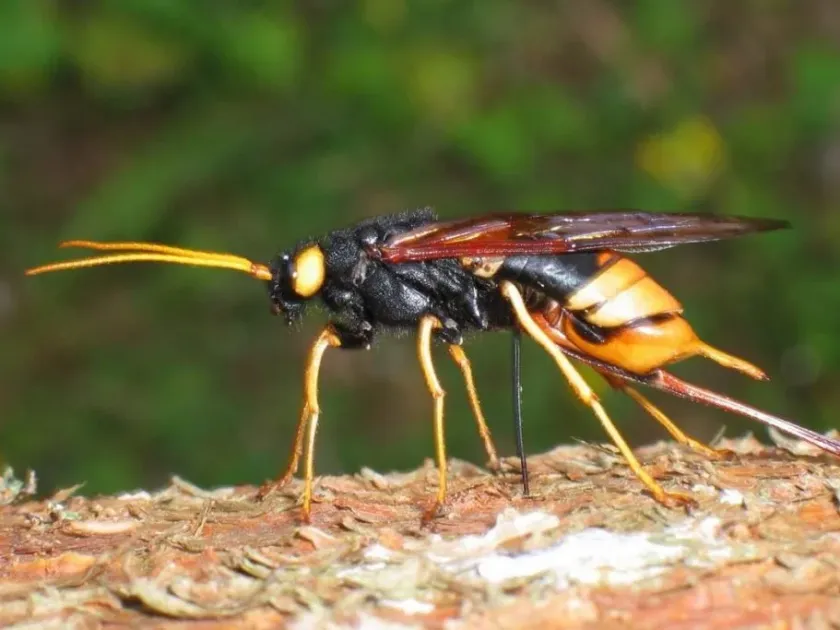
The wood wasp (Sirex areolatus) is a member of the Hymenoptera order, specifically the Siricidae family. Adults are large, cylindrical insects typically ranging from 10 to 25 mm in length.
Females possess a prominent, needle-like ovipositor used for drilling into wood to lay eggs; despite its appearance, it is harmless to humans.
The body coloration is usually dark blue or black with a distinct metallic sheen, providing effective camouflage against the bark of coniferous trees.
The larvae are pale and cylindrical, featuring a well-developed head and strong mandibles designed for boring through dense wood fibers.
Precise species identification often requires an examination of wing venation and ovipositor structure, as many wood wasps share a similar physical appearance.
What it damages
This pest prefers stressed, dying, or recently felled conifer species, such as pine, spruce, fir, and cedar, posing a significant risk to forestry and timber storage.
In silviculture and nursery management, the wood wasp causes substantial economic losses by compromising the structural integrity and quality of timber.
The primary damage is caused by the larval stage, which constructs long, winding galleries deep within the wood, rendering the timber unsuitable for construction.
In addition to physical tunneling, these insects introduce symbiotic fungi that accelerate wood decay and facilitate the breakdown of plant tissues.
Heavy infestations can lead to rapid degradation of timber stands, significantly reducing their commercial value and ecological health.
When it appears
The adult flight period typically occurs during the summer months, spanning from June to August, depending on the local climate and temperature trends.
During this timeframe, females actively search for suitable host trees, assessing their moisture levels and physiological state for successful egg deposition.
The insect life cycle is complex and can span from one to three years, heavily influenced by ambient temperatures and the internal quality of the host wood.
Pupation occurs near the wood surface, after which the adults bore circular exit holes to emerge, signaling the start of the next generation's flight.
The species overwinter primarily in the larval stage, protected deep within the woody tissue, which allows them to survive harsh winter conditions.
Signs of infestation
The most diagnostic sign of infestation is the appearance of perfectly circular exit holes, approximately 4–6 mm in diameter, on the surface of the bark.
Removing the bark often reveals dense galleries filled with fine wood dust, known as frass, which provides clear evidence of larval feeding activity.
Needle yellowing or browning, particularly in the upper canopy, often indicates that the tree's vascular system has been compromised by the infestation.
During peak flight activity, the audible buzzing of the wasps near host trees is a notable indicator of a high population density in the area.
- Resin droplets on the bark.
- Piles of wood dust at the base of the tree.
- Premature needle drop and foliage loss.
Control measures
Effective management relies heavily on strict sanitation practices, such as the rapid removal of weakened, dying, or freshly fallen trees from forests.
Proper timber management is essential; logs should be debarked promptly or processed quickly to prevent them from becoming breeding grounds for the pests.
Utilizing biological control agents, such as parasitic wasps that target wood wasp larvae, is a sustainable method to regulate population numbers.
In nurseries, targeted insecticide applications during the adult flight period can prevent egg-laying and protect young, vulnerable conifer stock.
Maintaining overall tree health through appropriate silvicultural techniques remains the most effective long-term preventative measure against wood wasp damage.
Taxonomy
- Latin name
- Sirex areolatus
- Order
- Hymenoptera
- Family
- Siricidae
- EPPO code
- SIRXAR
Discussion
No discussions yet — be the first.