
Steel-blue woodwasp
Sirex juvencus
Description
How to identify
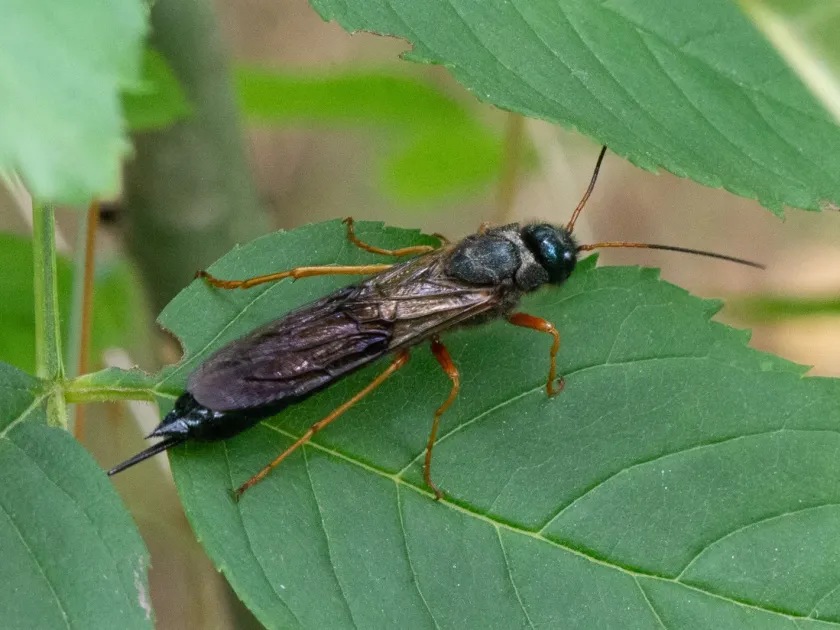
The Steel-blue woodwasp (Sirex juvencus) is a member of the Siricidae family within the order Hymenoptera. Adult females typically measure between 10 and 30 mm in length and feature a distinctive metallic blue or blue-black body.
A notable feature of the female is the prominent ovipositor, which looks like a sharp spine at the end of the abdomen. This organ is used to drill through bark and wood to deposit eggs deep inside the tree stem.
Larvae are legless, white-colored, and bear a characteristic black horn-like spine on their posterior end. They spend their entire developmental period hidden within the galleries they excavate inside the wood.
Adult woodwasps are sun-loving insects, exhibiting the highest levels of activity during warm, bright summer days when they search for suitable host trees.
This species primarily targets coniferous trees, showing a strong preference for spruces, although it may also infest pines, firs, and larches, especially if they are already weakened.
What it damages
The damage is caused by larvae as they bore long, circular tunnels through the wood. These galleries cause significant structural damage, rendering timber commercially worthless for many industrial applications.
The woodwasp maintains a symbiotic relationship with fungi (Amylostereum areolatum). When laying eggs, the female injects fungal spores into the wood, which cause decay and facilitate the breakdown of the tree's internal structure.
The pest poses a severe threat to log yards and sawmills. If unchecked, an infestation can destroy significant volumes of lumber in a relatively short period, turning high-quality timber into unusable material.
In standing trees, the combined effect of larval tunneling and fungal infection puts extreme stress on the tree, often leading to rapid crown decline, wilting, and eventually the death of the tree.
Infested trees are also prone to subsequent attacks by secondary pests, creating a cascading effect of decline within forest stands that complicates recovery efforts.
When it appears
Adult emergence occurs during the summer months, specifically between July and August, although this timing can fluctuate depending on regional climate and annual weather patterns.
The life cycle of the Steel-blue woodwasp is prolonged, typically taking two to three years to complete. This duration is influenced by environmental temperature and the nutritional quality of the wood.
Larvae remain active within the wood throughout the year, with feeding intensity often correlated with seasonal temperature increases, though they continue to progress even during cooler periods.
Pupation occurs deep within the wood at the end of the larval stage. Upon maturing, the adult uses its mandibles to bore a perfectly circular emergence hole to escape to the exterior.
The period of adult activity is critical, as females actively seek out freshly cut logs or stressed trees to start the next generation, making this the prime time for monitoring.
Signs of infestation
The most reliable indicator of an infestation is the presence of perfectly round emergence holes, approximately 4–6 mm in diameter, on the surface of bark or wood.
Evidence of wood dust or "frass" accumulating at the base of trees or under piles of timber is a clear sign that larvae are actively boring and feeding inside the wood.
Visible changes in foliage color, such as chlorosis (yellowing) or needle drop in the canopy, often indicate that the internal vascular system of the tree has been compromised.
Cross-sections of infested wood will reveal intricate networks of tunnels. These galleries are often stained dark or blue due to the presence of the symbiotic fungus that accompanies the insect.
Excessive resin flow on the trunk surface of standing trees can sometimes indicate an attempt by the tree to defend itself against the woodwasp's oviposition efforts.
Control measures
Sanitation felling is the most effective management strategy. It is crucial to remove and process infested, dying, or wind-thrown trees before the new generation of adults emerges.
Proper log storage management is essential in timber yards. This includes rapid processing of logs or maintaining storage conditions that are unfavorable for the woodwasp, such as log irrigation.
Debarking logs is a highly effective preventative measure, as it disrupts the woodwasp's ability to successfully oviposit and affects the development of early-stage larvae.
Biological control involves promoting the presence of natural enemies, particularly parasitic wasps of the family Ichneumonidae, which are capable of locating larvae deep within the wood.
Chemical control via insecticides is largely impractical for large-scale timber storage because the larvae are protected deep within the wood, rendering most surface-applied treatments ineffective.
Taxonomy
- Latin name
- Sirex juvencus
- Order
- Hymenoptera
- Family
- Siricidae
- EPPO code
- SIRXJU
Discussion
No discussions yet — be the first.