
Behrens wood wasp
Sirex behrensi
Description
How to identify
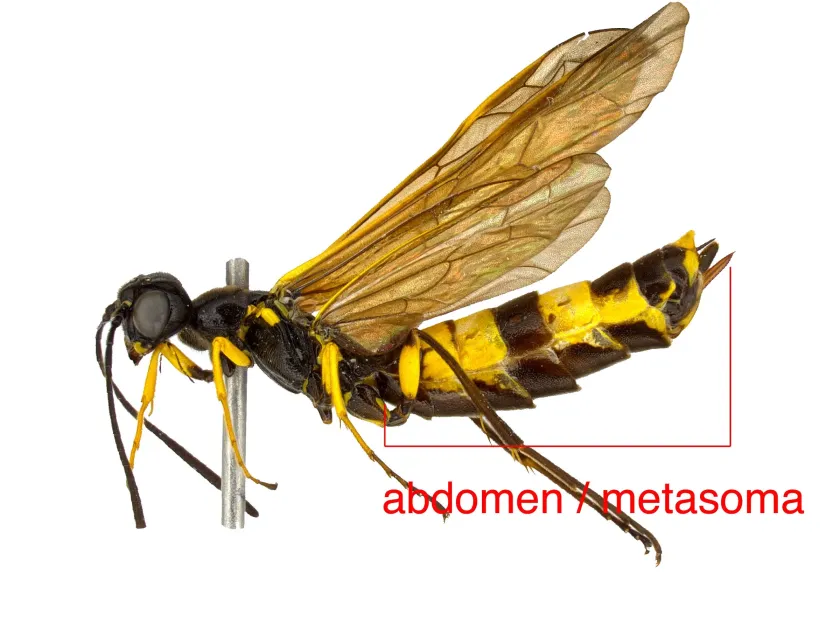
The Behrens wood wasp (Sirex behrensi) is a species of horntail belonging to the family Siricidae. Adult wasps typically reach a length between 15 and 30 millimeters, exhibiting the classic slender body shape of the family.
These insects generally appear dark blue or black with a distinct metallic sheen. The females are equipped with a long, needle-like ovipositor used for drilling into wood to deposit their eggs.
The larvae are cream-colored, legless, and feature a robust head capsule equipped with mandibles designed for boring through wood. A defining characteristic is the sharp, horn-like spine located at the end of the abdomen.
The lifecycle of Sirex behrensi is intrinsically linked to a symbiotic fungus. This fungus, introduced by the female during oviposition, creates the necessary conditions for the larvae to digest the wood fibers.
Proper identification requires examining the wing venation and abdominal structure, as the species shares morphological similarities with other wood-boring wasps inhabiting the same ecological zones.
What it damages
The Behrens wood wasp primarily targets conifers, including various species of pine and fir. The pest is predominantly opportunistic, attacking trees that are already stressed, weakened, or recently fallen.
Larvae create intricate tunnels through the sapwood and heartwood. This activity severely degrades the structural integrity of the timber, making the affected logs unsuitable for high-quality construction use.
The associated symbiotic fungi cause white rot in the wood, which accelerates the decomposition process. This biological damage often proceeds faster than the physical boring of the larvae.
In high-density populations, these wasps can overwhelm the natural defenses of healthy trees. Excessive resin flow attempting to trap the larvae often fails when the attack is massed.
Forest stands experiencing drought or wildfire damage are at the highest risk, as these conditions significantly reduce the tree's ability to resist the wasp's boring and fungal introduction.
Signs of infestation
The most visible sign of an infestation is the presence of perfectly circular exit holes on the bark of infested trees, indicating that the adult wasps have completed their lifecycle.
Fine, powdery sawdust known as frass, often found around the base of trees or accumulated in bark crevices, is a clear indicator that larvae are actively feeding deep within the wood.
Premature chlorosis and needle drop in the canopy are classic symptoms, signaling that the wasp's boring activities have disrupted the tree's vascular system, leading to dehydration.
Close inspection of the trunk may reveal tiny, puncture-like oviposition sites. In some cases, small beads of resin appear at these points as the tree attempts to eject the wasp's eggs.
The presence of adult wasps buzzing around forest edges or lumber yards during warm, sunny months is a primary indicator of an active local population that requires immediate monitoring.
Control measures
The cornerstone of management is rigorous forest hygiene. Prompt sanitation harvesting and the removal of infested or downed trees are essential to disrupt the reproductive cycle of the pest.
Effective lumber yard management involves ensuring that logs are processed or debarked quickly. Storing raw logs for long periods in warm weather significantly increases the risk of wood wasp colonization.
Maintaining the overall vigor of forest stands through appropriate thinning and stand density management reduces the likelihood of the wasps being attracted to the area.
- Monitoring: Utilizing pheromone-baited traps to detect adult flight patterns and population density.
- Biological control: The release of parasitoid wasps, such as Ibalia species, which target wood wasp larvae.
- Export requirements: Mandatory heat treatment or fumigation of wood products to prevent international spread.
Prompt disposal of logging slash and debris is critical, as these residues serve as the initial breeding grounds before the population expands to target living standing timber.
Taxonomy
- Latin name
- Sirex behrensi
- Order
- Hymenoptera
- Family
- Siricidae
- EPPO code
- SIRXBE
Discussion
No discussions yet — be the first.