
Yellow-horned wood wasp
Urocerus flavicornis
Description
How to identify
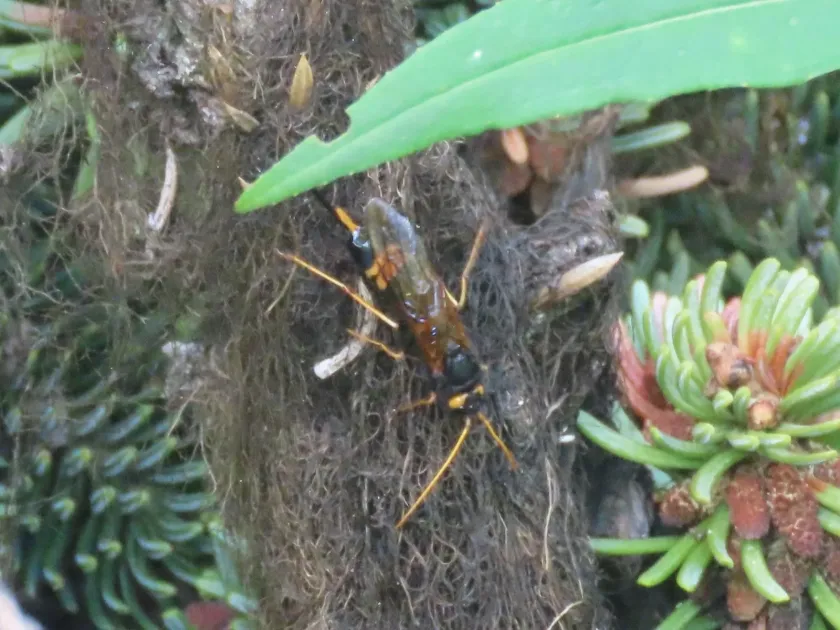
The yellow-horned wood wasp belongs to the order Hymenoptera and the family Siricidae. Adult insects reach 25–35 mm in length and are characterized by a black body with distinctive bright yellow antennae.
Females are equipped with a strong ovipositor, which looks like a horn or spike extending beyond the end of the abdomen. Males have a more uniform coloration and thickened hind tibiae.
The larvae of this pest are cylindrical, white, and possess a small horn-like process at the end of the body. They lack abdominal legs, which distinguishes them from the larvae of many other insects.
The development of the insect takes place deep inside the wood, making it almost impossible to detect the larvae visually during the early stages of infestation. The pupa forms at the end of the tunnel before the adult emerges.
Reproduction is sexual, and the generation cycle can take anywhere from one to three years, depending on regional climatic conditions and the health status of the host wood.
What it damages
The primary hosts of this pest are conifer species, particularly spruce, fir, and occasionally pine or larch. They show a strong preference for weakened, diseased, or freshly cut logs.
Larvae excavate deep tunnels through the wood, tightly packing them with frass (wood dust and excrement), which degrades the structural integrity of the timber and renders it unusable.
When laying eggs, adult females inject a fungal pathogen into the wood, which accelerates decay, makes the nutrients more accessible to the larvae, and reduces the tree's vitality.
Significant economic losses occur in the forestry industry as damaged logs lose commercial value and become breeding grounds for other secondary pests.
While healthy young trees are rarely affected, massive outbreaks during unfavorable weather conditions can lead to the widespread mortality of conifer forest stands.
Signs of infestation
The first sign of infestation is the presence of perfectly round exit holes, 5–8 mm in diameter, on the tree bark, which are created by adults as they emerge.
On the surface of the trunk, one can spot characteristic scars or depressions, which the female creates while drilling the bark to insert eggs deep into the wood layers.
When the bark is removed, winding tunnels filled with fine wood dust become visible, reaching deep into the sapwood and heartwood, which interrupts the sap flow of the tree.
Gradual needle desiccation and discoloration of the crown are key indicators of serious vascular system damage, usually observed only during advanced stages of infestation.
In very quiet conditions, the sound of larvae feeding inside the wood can sometimes be heard, particularly in heavily infested stockpiles of harvested timber.
Control measures
The main preventive measure involves timely sanitary thinning and the prompt removal of fallen, freshly cut, or highly weakened trees from the forest to deny the pest a breeding substrate.
It is crucial to follow strict timber storage protocols, such as removing harvested logs from the forest before the annual flight season of the wood wasp begins.
For high-value specimen trees, the use of pheromone traps can be an effective way to monitor population dynamics and implement localized control measures.
Biological control methods rely on maintaining natural populations of parasitic wasps, which are highly effective at hunting and killing wood wasp larvae within the wood.
Chemical insecticides are rarely used because they have low effectiveness against larvae, which spend their entire developmental phase protected deep inside the timber.
Taxonomy
- Latin name
- Urocerus flavicornis
- Order
- Hymenoptera
- Family
- Siricidae
- EPPO code
- URCEFL
Discussion
No discussions yet — be the first.