
White-horned wood wasp
Urocerus albicornis
Description
How to identify
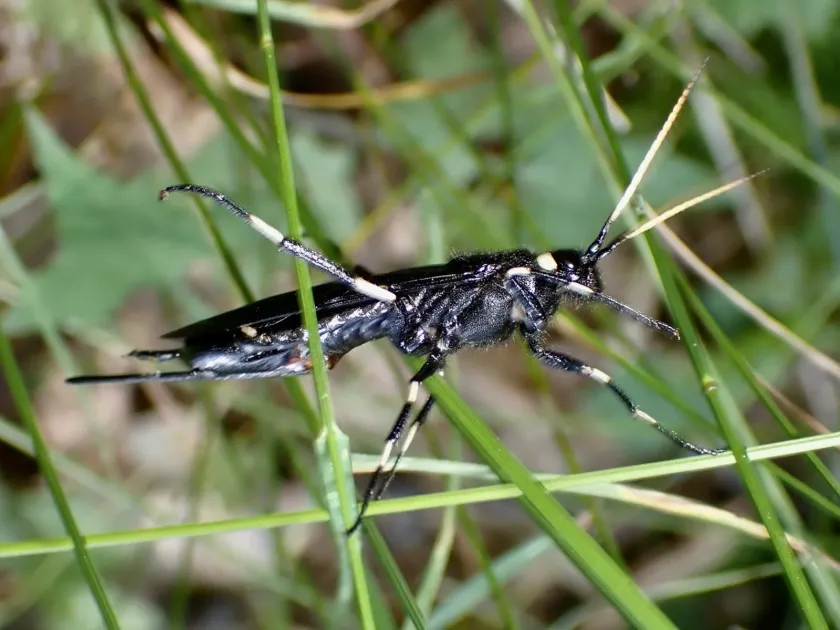
The white-horned wood wasp, Urocerus albicornis, is a member of the Siricidae family within the Hymenoptera order. These large insects are notable for their size, with females reaching up to 40 mm in length.
Adult females are typically black with a metallic blue sheen, while males are black with yellow markings on their abdomen. Their wings are generally clear or slightly tinted.
The common name comes from the distinct white spots located behind the eyes and white segments on the antennae, which serve as key identifiers for this species compared to other wood wasps.
The larvae are cylindrical, creamy white in color, and feature a small, horny spine on the posterior end of the abdomen, which is a classic characteristic of wood wasp larvae.
The lifecycle of this insect is prolonged, often taking two to three years depending on environmental conditions, with the larval stage spending its entire life inside the host tree.
What it damages
This pest primarily attacks coniferous tree species such as spruce, pine, fir, and larch. It is particularly drawn to weakened, stressed, or recently felled timber.
Trees damaged by fire, storms, or other insect infestations are at a higher risk of being colonized by the white-horned wood wasp due to their reduced ability to fend off the intruders.
Larvae create extensive tunnel systems deep within the wood, which significantly compromises the structural integrity of the timber and reduces its commercial timber value.
During the egg-laying process, females introduce fungal spores (like blue-stain fungi) into the wood, which facilitates the growth of rot and accelerates the degradation of the tree trunk.
For forestry and timber industries, this damage leads to significant economic losses, as the infested wood becomes unsuitable for high-quality construction or carpentry work.
When it appears
The adult flight period generally occurs during the summer months, typically from June through August, when warm temperatures favor insect activity and reproduction.
During this window, females actively search for suitable host trees, utilizing specialized sensors to detect the chemical signals released by stressed or dead coniferous wood.
Once a suitable host is found, the female uses her long, needle-like ovipositor to drill through the bark and deposit eggs deep into the sapwood, protecting them from external predators.
After hatching, the young larvae begin tunneling inward, consuming the wood fibers as they grow and creating galleries that can extend deep into the heartwood of the tree.
The final phase of development involves the larva pupating near the surface of the wood, after which the new adult chews an exit hole to emerge and begin the cycle again.
Signs of infestation
The most visible sign of an infestation is the presence of perfectly circular exit holes on the surface of the bark, typically measuring about 5 to 8 mm in diameter.
Frass, or fine wood dust, often accumulates at the base of the tree or around the entrance/exit points, indicating that larvae are actively feeding inside the trunk.
Sticky resin exuding from the bark is a common indicator, as coniferous trees attempt to push out the ovipositor or seal off areas where the female has attempted to lay eggs.
Crown symptoms, such as chlorosis (yellowing of needles) or early needle drop, may occur if the tunneling has significantly disrupted the tree's vascular system, causing systemic stress.
Professional inspection of lumber may reveal internal galleries, which look like long, winding tunnels that follow the grain of the wood, confirming the historical presence of the wood wasp.
Control measures
The most effective management strategy is the implementation of rigorous forest hygiene, which includes the timely removal and processing of dead, damaged, or infested timber.
Preventing timber from lingering on log yards during the summer months is crucial, as this minimizes the window of opportunity for female wasps to locate and infest the stacked logs.
For high-value timber or logs that must remain in the forest, applying contact insecticides to the bark can serve as a temporary barrier against ovipositing females.
Monitoring programs using pheromone traps can help forest managers track the population density of Urocerus albicornis and determine the timing of the flight period.
- Sanitary logging to remove infested host trees.
- Rapid transport and milling of felled timber.
- Application of preventative treatments on log piles during flight season.
Taxonomy
- Latin name
- Urocerus albicornis
- Order
- Hymenoptera
- Family
- Siricidae
- EPPO code
- URCEAL
Discussion
No discussions yet — be the first.